dfcu and Meta unite to drive agro-industrial growth with a key financing partnership
Launched at the iconic Kakira Sugar Limited in Jinja, the partnership situates itself at the heart of a thriving agro-industrial ecosystem. The choice of venue was deliberate.
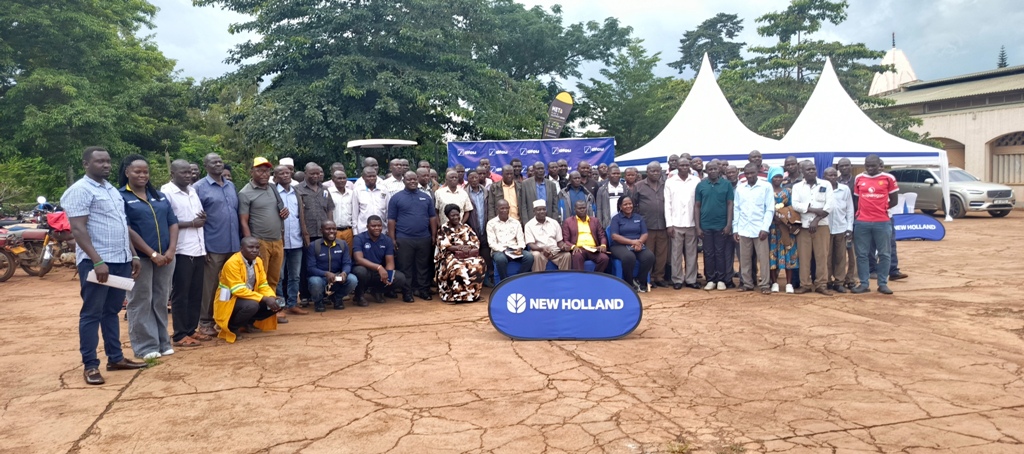
At a time when Uganda’s agricultural sector is under increasing pressure to modernise, boost productivity and meet rising market demand, dfcu Bank’s latest strategic move signals a decisive shift toward integrated, solution-driven financing.
Its newly announced partnership with Meta Plant & Equipment Uganda Limited is more than a commercial arrangement; it is a targeted intervention aimed at unlocking one of the sector’s most persistent bottlenecks: access to affordable mechanisation.
Launched at the iconic Kakira Sugar Limited in Jinja, the partnership situates itself at the heart of a thriving agro-industrial ecosystem. The choice of venue was deliberate.
Established in 1930 and operated by the Madhvani Group, Kakira Sugar remains a cornerstone of Uganda’s sugar industry, processing approximately 7,500 tonnes of cane daily while supporting thousands of outgrowers across the Busoga sub-region.
It is here, amidst the rhythms of production, logistics and smallholder farming, that the dfcu–Meta collaboration finds immediate relevance.
Bridging the Mechanisation Gap
Uganda’s agricultural potential is widely acknowledged, yet its productivity continues to be constrained by low levels of mechanisation.
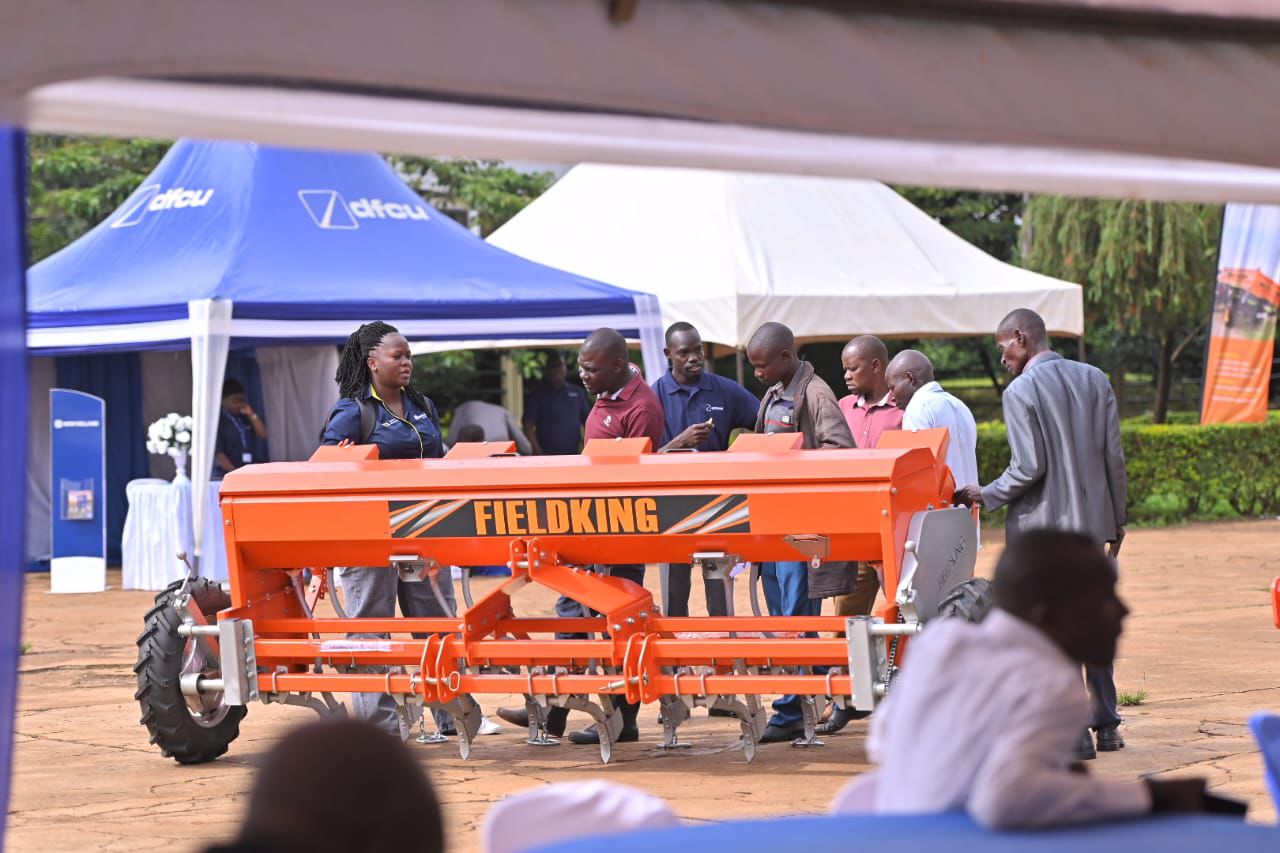
With tractor density estimated at fewer than 1.5 tractors per 1,000 hectares of arable land, much of the sector still relies heavily on manual labour. This has far-reaching implications: delayed planting cycles, limited land utilisation and post-harvest losses that can reach up to 30 percent in some value chains.
Against this backdrop, dfcu’s Vehicle and Asset Finance solution introduces a compelling value proposition. By offering up to 90 percent financing on agricultural and industrial equipment, including tractors, harvesters, irrigation systems and commercial vehicles, the bank is effectively lowering the barrier to entry for farmers and agribusinesses seeking to scale.
Annette Kiconco, dfcu’s Chief Retail Banking Officer, underscored the strategic intent, saying, “Agriculture employs over 70 percent of Uganda’s population and contributes roughly a quarter of GDP, yet remains under-mechanised. The partnership with Meta, she notes, is designed to bring financing “closer to where decisions are made.”
She ensured that capital should not be a constraint when investment opportunities arise.
A Seamless Customer Proposition
What distinguishes this partnership is its integrated approach. By combining financing with immediate access to machinery at the point of purchase, dfcu and Meta are collapsing the traditional gap between aspiration and execution.
Customers no longer need to navigate separate channels for credit and equipment procurement; instead, they encounter a unified offering tailored to their operational realities.
Meta Plant & Equipment Uganda Limited, part of a broader regional network spanning East and Southern Africa, brings to the table a portfolio of globally recognised brands such as New Holland, Dezzi and Fieldking.
Beyond the initial sale, the company’s strength lies in its aftersales ecosystem, technical expertise, spare parts availability and service support, critical factors in ensuring long-term asset performance.
For Gloria Ssuuna Namutebi, Senior Manager of Vehicle and Asset Finance at dfcu, the model is as much about sustainability as it is about access.
By requiring customers to contribute just 10 percent upfront, the financing structure preserves liquidity, allowing businesses to invest without destabilising their cash flows. Flexible repayment terms aligned to seasonal income cycles further enhance affordability, particularly for smallholder farmers.
Catalysing Value Chains in Busoga and Beyond
The Busoga sub-region offers a compelling case study for the partnership’s potential impact. With over 13,000 sugarcane outgrowers supplying multiple factories, the region represents a dense, interconnected value chain where incremental efficiency gains can yield significant aggregate benefits.
For farmers, access to tractors and modern implements translates into timely land preparation, improved yields and a more consistent supply to processing facilities.
For transporters and logistics providers, mechanisation enhances reliability and reduces turnaround times. For processors like Kakira Sugar, it ensures a steadier flow of raw materials—critical for maintaining production capacity.
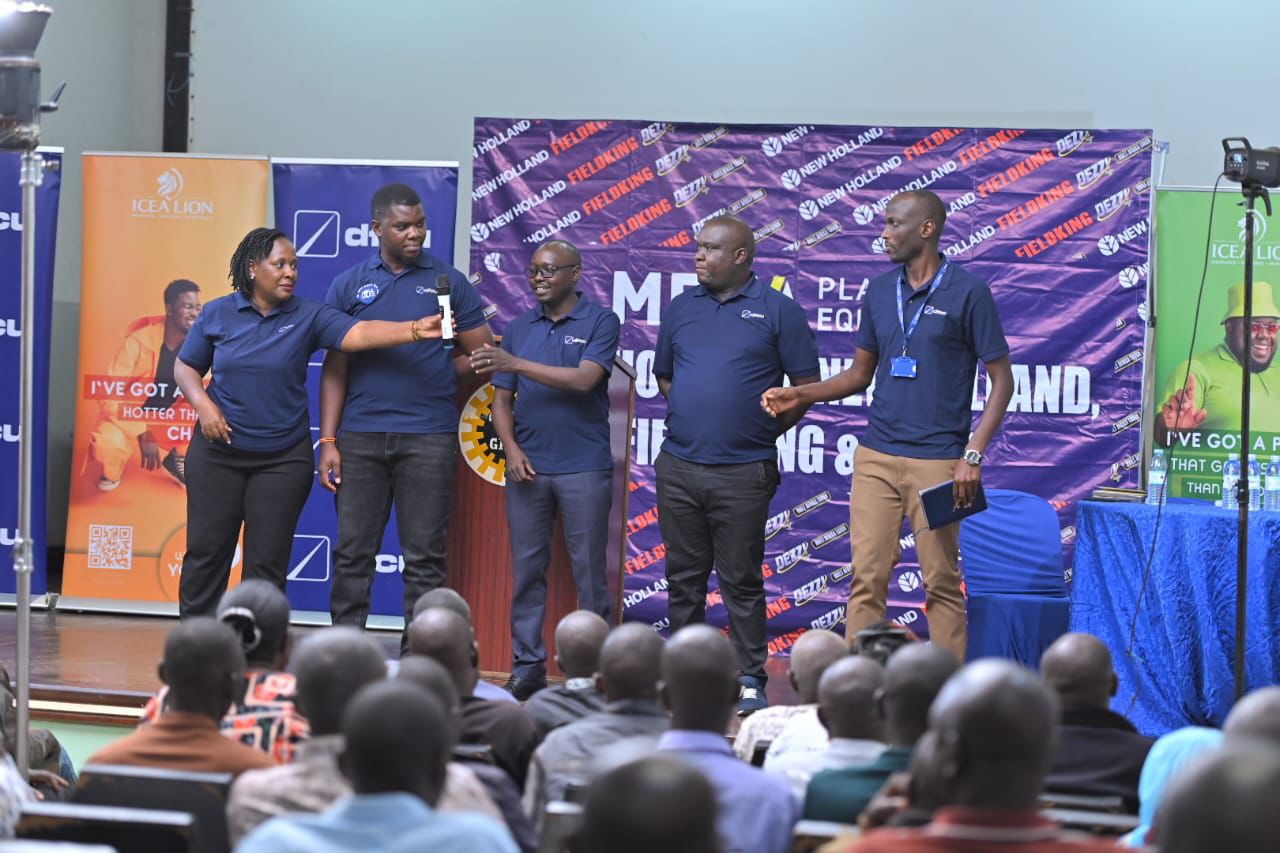
Mombwe David Christopher, Chairperson of the Busoga Outgrowers Association, captures this dynamic succinctly: mechanisation is not merely a productivity tool; it is a pathway to commercialisation. By enabling farmers to transition from subsistence to market-orientated production, the partnership is poised to reshape livelihoods across the region.
Positioning for Economic Transformation
From a broader economic perspective, the dfcu–Meta collaboration aligns with Uganda’s long-term development agenda, which prioritises industrialisation, value addition and export growth. By strengthening the agricultural base through mechanisation, the partnership contributes to a more resilient and competitive economy.
It also reinforces dfcu Bank’s evolving role as an ecosystem builder. Rather than operating solely as a lender, the bank is increasingly positioning itself as a facilitator of end-to-end solutions, connecting capital, technology and markets in ways that drive tangible outcomes.
As Uganda seeks to modernise its agricultural sector, partnerships of this nature will likely become more central to the development playbook. The integration of financing with real-economy assets offers a scalable model, one that not only addresses immediate productivity gaps but also lays the groundwork for sustained growth.
In that sense, the dfcu–Meta partnership is not just about tractors and machinery. It is about redefining access, accelerating transformation and, ultimately, financing the future of Uganda’s most vital sector.