
We have enough fuel in the country – energy ministry, UNOC insist
Between early May and June, Uganda expects deliveries of 183 million litres of petrol, 258 million litres of diesel, and 23 million litres of jet fuel via regional supply routes, including Kenya’s Indian Ocean gateway and Tanzanian ports.
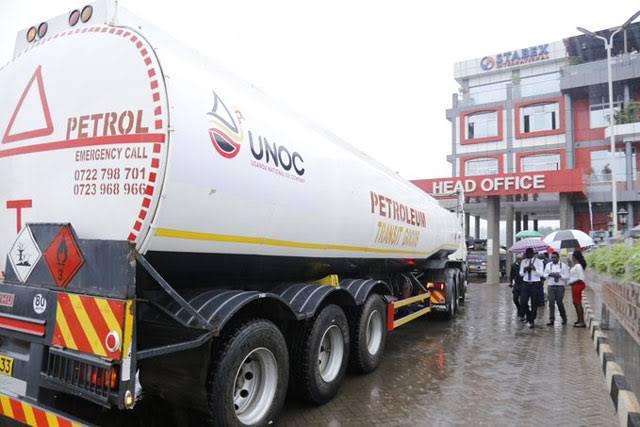
Uganda’s energy authorities have moved to calm market jitters, affirming that the country’s fuel supply remains robust despite isolated shortages and price fluctuations in some regions.
In a joint statement issued on April 21, the Ministry of Energy and Mineral Development and the Uganda National Oil Company said current petroleum stock levels and incoming shipments are sufficient to guarantee national supply in the near to medium term.
As of April 20, Uganda held 70.5 million litres of petrol, equivalent to 19 days of consumption, alongside 43.2 million litres of diesel (12 days) and 32 million litres of jet fuel, which translates to a significantly longer 53-day cover.
Officials described these levels as “within operational thresholds,” underscoring the resilience of the country’s fuel reserve management system.
More critically for market confidence, authorities pointed to a strong inflow pipeline.
Between early May and June, Uganda expects deliveries of 183 million litres of petrol, 258 million litres of diesel, and 23 million litres of jet fuel via regional supply routes, including Kenya’s Indian Ocean gateway and Tanzanian ports.
These shipments will extend fuel cover by an additional 49 days for petrol, 74 days for diesel, and 37 days for jet fuel, effectively reinforcing supply buffers well into mid-year.
The coordinated logistics effort, led by UNOC in partnership with licensed Oil Marketing Companies and regional suppliers, highlights the increasing sophistication of Uganda’s downstream petroleum supply chain.
Industry observers note that such forward planning is critical for a landlocked economy heavily dependent on regional transit corridors.
However, the statement also acknowledged operational frictions at the retail level.
Some filling stations have recently experienced stockouts, attributed not to national shortages but to distribution inefficiencies among individual oil marketers.
Similarly, pump prices have edged upward in border towns such as Arua and Tororo, driven largely by heightened cross-border demand, a recurring dynamic in frontier markets.
Authorities signaled a more assertive regulatory stance where necessary. Oil Marketing Companies have been engaged in cases of what officials termed “unjustified” price increases, reflecting government efforts to curb opportunistic pricing while maintaining a liberalized fuel market structure.
Beyond domestic factors, officials cautioned that pump prices remain sensitive to global oil market trends, currency movements, and geopolitical developments. Still, the government emphasized that it is actively monitoring these variables to keep price volatility within manageable bounds.
The overarching message to consumers and businesses is one of reassurance. With adequate stocks, confirmed incoming supplies, and ongoing oversight of distribution and pricing, Uganda’s fuel market is positioned to remain stable.
Authorities urged the public to avoid panic buying, reiterating that there is no immediate risk to national fuel availability.
The statement was jointly signed by Dr. Patricia Litho of the Energy Ministry and Tony Otoa, head of corporate affairs at UNOC, reinforcing a unified government-industry front on energy security and market transparency.