
Why Uganda’s bet on indigenous science defines our liberation and future
The future will not be kind to those who doubted their own capacity to create. The 21st century will belong to those who own the patents, the platforms, and the production lines. Uganda has chosen its path. We are no longer content to import solutions; we are determined to invent them.

By Eng Jonard Asiimwe
The history of global power is not written in the ink of diplomacy, but in the alchemy of innovation and the audacity of nations to back their own genius. For centuries, the African continent has been relegated to the periphery of the global value chain acting as a mere laboratory for foreign experiments and a marketplace for finished products conceived elsewhere. Today, Uganda stands at a historic crossroads, daring to shatter this cycle of dependency by placing science, technology, and indigenous innovation at the absolute center of our national transformation. To view this bold leap through the narrow lens of skepticism is to misunderstand the very nature of statecraft in the 21st century.
I write not merely as a political actor, but as a student of science policy, a steward of public trust, and a believer in Africa’s intellectual destiny. The question before us is not whether skepticism is necessary in science; it is. The real question is whether cynicism, especially when directed at our own innovators, is a substitute for nation-building. It is not. It never has been. Across centuries, no nation has risen by ridiculing its inventors. Progress is born not from contempt, but from calibrated belief-belief disciplined by empirical validation, yet animated by ambition.
We must recognize that the path to industrialization is never paved with timidity. Scientific revolutions are not linear; they are iterative, nonlinear, and often born at the intersection of uncertainty and daring investment. The modern knowledge economy is built not merely on capital, but on intellectual property, laboratory ecosystems, and translational research pipelines that convert theory into application. Every Great Power from the state-backed semiconductor push in East Asia to the billions in federal R&D grants that seeded Silicon Valley- achieved dominance by placing strategic, long-horizon bets on science. Uganda’s pivot is therefore not experimental in a vacuum; it is historically consistent with the trajectories of all technologically sovereign states.
In Uganda, our transition from a subsistence economy to a modern, knowledge-based society necessitates a radical departure from the “safe” economics of the past. Agriculture alone, while foundational, cannot carry us into the fourth industrial revolution. We are now deliberately positioning ourselves within high-value sectors; biotechnology, pharmaceuticals, artificial intelligence, advanced manufacturing, and clean energy systems. According to the Uganda Bureau of Statistics, the contribution of industry to GDP has steadily increased, now hovering around 27%, with manufacturing alone contributing approximately 9 -10%. This structural shift is not accidental; it is policy-driven, science-enabled transformation.
I find it necessary, therefore, to assert that Uganda stands at a delicate but defining threshold: a transition from a consumer of global science to a contributor within it. That transition is inherently messy, experimental, and at times uncomfortable. But it is indispensable. To dismiss this entire ecosystem as fraudulent is not only intellectually deficient; it is scientifically illiterate.
Let us ground ourselves in verifiable scientific progress. Uganda’s investment in research and development, though still modest at approximately 0.4% of GDP, has been strategically targeted. The National Development Plan III explicitly prioritizes science, technology, and innovation as a driver of socio-economic transformation, with a clear roadmap toward increasing this to 1% of GDP. More importantly, this investment is being channelled into mission-oriented research; health security, agro-biotechnology, and industrial innovation.
Institutions such as the Joint Clinical Research Centre have not only contributed to HIV/AIDS treatment but have also been central to clinical trials for antiretroviral therapies used globally. Uganda’s HIV prevalence, once at crisis levels in the 1990s, has stabilized at approximately 5.1–5.5%, with over 1.3 million people currently on life-saving antiretroviral therapy. This is the outcome of sustained scientific intervention, not rhetoric. The Uganda Virus Research Institute continues to be a continental leader in virology, having participated in over 20 international vaccine trials, including for Ebola, Marburg, and COVID-19. Uganda’s Ebola response, particularly during the 2022 Sudan strain outbreak, demonstrated rapid genomic sequencing capabilities and locally coordinated surveillance systems – hallmarks of a maturing scientific infrastructure.
Beyond health sciences, Uganda is making tangible strides in applied engineering and industrial innovation. Kiira Motors Corporation has moved from conceptual prototypes to the production of electric buses such as the Kayoola EVS, with plans to scale production capacity to over 5,000 vehicles annually at the Jinja Industrial Park. This is not merely about vehicles; it is about battery technology, local supply chains, and the development of an electric mobility ecosystem. Similarly, the National Agricultural Research Organisation has developed drought-resistant crop varieties, including improved cassava and banana strains, which are already enhancing food security and farmer incomes in climate-vulnerable regions.
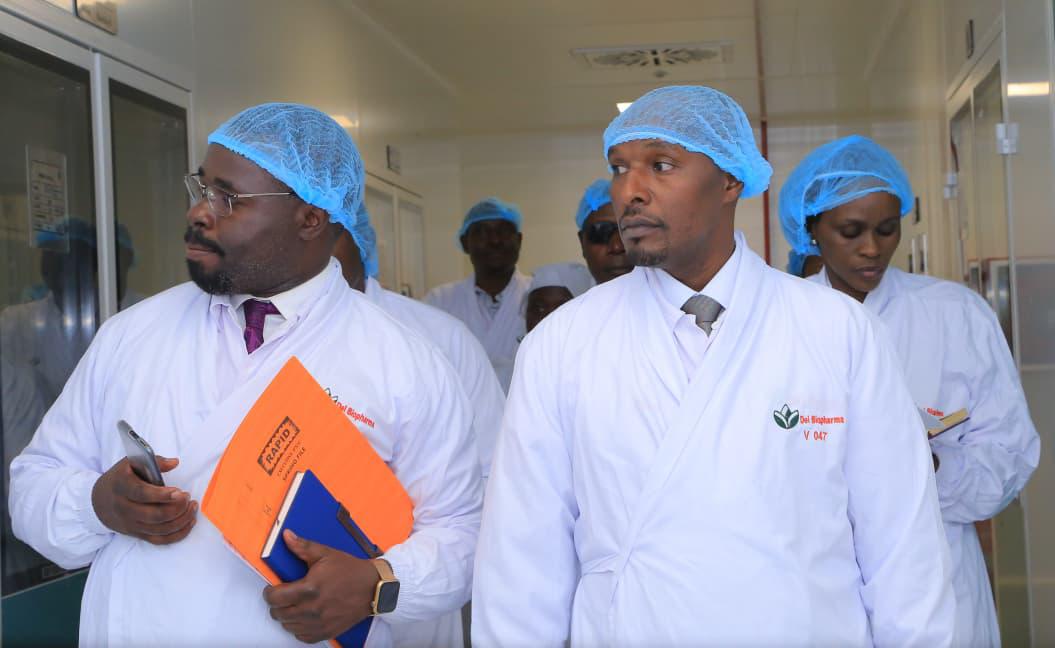
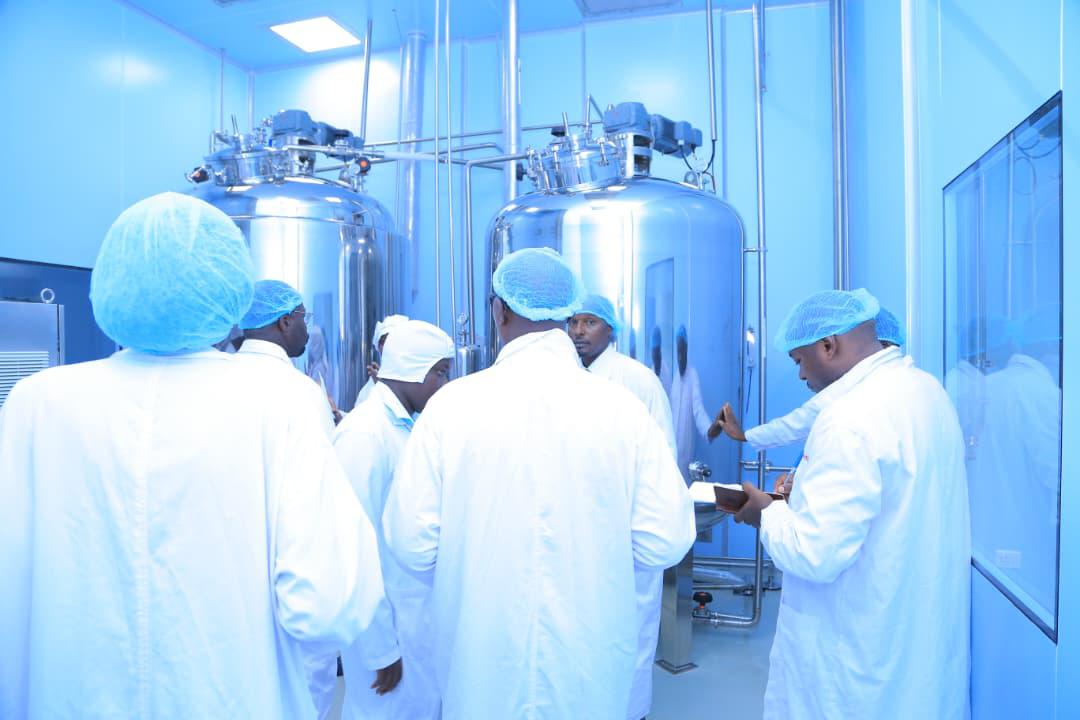
In pharmaceuticals, Uganda’s ambition to produce Active Pharmaceutical Ingredients (APIs) locally represents a strategic leap. Currently, Africa imports over 95% of its medicines and nearly all of its vaccine inputs. Uganda spends hundreds of millions of dollars annually on pharmaceutical imports. This is not just an economic inefficiency; it is a national security risk. The push toward local production of vaccines, including mRNA-based platforms, positions Uganda within a new frontier of precision medicine. Early-stage collaborations between Ugandan scientists and international research consortia are already exploring genomic medicine tailored to African populations, addressing diseases that have historically been under-researched due to lack of commercial incentives.
The expansion of Presidential Industrial Hubs, now operational across multiple regions, is equipping thousands of young Ugandans with practical skills in welding, carpentry, electronics, and textile manufacturing. Each intake trains approximately 5,000 youth, creating a pipeline of technically competent individuals who can participate in industrial production. This is complemented by the growth of innovation hubs such as the National ICT Innovation Hub and university-based incubators, which are nurturing startups in fintech, health-tech, and agri-tech. Uganda’s digital economy is expanding, with mobile money transactions alone exceeding UGX 150 trillion annually; an indicator of technological adoption and innovation capacity.
The strategic investment in home-grown scientific enterprises is not an act of blind faith; it is a calculated move toward technological sovereignty. Scientific ecosystems do not emerge organically in developing economies; they are built through deliberate policy, sustained funding, and institutional support. The concept of “National Champions” is therefore not ideological; it is pragmatic. By concentrating resources in high-impact ventures, the State creates anchor institutions that catalyse broader ecosystems, from supply chains to research collaborations.
However, prudence demands balance. Uganda’s innovation strategy must continue to evolve toward a diversified portfolio, supporting flagship projects while simultaneously nurturing a broad base of startups and academic research. This dual approach increases resilience and accelerates discovery. The introduction of competitive research grants, public-private partnerships, and venture financing mechanisms will be critical in deepening this ecosystem.
Equally important is the architecture of accountability. The establishment of Science Audit Review Committees, peer review systems, and performance-based funding frameworks ensures that public investment is aligned with measurable outcomes. Uganda is increasingly adopting global best practices in research governance ethical review boards, clinical trial protocols, and data transparency standards. These mechanisms are not constraints; they are enablers of credible science.
Fraud thrives in opacity. Science thrives in reproducibility.
To equate ambition with deception is to misunderstand the scientific method itself. Every breakthrough from CRISPR gene editing to mRNA vaccines was once a hypothesis subjected to skepticism. The difference between failure and success is not the absence of doubt, but the presence of structured validation systems.
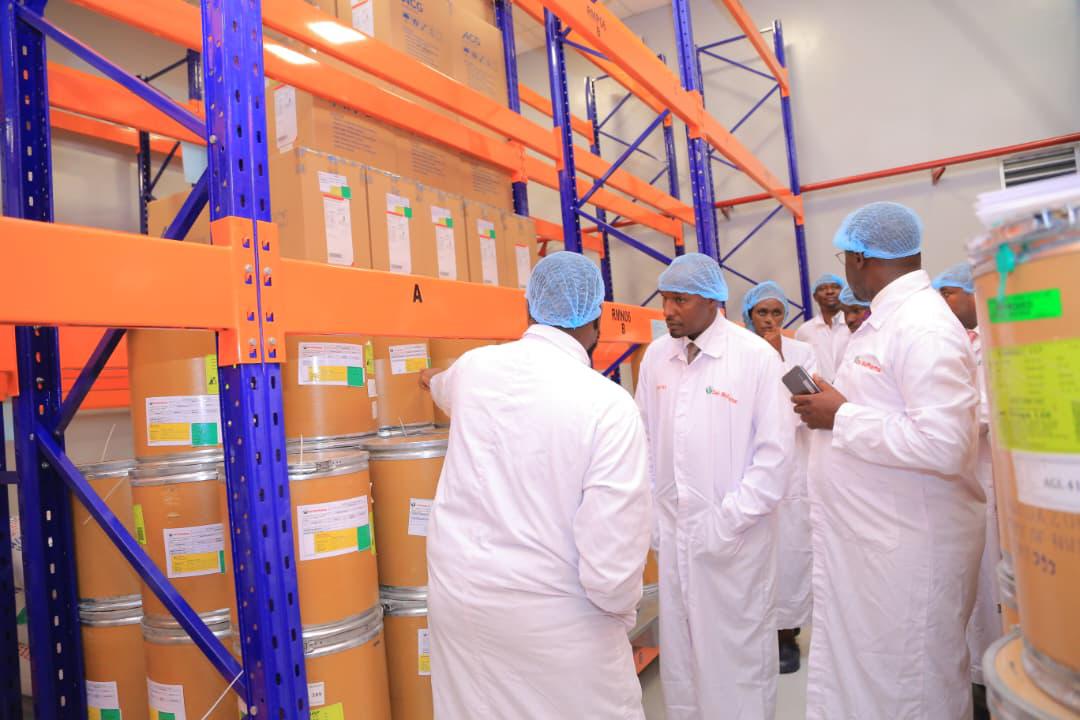
We must also confront the geopolitical realities of science. Global pharmaceutical markets are dominated by a handful of multinational corporations with significant influence over pricing, patents, and supply chains. Africa’s dependence on these systems has historically limited access to life-saving medicines. Uganda’s push for local production is therefore not merely economic; it is a declaration of sovereignty.
The emergence of indigenous innovation from electric mobility to biotechnology signals a deeper transformation. It reflects a nation beginning to trust its own intellectual capital. This is the foundation of true independence in the 21st century.
As Pan-Africanists, we must reject the reflex to undermine our own progress. Constructive criticism is essential, but it must be anchored in evidence, not cynicism. The data is clear: Uganda’s scientific capacity is growing, its institutions are strengthening, and its innovation ecosystem is expanding.
The question is not whether challenges exist; they do. The question is whether we have the courage to confront them while continuing to build.
I choose to stand on the side of constructive patriotism. I believe in a Uganda where a scientist in Ntungamo, a researcher in Kampala, or an innovator in Mbarara is given not blind trust, but a fair, structured, and well-funded opportunity to contribute to national development. I believe in an Africa that funds its own research, protects its intellectual property, and competes on the global stage.
The future will not be kind to those who doubted their own capacity to create.
The 21st century will belong to those who own the patents, the platforms, and the production lines. Uganda has chosen its path. We are no longer content to import solutions; we are determined to invent them.
This is not merely policy. It is a scientific renaissance.
And in this renaissance, belief is not a weakness; it is a strategic imperative.
We choose to believe.
We choose to build.
We choose to lead.
The writer is the National Vice Chairperson NRM Western Region, and CEO Jonard Conglomerate Investments Ltd.
Contact: princeasiimwe12@gmail.com