Too Few Midwives, Too Many Patients: How staff shortages are affecting Uganda’s mothers
According to Nsiimire, a single health worker may be required to conduct tests, provide nursing care, counsel patients, dispense medicines and enter patient records into the system, making the workload difficult to manage.
By Paul Tentena and Shabella Koshaba
Melon Amumpaire is an expectant mother who goes to Mbarara City Health Centre IV to do her routine antenatal checkups.
Amumpaire, a resident of Kakoba within Mbarara City, says she gets irritated when she goes to the health centre and endures long queues before being attended to – seeing a doctor.
“Sometimes I have to wait for a long time before I am attended to during antenatal visits. There are usually many pregnant women seeking services, while the number of nurses and midwives is limited.
“This makes me worried about whether I will receive immediate attention when I go into labour or when I have an emergency. I believe recruiting more midwives and nurses would reduce waiting times and ensure that pregnant women receive timely and adequate care,” she says.
The same issue is what Mariam Nansubuga, another expectant mother receiving antenatal care at Kawempe National Referral Hospital faces.
“I came early because I wanted to be attended to early, but there were already many mothers waiting. Sometimes you have to sit for a long time before you are attended to even when you have labour pain,” notes Nansubuga.
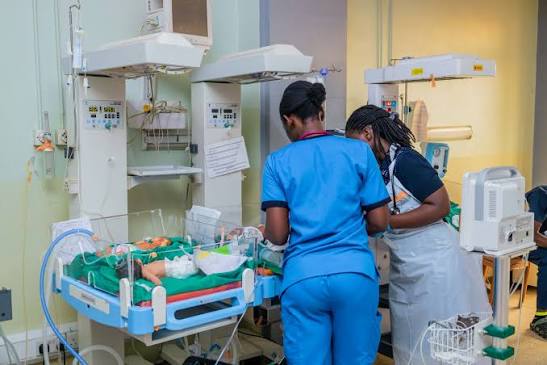
Emily Nsiimire, a nurse at Mbarara Regional Referral Hospital, says the long waiting hours patients endure is usually due to shortage of health workers which significantly increases the workload among the available staff, forcing some to perform duties meant for several people.
“Here you find one person does the work for two to three people,” she says. She explained that during a cardiology clinic on Fridays, more than 100 patients could be attended to by only two health workers.
This forces staff to work extra shifts and remain at the hospital beyond their normal working hours.
“Instead of finishing the work at lunchtime, I stretch to evening hours, or sometimes leave the hospital around 9 p.m.,” she adds.
According to Nsiimire, a single health worker may be required to conduct tests, provide nursing care, counsel patients, dispense medicines and enter patient records into the system, making the workload difficult to manage.
She adds the heavy workload also causes physical, emotional and mental fatigue among health workers, which can affect their ability to provide safe care.
“The person is working too much and is almost breaking down because the work is too much,” she says before adding that a job meant to be done by several people can sometimes fall on one health worker.
She recalls witnessing a nurse giving wrong medicine to a patient after working both day and night shifts.
“Because of shortage of health workers, she had to also worked during day, and the patient collapsed because he had not even eaten anything, so the nurse did not give good directives,” she recounts.
“The biggest challenge is the workload. Some days there are many patients who need attention, but the number of nurses available during a shift is sometimes not enough and this very hectic for us,” says Sarah Namukasa, another nurse who works at Kawempe National Referral Hospital.
Joseph Okello, who also works at Kawempe National Referral Hospital as a nurse, adds understaffing sometimes means health workers have to prioritize patients based on the urgency of their conditions.
“When the ward is very busy, we have to prioritize emergencies. Other patients may have to wait, even when they have been waiting for some time.”
Jovinta Atuhaire, a resident of Irembezi in Bushenyi District, who delivered her first baby at Bushenyi Health Centre IV, says she also experienced long waiting hours before being attended to.
“I delivered my baby at Bushenyi Health Centre IV and although I received the care I needed, I experienced long waiting times because there were many mothers and few health workers available.
“The nurses and midwives were attending to several patients at the same time, which made me anxious, especially during labour. I believe having more nurses and midwives would reduce the waiting time and allow mothers to receive more attention and better care,” says Atuhaire.
Patients’ Satisfaction and Quality of Care
The shortage of health workers also affects patients’ satisfaction and the quality of care, according to Nsiimire. She says health workers often have limited time to listen to patients because of long queues and high numbers of people seeking treatment.
“Patients will come when they need more time with the doctors, and in this case the doctor will have no time to listen to the patients’ concerns because the line of patients is too long and the patients are many,” she stresses.
Nsiimire says overcrowding can lead to long waiting times and rushed care. “Patients will be required to wait for so long. There is rushed care, like we don’t give good quality care because we are running after this person to this person,” she says.
Nsiimire further raised concerns about infection transmission, saying that fatigue and pressure can contribute to poor practices, including health workers using the same gloves on different patients, potentially transmitting infections from one patient to another.
Sarah Ikoru, who works at Mulago National Referral Hospital, says they face a lack of midwives in the wards where women give birth.
“Almost 50 children are born in a day, but because the midwives are not enough, the workload becomes too much on an individual.
“You have to compensate for the work of three persons at the same time, and it is only one person performing it. Sometimes, the long working hours really affect someone to continue working at night, so it slows down how you function as a human being,” says Ikoru.
Priscilla Nambi, a midwife at Mulago National Referral Hospital, adds that as nurses and midwives, they try their best to give quality care to expectant mothers.
However, she says the number of health workers is often not enough for the large number of patients who come to the hospital.
According to her, it means one nurse or midwife may have to attend to several mothers at the same time, making the workload very heavy.
She explains that although they are committed to ensuring safe deliveries and proper care before, during, and after childbirth, the shortage of staff makes their work more difficult and can affect how quickly patients receive attention.
Ministry of Health Response
Emmanuel Ainebyona, the outgoing Ministry of Health spokesperson, says shortage of health workers is sometimes caused as a result of underfunding of the wage bill, districts being slow to recruit and returning unspent wages to the consolidated fund, brain drain to NGOs/private sector and abroad who pay better, and a growing high population growth rate of 3.02% per year.
The Ministry of Health Director General of Health Services, Dr. Charles Olaro, who replaced Dr. Henry Mwebesa in May 2025, wondered how a consultant, whose salary had been enhanced to Ush 12 million, was turning up for duty for only eight days in a month.
“One of the consultants was showing up for duty only eight days a month… This is the consultant whose salary has been enhanced to Shs12m… Can you do that in a private facility? Why would you do that in a government hospital and get away with it?”
Uganda’s approved employment structure for health workers is 154,190 positions, with only 48,113, representing about 31%, filled and 69% vacant as of December 2024.
This Financial Year 2026/27, Parliament of Uganda approved a Ushs 132.6 billion budget funding for the recruitment of 16,963 health workers.
According to the Ministry of Health assessment that was carried out in 2024, Uganda required approximately 342,832 health workers against about 155,000, giving an estimated gap of 187,000 health workers.
Uganda’s current National Development Plan IV (NDP IV) Human Resource Development Plan covers 2025/26–2029/30, providing a five-year planning framework for developing the country’s human resources.
It identifies continuing shortages in several health professions, including midwifery, specialist doctors and Anesthesia doctors among others.