BoU Chief warns against central bank dependence for Shilling stability
When importers compete for a limited supply of dollars, the resulting pressure is transmitted to the exchange rate, increasing the cost of importing goods and potentially feeding into domestic prices.
By David Basekke
Bank of Uganda Governor Dr Michael Atingi-Ego has warned that the central bank cannot indefinitely defend the Uganda Shilling against depreciation, arguing that lasting currency stability will depend on Uganda’s ability to generate more foreign exchange through exports, tourism, domestic production and industrialisation.
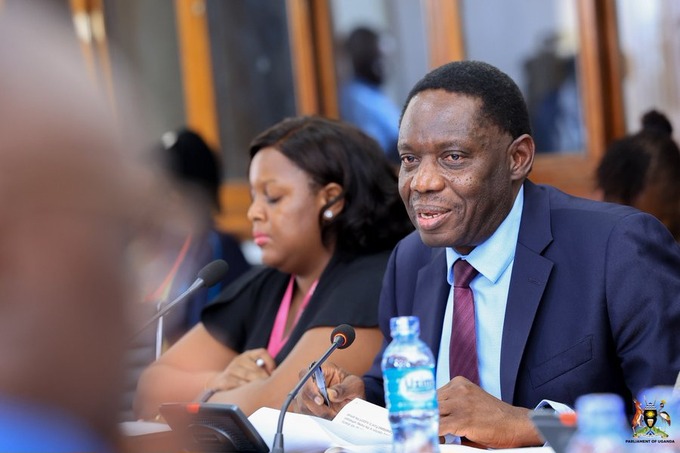
Appearing before Parliament’s Committee on Commissions, Statutory Authorities and State Enterprises (COSASE) on Tuesday, November 10, 2026, Atingi-Ego said the central bank could intervene to moderate sharp exchange-rate movements but could not sustainably compensate for persistent weaknesses in the country’s foreign-exchange earnings.
He cautioned that repeatedly selling dollars from the country’s foreign-exchange reserves to support the Shilling would gradually erode the financial buffers Uganda needs to meet external obligations, finance essential imports and withstand international economic shocks.
“Bank of Uganda can only handle this thing in the short term. We can only try to stabilise the currency in the short term, but it is not sustainable,” Atingi-Ego told MPs.
His warning places renewed scrutiny on Uganda’s external economic position, particularly the widening gap between foreign currency earned through exports and services and the dollars required to finance imports, service external obligations and support domestic economic activity.
The Governor attributed the recent depreciation to a combination of reduced foreign-exchange inflows, higher import costs, declining tourism receipts, increased debt-servicing requirements and geopolitical tensions that have disrupted international trade and financial markets.
He explained that these pressures had weakened Uganda’s current-account position, creating an imbalance between the supply of foreign currency and demand from businesses, government and investors.
Atingi-Ego told the committee that Uganda had experienced a substantial deterioration in its external accounts following disruptions to some of its traditional foreign-exchange sources.
He cited health-related concerns that prompted some countries to issue travel advisories against Uganda, affecting international tourist arrivals and the sector’s contribution to foreign-exchange earnings.
Although he did not provide a statistical breakdown or specify the comparison period, the Governor estimated that tourist arrivals had declined by more than 30 per cent, reducing receipts from accommodation, transport, hospitality and other tourism-related services.
Tourism is an important source of foreign exchange for Uganda, alongside merchandise exports, remittances, foreign direct investment and other services.
The sector’s vulnerability to travel advisories, health emergencies and international perceptions of destination safety illustrates the risks of relying on foreign-exchange earnings that can quickly deteriorate when external circumstances change.
The Governor also pointed to geopolitical tensions in the Middle East and disruptions affecting international shipping routes, particularly around the Strait of Hormuz, as additional sources of pressure.
He said higher freight charges, shipping insurance premiums and transportation costs increased the amount of foreign currency Ugandan importers needed to purchase the same quantities of goods.
The impact is particularly significant for an import-dependent economy such as Uganda, where petroleum products, machinery, industrial inputs, pharmaceuticals and other essential commodities require substantial foreign-exchange payments.
When importers compete for a limited supply of dollars, the resulting pressure is transmitted to the exchange rate, increasing the cost of importing goods and potentially feeding into domestic prices.
Atingi-Ego told MPs that the deterioration in Uganda’s external position involved several components, including an estimated US$500 million gap in merchandise trade and a US$900 million shortfall in services, including tourism and insurance.
“The balance of trade, the difference between exports and imports, there was a gap of about 500 million dollars created. Then, in terms of services, including insurance and tourism, we had a shortfall of about 900 million dollars,” he said.
He further cited approximately US$400 million in additional debt-servicing pressure.
These figures, however, require further clarification from the central bank, particularly regarding the accounting periods, the distinction between the current account and broader external financing requirements, and whether the amounts represent annual or period-specific changes.
The distinction matters because the current account captures trade in goods and services, primary income and transfers, while repayment of external loan principal is recorded in the financial account rather than the current account. Interest payments, unlike principal repayments, are recorded under primary income.
The Governor said the central bank faced a difficult policy choice: release foreign currency from its reserves to meet excess demand in the market or allow the Shilling to adjust until demand and supply reached a new equilibrium.
He said the Bank of Uganda had opted against extensive intervention because the country’s reserves also serve critical national financing and economic stability functions.
According to Atingi-Ego, Uganda’s foreign-exchange reserves stood at approximately US$6.7 billion at the time of the developments he was explaining.
He disclosed that government requires approximately US$1.55 billion annually to meet debt-servicing obligations and another US$450 million to US$500 million for government imports.
This places the annual foreign-exchange requirements for the two categories at approximately US$2 billion, much of which is facilitated through the central bank.
“If you are preserving two billion dollars for government obligations, and then you want to be intervening in the market as well, you are going to burn your reserves,” he said.
The Governor used the example of a shortage of matooke in a market to explain the exchange-rate dynamics, arguing that when demand remains relatively constant but supply declines, prices inevitably increase.
The same principle, he said, applies to the dollar: when foreign-exchange earnings decline while demand for imports and other external payments remains high, the price of foreign currency rises against the Shilling.
The International Monetary Fund’s July 2026 assessment provides additional context to the pressures facing Uganda’s external sector.
The IMF reported that gross international reserves stood at US$6.1 billion at the end of May 2026, equivalent to approximately 2.7 months of imports of goods and services.
It also identified increased private-sector imports of capital goods, higher gold imports and a wider services-account deficit among the factors contributing to external-sector pressures.
The difference between the IMF’s May reserve figure and the US$6.7 billion cited by the Governor should be reconciled against the respective reporting dates and reserve definitions rather than treated as a contradiction.
The reserve position is important because foreign-exchange buffers help a country meet international payment obligations, manage external shocks and maintain confidence in its financial system.
However, preserving reserves also means accepting some exchange-rate flexibility when market conditions deteriorate.
Atingi-Ego also attributed part of the Shilling’s depreciation to developments in the United States, where higher returns on dollar-denominated financial assets encouraged international investors to reconsider their holdings in emerging and frontier markets.
He said some non-resident investors holding Uganda government securities began selling their Shilling-denominated investments and converting the proceeds into dollars, adding pressure to the local foreign-exchange market.
The Shilling consequently weakened to approximately Shs4,000 per US dollar before depreciating further to nearly Shs4,500.
To contain the pressure, the Bank of Uganda tightened monetary conditions by withdrawing liquidity from the domestic financial system and making access to central bank financing more expensive for commercial banks.
One of the measures was increasing the Cash Reserve Ratio (CRR) from 11 per cent to 13.5 per cent.
The CRR is the proportion of commercial banks’ deposit liabilities that they are required to maintain as reserves at the central bank. Increasing the ratio reduces the funds banks have available for lending and other transactions.
Atingi-Ego said the adjustment withdrew approximately Shs1.3 trillion from the financial system.
The central bank also raised its Central Bank Rate (CBR) by 225 basis points, from 9.75 per cent to 12 per cent, on October 14, 2026, increasing the cost of accessing liquidity facilities and signalling a tighter monetary policy stance.
The measures were intended to reduce excess Shilling liquidity, moderate speculative pressure on the exchange rate and make domestic financial assets more attractive to investors.
The Governor said the adjustments contributed to higher yields across the government securities market, helping to attract foreign investors back into Uganda’s treasury bills and bonds.
He cited a recent government securities auction in which government offered Shs1.4 trillion, with offshore investors purchasing securities worth more than Shs200 billion.
The renewed participation generated additional foreign-exchange inflows as investors converted dollars into Shillings to acquire domestic government securities.
Atingi-Ego said the combined effect of tighter monetary conditions and renewed investor inflows helped the Shilling recover from nearly Shs4,500 to approximately Shs4,050 per dollar by the end of the previous week.
However, the currency subsequently weakened slightly to approximately Shs4,102 per dollar at the time of his appearance before COSASE.
The Governor disclosed that he had arrived late for the parliamentary engagement because he had been attending a financial-market monitoring meeting to assess developments in the exchange rate and determine whether further intervention was necessary.
While the return of offshore investors provided some relief, it also highlighted the vulnerability of the Shilling to movements in international financial markets.
Portfolio investments can provide useful foreign-exchange inflows and support government financing, but they are not necessarily permanent sources of capital. Investors can quickly withdraw funds when interest-rate differentials, global risk perceptions or domestic economic conditions change.
Consequently, a currency recovery driven partly by short-term portfolio inflows should not be confused with a fundamental improvement in export capacity or the country’s ability to generate foreign exchange.
The Governor’s explanation also exposes the difficult balance between stabilising the currency and protecting domestic businesses and households from the consequences of tighter monetary policy.
Higher interest rates can help contain inflationary pressures and support the Shilling by reducing excess liquidity and improving the relative attractiveness of domestic financial assets.
However, they can also increase commercial lending rates, raise the cost of working capital and make borrowing more expensive for businesses seeking to expand production.
Small and medium-sized enterprises, manufacturers, farmers and other businesses dependent on bank financing could face additional pressure, particularly where they rely on imported machinery, raw materials and production inputs.
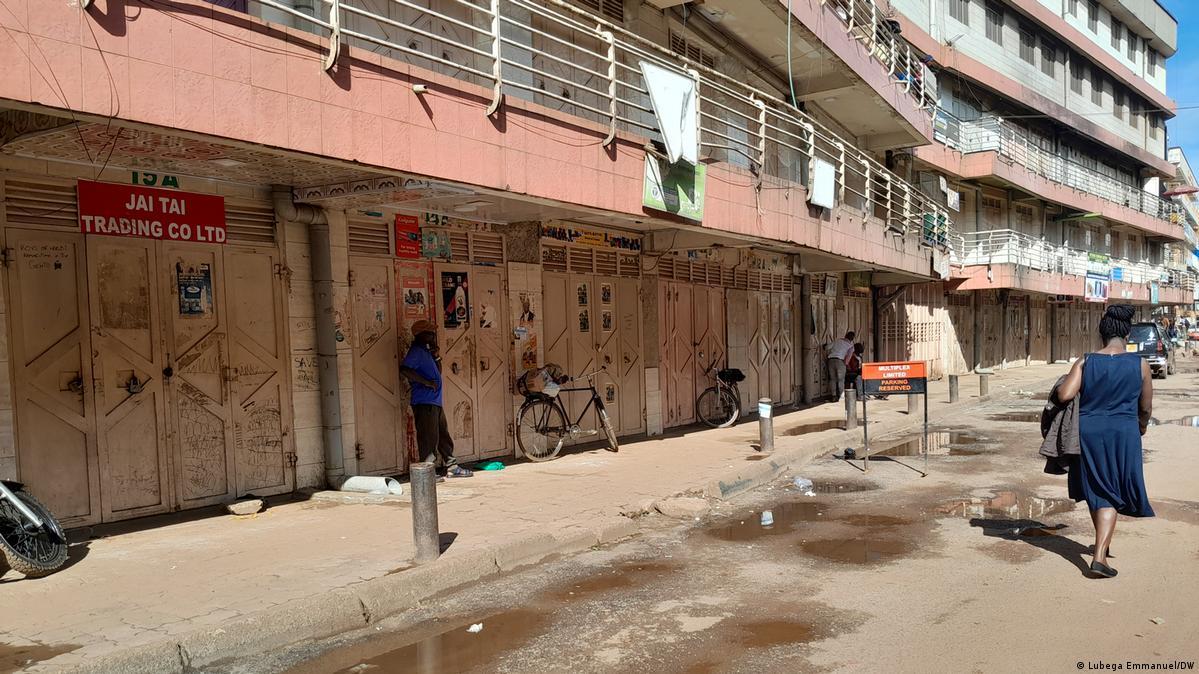
The implications extend beyond the financial sector. A persistently weak Shilling increases the domestic cost of imported fuel, medicines, fertilisers, machinery and industrial inputs. These costs can ultimately be passed on to consumers through higher prices for goods and services.
The latest monetary policy developments illustrate the challenge.
On November 9, 2026, the Bank of Uganda maintained the CBR at 12 per cent, while widening its policy-rate band from plus or minus two percentage points to plus or minus three percentage points to support tighter Shilling liquidity.
The decision came as annual headline inflation increased to 5.8 per cent in October, up from 4.6 per cent in September, while core inflation reached 4.4 per cent.
The Bank also revised its 2026/27 economic growth forecast downwards to between 5.5 and six per cent, citing tighter financial conditions, geopolitical uncertainty, elevated energy prices and the effects of earlier drought conditions.
This presents a difficult policy environment in which the central bank must contain inflation and exchange-rate volatility without excessively constraining credit, investment and economic activity.
The policy challenge is particularly relevant to Uganda’s development ambitions, which require affordable financing for productive enterprises, infrastructure, agriculture and industrialisation.
Beyond the immediate monetary interventions, Atingi-Ego urged Parliament to press government to accelerate implementation of the Tenfold Growth Strategy, arguing that expanding domestic production and value addition would provide a more sustainable foundation for exchange-rate stability.
The strategy identifies four priority growth areas: agro-industrialisation, tourism development, mineral-based industrialisation, including oil and gas, and science, technology and innovation.
The objective is to expand the productive capacity of the economy, increase exports, create employment and grow the economy towards US$500 billion by 2040.
Atingi-Ego argued that Uganda must move beyond exporting predominantly raw or minimally processed commodities and develop industries capable of capturing a larger share of the value generated from its natural and agricultural resources.
For example, processing agricultural produce locally, developing mineral-refining capacity, expanding manufacturing and strengthening tourism services could increase foreign-exchange earnings while creating jobs and supporting domestic enterprises.
“If there’s any appeal I’m going to make to the Honourable Members of Parliament, can you press the government to make sure that the tenfold growth strategy is implemented in order to create sustainability in our current account balance and stability of our currency?” he asked.
The strategy is aligned with the Fourth National Development Plan (NDP IV), covering the 2025/26–2029/30 financial years, which prioritises value addition, private-sector development, productive infrastructure, higher household incomes and sustainable industrialisation.
The National Planning Authority identifies the plan as the first of three successive five-year development plans intended to deliver Uganda’s tenfold economic growth ambition.
However, achieving the strategy’s objectives will require more than policy declarations and sectoral investment targets.
It will depend on reliable electricity, affordable long-term financing, efficient transport infrastructure, access to regional and international markets, predictable taxation, improved agricultural productivity and a business environment capable of attracting sustained private investment.
Government will also need to address the structural challenges that constrain domestic production, including high production costs, limited industrial capacity, inadequate access to finance, post-harvest losses and dependence on imported inputs.
Uganda’s ability to earn more foreign exchange will ultimately depend on whether its productive sectors can consistently supply competitive goods and services to domestic, regional and international markets.
Responding to the Governor’s presentation, COSASE Chairperson Muwada Nkunyingi called on the central bank to use all available measures within its mandate to stabilise the prevailing economic situation.
Nkunyingi had earlier raised concerns about the rising dollar rate and its implications for the cost of living, asking the central bank to explain the prospects of containing inflation and stabilising commodity prices.
The parliamentary engagement brings into focus the complementary responsibilities of monetary and fiscal authorities in safeguarding economic stability.
Under Article 162 of the Constitution, the Bank of Uganda is responsible for functions that include formulating and implementing monetary policy, issuing currency and managing the country’s foreign-exchange reserves. The central bank’s mandate also includes promoting price stability and maintaining a sound financial system.
While the Bank has operational responsibility for monetary policy, the broader structural conditions affecting foreign-exchange generation fall substantially within the responsibilities of government ministries, departments, agencies and the productive private sector.
Parliament, through its oversight and budgetary functions, has a role in examining whether public expenditure, borrowing, investment incentives and sectoral programmes are aligned with the country’s economic transformation objectives.
The Public Finance Management Act, 2015, also provides a framework for fiscal discipline, public debt management and accountability in the use of public resources.
The IMF has similarly emphasised the importance of exchange-rate flexibility in absorbing external shocks, rebuilding foreign-exchange reserves, strengthening fiscal discipline and addressing structural weaknesses that undermine economic resilience.
Ultimately, Atingi-Ego’s warning presents government and Parliament with a question that extends beyond the daily movement of the exchange rate: whether Uganda is building an economy capable of earning enough foreign currency to finance its development ambitions without repeatedly drawing down its reserves or relying on volatile international capital flows.
The Shilling may recover temporarily through tighter monetary conditions and foreign investor inflows, but its long-term resilience will depend on the strength of the economy behind it.
SOURCE: Parliament Watch