dfcu Bank pushes for financial reform to accelerate women-led enterprises
The call reflects a broader shift in development finance thinking: moving beyond micro-activity toward structured growth, formalization and long-term sustainability.
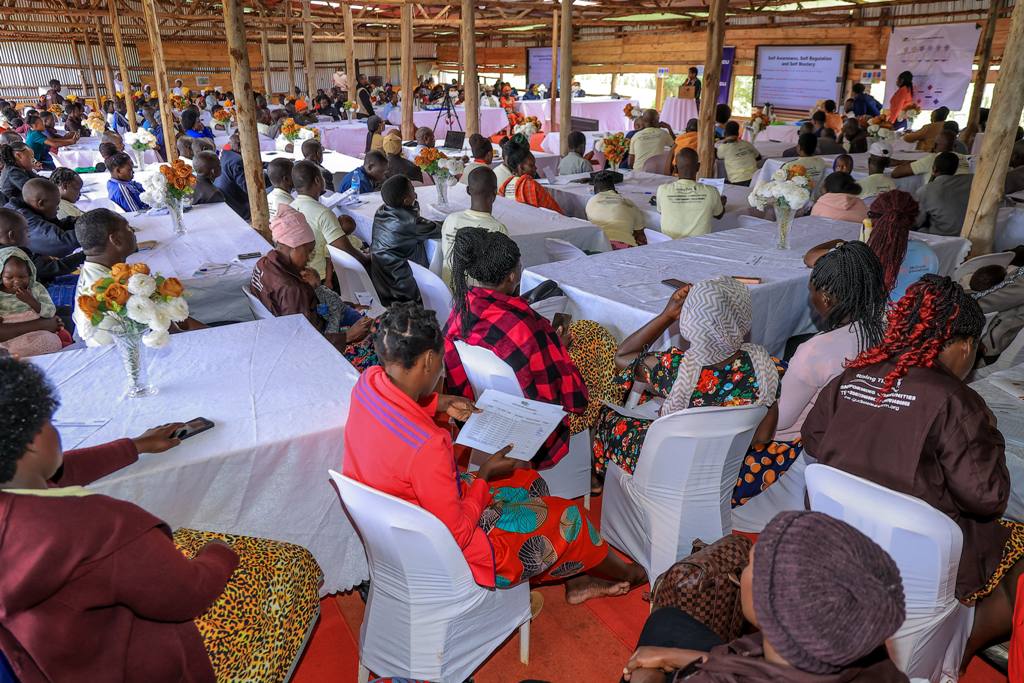
As Uganda marked International Women’s Day, dfcu Bank used the occasion to call for deliberate reforms within the financial system to better support women-led enterprises, particularly those spearheaded by young entrepreneurs.
The message was delivered during the Women in Business Symposium hosted at Gudie Leisure Farm under the theme “Leading with Power: Knowledge. Voice. Action.” The gathering brought together policymakers, private sector leaders, development partners and entrepreneurs to explore leadership development, mental resilience, asset protection, alliance-building and the evolving role of financial institutions in advancing women’s economic empowerment.
Moving from Participation to Scale
Speaking at the symposium, Simon Peter Kiwanuka, Chief Compliance Officer and Money Laundering Control Officer at dfcu Bank, noted that Uganda consistently ranks among the highest globally in female entrepreneurial activity, with women owning nearly 40 percent of businesses nationwide.
However, he argued that participation alone is not enough.
Uganda’s strong representation of women in enterprise, he said, must now translate into scale, productivity and competitiveness. He identified agriculture, the backbone of Uganda’s economy and a sector employing the majority of women, girls and youth, as a critical area for targeted financial innovation and support.
The call reflects a broader shift in development finance thinking: moving beyond micro-activity toward structured growth, formalization and long-term sustainability.
Reframing Gender Equity as a Collective Responsibility
Kiwanuka also challenged men to play a more intentional role as allies in advancing gender equity. Framing the discussion as particularly important for the men in attendance, he emphasized the need for reflection on how environments at home, in communities and in workplaces are shaped.
He highlighted parenting approaches and the influence fathers have in shaping expectations for sons and daughters alike. According to him, transforming perceptions of women in society begins with introspection, both at household and institutional levels.
The conversation positioned gender equity not as a women-only agenda but as a structural and cultural issue requiring cross-gender commitment.
Building Investment-Ready Women Entrepreneurs
Dr. Gudula Basaza, Director and Founder of Gudie Leisure Farm, underscored the value of partnerships in accelerating women’s economic participation. She noted that the institution’s longstanding collaboration with dfcu Bank continues to focus on raising awareness about the structural barriers limiting women’s full contribution to economic development.
Most recently, Gudie Leisure Farm has been training women from the Teso region to become compliant and investment-ready, equipping them to meet formal standards required by financial institutions and development partners.
Over a 35-day intensive programme, participants received training in business management, leadership, ICT and technical agriculture. They acquired hands-on skills in animal feed formulation, poultry management, piggery and fish farming. Value addition was also central to the curriculum, including processing chicken, fish and pork products, as well as producing herbs and spices to enhance product competitiveness.
The emphasis on compliance and value addition reflects a strategic pivot from subsistence production to agribusiness entrepreneurship.
Women in Policy and Leadership
Adding a policy perspective, Dr. Victoria Sekitoleko, former Minister of Agriculture and respected leadership mentor, highlighted a persistent structural challenge: women are often the most affected by policies yet remain underrepresented in the spaces where those policies are crafted.
She observed that this imbalance exists at multiple levels, within families, at local council structures, district platforms and even Parliament. Her remarks reinforced the need for stronger female representation and coordinated advocacy.
Dr. Sekitoleko also emphasized the importance of women supporting one another. Leadership, she noted, can be isolating, particularly in male-dominated sectors. Strong professional networks allow women leaders to test ideas, consult peers and represent their communities more effectively.
The Business Case for Inclusion
Uganda’s demographic profile, youthful, entrepreneurial and agriculturally anchored, presents both opportunity and urgency. Financial institutions are increasingly recognizing that empowering women-led enterprises is not only a social imperative but also a commercial growth strategy.
For dfcu Bank, the call for financial system reform signals an acknowledgment that traditional lending models, collateral requirements and risk frameworks may unintentionally limit women’s scalability.
As Uganda continues to champion women’s economic inclusion, the Women in Business Symposium highlighted a crucial evolution in the conversation: from empowerment rhetoric to structural reform.
The next frontier, stakeholders agreed, lies in aligning finance, policy, skills development and cultural attitudes — ensuring that Uganda’s high female entrepreneurial participation converts into sustainable, competitive enterprises capable of driving national growth.