Karamoja food crisis response plan seeks $72.6 Million funding gap.
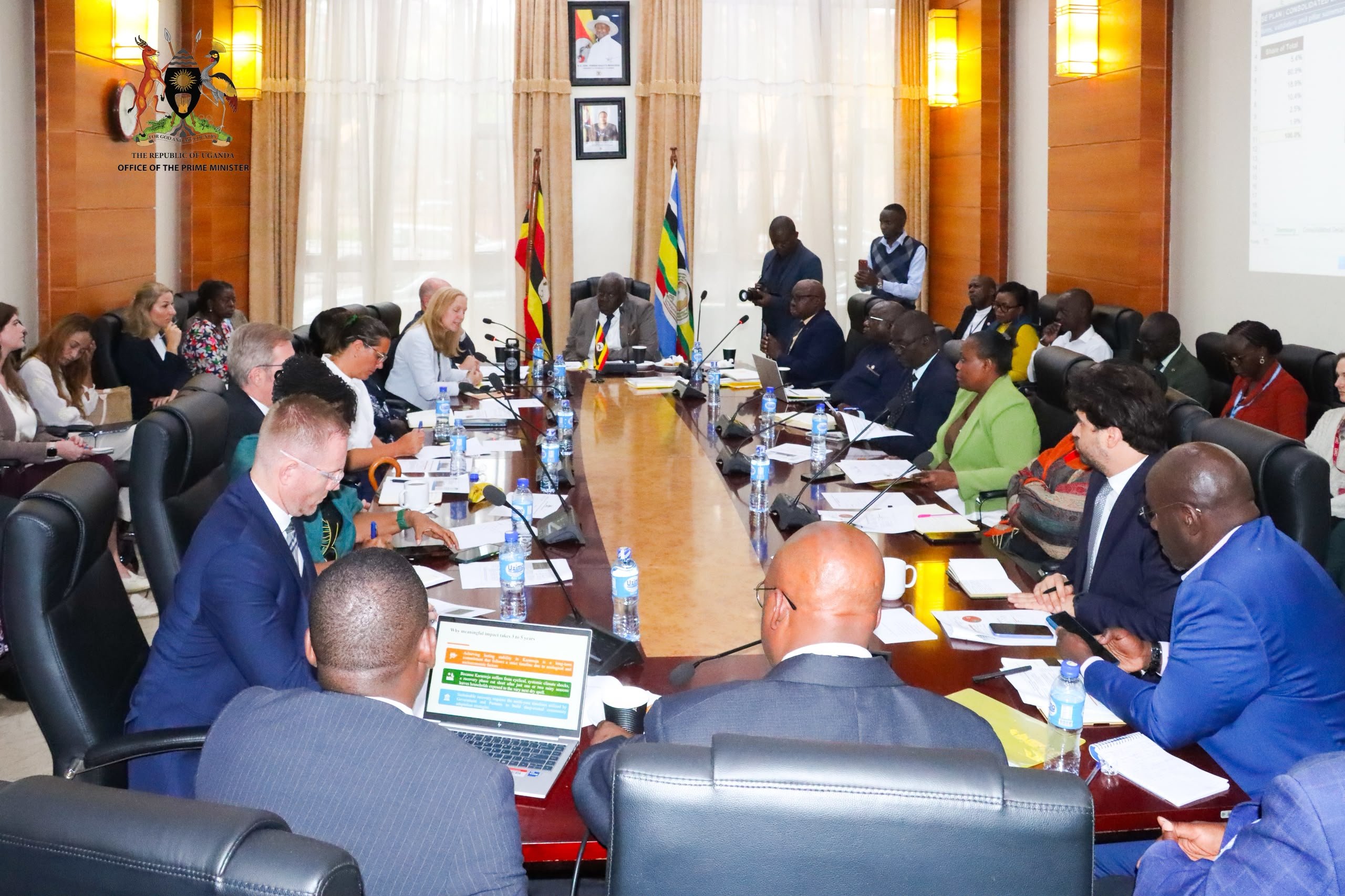
The Prime Minister’s office, through a meeting of the Karamoja Development Partners Group, brought together stakeholders to align regional interventions with the six-month Food Security and Nutrition Crisis Response Plan.
The Government has called on development partners to strengthen coordination and support efforts aimed at addressing the worsening food security and nutrition crisis in the Karamoja sub-region.
The Prime Minister’s office, through a meeting of the Karamoja Development Partners Group, brought together stakeholders to align regional interventions with the six-month Food Security and Nutrition Crisis Response Plan.
The meeting was chaired on behalf of the Prime Minister and focused on joint action to respond to the humanitarian situation affecting thousands of people in Karamoja.
The response plan is built around six key pillars: coordination and early warning, food and cash assistance, health and nutrition, agriculture, school meals and education, as well as cross-border peace and protection.
According to the plan, about 473,000 people in Karamoja are facing acute food shortages, while more than 30,000 children are suffering from malnutrition following two consecutive failed crop seasons.
The intervention requires a total of $84 million, with the government having already committed $12.16 million, leaving a funding gap of approximately $72.6 million.
Government food relief distribution is already underway, with authorities appreciating partners supporting humanitarian efforts on the ground.
Stakeholders were urged to work closely with government structures to ensure effective coordination and delivery of assistance to affected communities.
Beyond emergency response, the government emphasised the need for long-term solutions, including investment in irrigation schemes, grain storage facilities and sustainable agricultural production.
The plan also highlighted the importance of extending attention to neighbouring regions such as Teso, Lango and Acholi, which face related food security challenges.