United Nations Office on Drugs and Crime reaffirms support to Uganda Judiciary in justice reforms
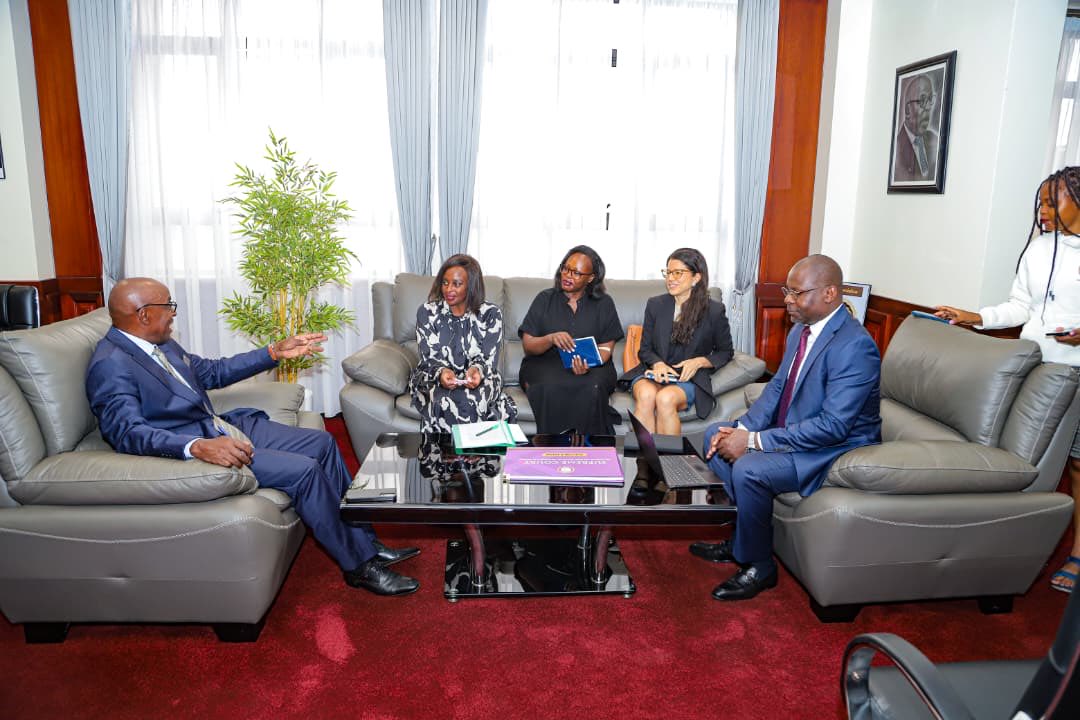
Bargoria made the remarks during a meeting with the Chief Justice, Justice Dr. Flavian Zeija, at the Supreme Court in Kampala, where she introduced herself and provided updates on ongoing UNODC programmes with the Judiciary.
The new Head of Office for the United Nations Office on Drugs and Crime (UNODC) in Uganda, Ms Winnie Jeptum Bargoria, has pledged continued support to Uganda’s Judiciary in strengthening access to justice, criminal justice reforms and the fight against environmental crimes.
Bargoria made the remarks during a meeting with the Chief Justice, Justice Dr. Flavian Zeija, at the Supreme Court in Kampala, where she introduced herself and provided updates on ongoing UNODC programmes with the Judiciary.
She was accompanied by UNODC Programme Management Officer Ms Mukisa Diva and Programme Coordinator Ms Alejandra Euceda. Also present were Registrar Planning, Research and Development, HW John Paul Edoku, and the Chief Justice’s Personal Assistant, HW Mwesigye Julius.
Bargoria, who has a legal background and experience working with the Kenyan Judiciary on Alternative Justice Systems, said UNODC remains committed to deepening its partnership with Uganda’s Judiciary through programmes supporting access to justice, accountability, criminal justice systems and environmental protection.
“Our relationship with the Judiciary is very robust. We work closely with the Judiciary and the Judges in capacity building and developing various policies,” she said, noting that UNODC currently runs three programmes in Uganda focusing on access to justice, criminal justice and environmental crimes.
UNODC officials also briefed the Chief Justice on ongoing interventions, including judicial training, support for non-custodial measures, National Court Open Days and court digitisation.
The agency revealed plans to equip courts in Patongo, Moroto, Gulu and Rukungiri with video conferencing facilities linked to prisons, as well as provide interpretation equipment for the International Crimes Division and Anti-Corruption Division.
On environmental protection, Euceda said UNODC is supporting the refurbishment of the Wildlife Court, installation of video conferencing facilities at key courts in wildlife crime hotspot districts, and development of a forest crimes adjudication training manual in partnership with the Judicial Training Institute.
She added that UNODC is also supporting the operationalisation of the Environment Court and expanding Uganda’s wildlife forensic laboratory to include timber forensics.
In response, Chief Justice Zeija welcomed Bargoria and praised the strong partnership between the Judiciary and UNODC. He called for increased collaboration in promoting Alternative Justice Systems, drawing lessons from Kenya’s experience.
The Chief Justice highlighted the importance of National Court Open Days as a platform for accountability and public engagement, allowing citizens to interact with judicial officers and raise concerns.
“It’s only when you have these Court Open Days that people tell you what you are not doing right,” Zeija said.
He further emphasized the need for continued investment in court digitisation and prison video conferencing systems to improve case management, reduce costs and enhance security.
Justice Zeija also welcomed UNODC’s support towards the Environment Court, noting that previous collaborations and study visits had contributed to improvements in case management, digitisation and coordination within the justice sector.