What Absa’s takeover of Standard Chartered’s retail business means for Uganda’s banks and customers
For Standard Chartered, the disposal is part of a broader global strategy to concentrate resources on businesses where the group believes it has a stronger competitive advantage.
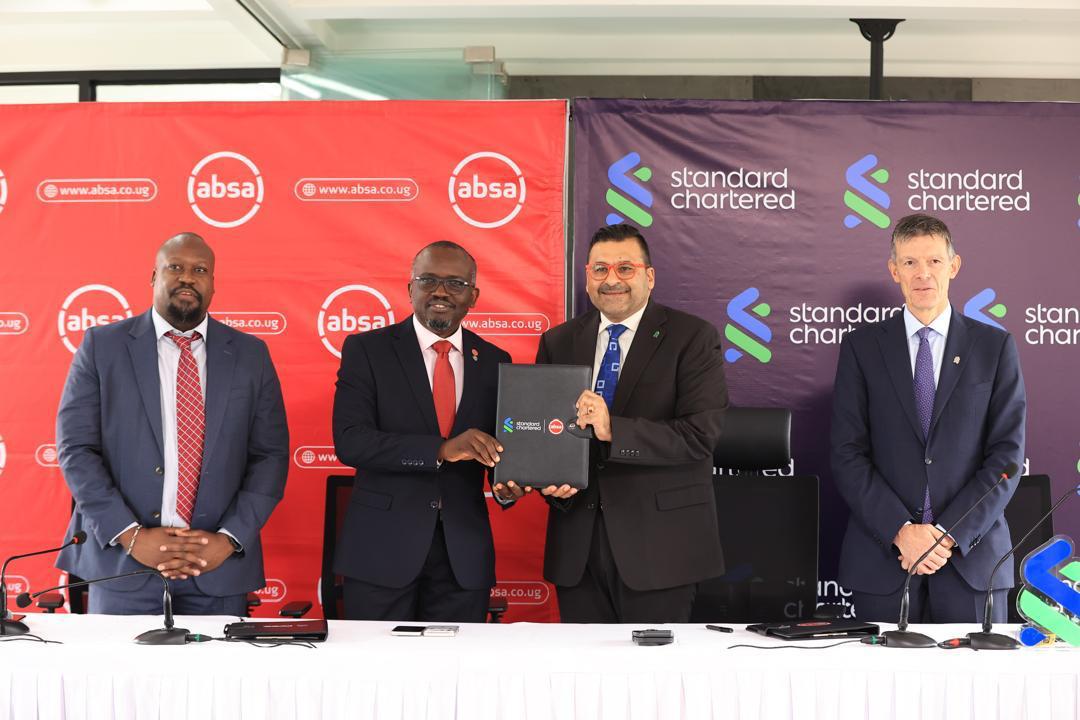
Absa Bank Uganda’s takeover of Standard Chartered Bank Uganda’s Wealth and Retail Banking business is set to reshape competition in the country’s banking sector, consolidating more retail customers, wealth management expertise and banking relationships under one institution.
The transaction, completed on November 13, 2026, following regulatory approvals, transfers Standard Chartered’s wealth and retail banking clients, products and employees to Absa, marking the end of a transition process first announced in November 2024.
The final migration and integration of client accounts and banking services is scheduled for November 13–15, with customers expected to begin accessing their Absa accounts and banking channels from November 16.
For Uganda’s banking industry, the deal represents more than a change of ownership. It reflects a strategic shift in how international banks are positioning themselves in a market where competition for deposits, affluent customers, digital transactions and financial services is intensifying.
Absa strengthens its retail and wealth banking position
The immediate beneficiary of the transaction is Absa, which gains an expanded customer base, established client relationships and additional expertise in wealth and retail banking.
The transfer of Standard Chartered’s employees supporting the business is particularly significant. It allows Absa to retain institutional knowledge and experienced personnel who understand the needs and financial histories of the transferring customers.
This could strengthen Absa’s capacity to serve high-net-worth individuals, professionals, entrepreneurs and other retail customers seeking savings, investment, lending and wealth management solutions.
The acquisition also provides an opportunity for Absa to deepen its market presence without having to build all the transferred customer relationships and capabilities from scratch.
Managing Director David Wandera said the transaction builds on Absa’s existing wealth banking capabilities, infrastructure and experienced teams.
“We recognise that changing banks is a significant transition for clients, which is why we have worked closely with Standard Chartered to make this transition as smooth as possible while preserving the products, pricing, relationships and support that clients value,” Wandera said.
The expanded business could improve Absa’s ability to compete for affluent customers and increase its share of Uganda’s retail banking market.
However, the long-term benefit will depend on how effectively the bank integrates the transferred accounts, retains customers and maintains the quality of service they previously received.
Competition and customer choice
The deal could intensify competition among Uganda’s commercial banks, particularly in wealth management and premium retail banking.
With a larger customer base and additional expertise, Absa will have an opportunity to strengthen its position against other established banks seeking to attract individuals and businesses with substantial financial resources.
For customers, the potential benefits include access to a broader banking network, products and digital services. The retention of existing product pricing and client relationships during the transition is also intended to reduce disruption.
However, the transfer also means customers will have to adapt to Absa’s systems, procedures and banking channels. The success of the migration will therefore be an important test of the two banks’ ability to protect customer confidence.
Any disruption involving account access, cards, mobile banking, internet banking or payment instructions could undermine the benefits of the transaction.
The transition period will consequently be critical in determining whether customers experience the change as an improvement in banking services or an inconvenience.
Standard Chartered narrows its focus in Uganda
For Standard Chartered, the disposal is part of a broader global strategy to concentrate resources on businesses where the group believes it has a stronger competitive advantage.
The bank will retain its Corporate and Investment Banking business in Uganda, continuing to serve corporates, financial institutions and cross-border clients.
This means Standard Chartered is not exiting Uganda altogether. Instead, it is shifting away from direct retail and wealth banking towards corporate, institutional and international financial services.
Chief Executive Officer and Managing Director Sanjay Rughani said the completion marked an important milestone for the bank and the conclusion of a carefully managed transition.
“Our priority throughout has been to protect continuity for our Wealth and Retail Banking clients and colleagues and to support their move to an institution positioned to serve their future needs and ambitions,” Rughani said.
He added that Standard Chartered would continue connecting Ugandan businesses and institutions to its international network, expertise and financing capabilities.
The bank’s continued presence in corporate and investment banking is significant because Uganda’s businesses increasingly require access to international financing, trade services, foreign exchange solutions and cross-border financial networks.
Its strategy allows it to maintain a presence in the market while concentrating on institutional and corporate clients rather than competing directly for the retail customer base.
Implications for Uganda’s financial sector
The transaction illustrates the changing structure of Uganda’s banking industry, where institutions are increasingly reviewing their business models, investment priorities and areas of competitive strength.
For Absa, the acquisition offers an opportunity to achieve greater scale, deepen customer relationships and potentially improve operational efficiency by combining the transferred business with its existing infrastructure.
For the wider industry, it could encourage other banks to review their market positions, invest in specialised financial services and strengthen their digital banking capabilities to remain competitive.
The deal also highlights the importance of wealth management as an increasingly important area of banking. As customers seek more sophisticated ways to save, invest and manage their assets, banks with strong advisory capabilities and specialised products could gain a competitive advantage.
Nevertheless, the consolidation of customers and business under fewer institutions also places greater responsibility on banks to maintain service standards, protect customer information and ensure reliable access to financial services.
The transaction’s success will ultimately be measured not only by the number of customers transferred but also by customer retention, service quality, operational efficiency and the ability of the combined business to generate sustainable growth.
As Absa begins integrating the transferred business, Uganda’s banking sector enters a new phase in which scale, customer experience, digital innovation and specialised financial services are likely to play an increasingly important role in determining competitiveness.