Uganda advances newborn health with launch of advanced screening technology
The newly installed equipment, developed by Revvity, is the first of its kind in Sub-Saharan Africa, marking a major milestone in Uganda’s diagnostic and laboratory capabilities. The machine is designed to enhance screening for sickle cell disease and other congenital disorders using a single dried blood spot (DBS) sample.
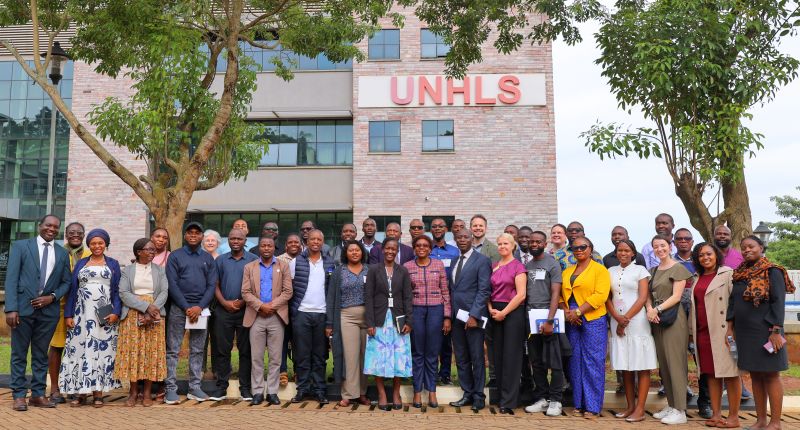
Uganda has strengthened its fight against congenital disorders with the commissioning of a state-of-the-art newborn screening machine at the Ministry of Health’s Department of National Health Laboratory and Diagnostic Services (NHLDS).
The development forms part of a five-year pilot programme under the Consortium of Newborn Screening in Africa (CONSA), supported by the American Society of Hematology (ASH) and implemented across seven African countries, including Kenya, Tanzania, Zambia, Ghana, Nigeria, and Liberia.
The machine was officially commissioned by the Minister for Health, Dr. Jane Ruth Aceng, who unveiled the Gel Scanner Machine—an advanced system that automates the Isoelectric Focusing (IEF) process used in newborn screening. The technology is expected to significantly boost testing capacity, improve efficiency, and reduce turnaround time for results.
“With this capacity built at our laboratory and the efficiency it brings on board, Uganda’s newborn screening capacity has been increased extensively. This has been timely as we are in the process of increasing coverage for newborn screening until it becomes universal,” Dr. Aceng said.
The newly installed equipment, developed by Revvity, is the first of its kind in Sub-Saharan Africa, marking a major milestone in Uganda’s diagnostic and laboratory capabilities. The machine is designed to enhance screening for sickle cell disease and other congenital disorders using a single dried blood spot (DBS) sample.
According to Revvity representative Marika Kase, the system supports testing for over 56 disorders and contributes to a global network that screens more than 33 million babies annually across 550 laboratories in 110 countries.
“The machine offers a complete solution for sickle cell newborn screening. It is a cost-effective, efficient and safe way to test for sickle cell disease from a newborn,” Kase said, adding that existing systems such as sample transport and laboratory information management systems (LIMS) will support wider scale-up.
The commissioning event also coincided with a regional training programme under CONSA, bringing together participants from seven African countries to strengthen collaboration in addressing sickle cell disease and other inherited conditions.
Uganda currently operates two CONSA screening sites at Jinja and Lira Regional Referral Hospitals. Since 2021, a total of 29,080 infants have been screened, with 419 confirmed positive for sickle cell disease.
Dr. Aceng urged NHLDS to prioritize funding for IEF reagents and called for the centralization of newborn screening services, alongside point-of-care testing in hard-to-reach areas. She also encouraged Revvity to consider supplying additional machines capable of screening multiple congenital disorders from the same sample.
Health experts say newborn screening is a critical intervention that enables early detection of congenital conditions, timely treatment, and improved survival outcomes for affected infants, ensuring they are linked to care and essential medicines from an early stage.