Ugandan thinkers publish paper for African mindset change, arguing attention, not politics, is Africa’s missing key
New paper extends Mazrui's triple heritage thesis, challenges Africans to examine what they are paying attention to — and who decided that for them

A Ugandan-led intellectual initiative has published what it describes as the first paper to examine the African mind-architecture entirely from within; without the gaze of a colonial oppressor as its reference point.
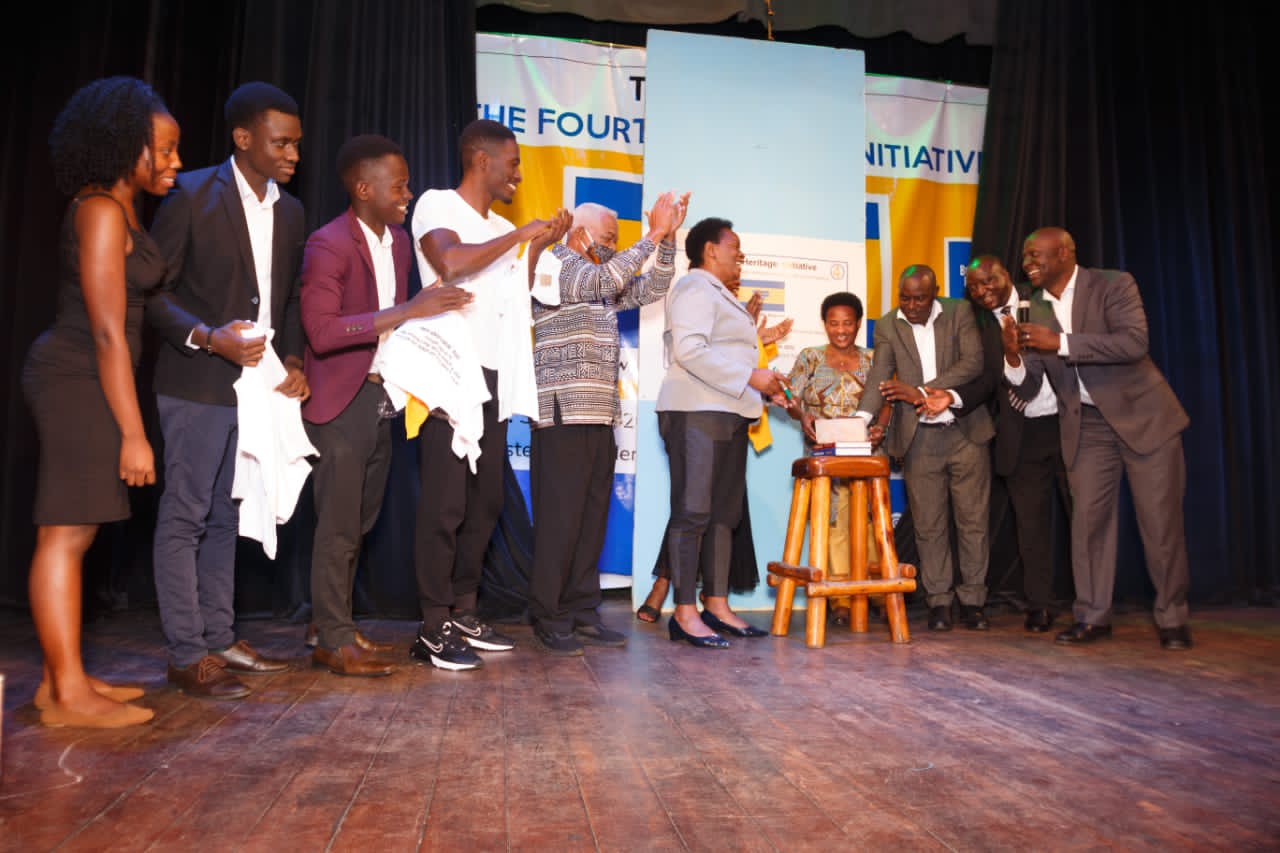
The Fourth Heritage Initiative (4HI) today, 18th May 2026, released Fourth Heritage Attention Is All You Need (FHA), a 13-page collaborative paper co-authored by Emmanuel S. Kirunda, David J. Muganzi and Timothy M. Kisakye. The paper is available for free download at www.4thheritage.com.
Building on Mazrui Legacy
The paper takes as its starting point the late Professor Ali Mazrui’s influential thesis of the African’s triple heritage — the intertwining of tribal, Islamic or Christian religious, and Western colonial influences that shape the African identity.

FHA does not dispute Mazrui’s framework. Instead, it extends it, arguing that while these three streams are real and powerful inputs into the African mind, the problem arises when they go unexamined.
Left unquestioned, the paper argues, the triple heritage can quietly train African attention towards fear, imitation, victimhood, group pressure and borrowed validation, patterns that quietly sabotage individual agency and collective progress long before any policy failure takes hold.
“African development is less a political or policy problem, and more a mind-architecture problem: a factor of what we pay attention to — what we habitually privilege, rehearse and obey. Attention is all we need — but only if it is our own attention,” said Kirunda, the paper’s lead author, thought leader, and founder of 4HI.
A Departure from Fanon and Biko
The paper positions itself in deliberate conversation with two of the twentieth century’s most influential African thinkers on the psychology of oppression. Frantz Fanon diagnosed the African’s inferiority complex and the adoption of “white masks” as a product of colonial violence. Steve Biko made the healing of the oppressed mind the cornerstone of Black Consciousness.
FHA honours both intellectual traditions while identifying what it sees as a shared limitation: both Fanon and Biko constructed their frameworks with the colonial oppressor as a necessary reference point, a mirror against which African identity was defined, even in resistance.
FHA proposes to remove that mirror entirely. The African mind-architecture it examines is not defined by what colonialism did to it, but by what Africans choose to do with what they have inherited. Its central question is not what was done to us but what are we paying attention to, and who decided that for us?
Written for the Young, Open to All
While the paper engages serious intellectual terrain, its intended primary audience is young Africans, particularly those at university level or at the stage of independent questioning, when inherited voices are loudest and the habit of self-examination is either formed or missed.
4HI has been explicit that the paper is not presented as doctrine. “We invite readers, scholars, journalists and institutions to download the paper, read it with an open mind, challenge it where necessary, and engage the Initiative with honest reflections,” the organisation said in a statement. “The paper is not presented as doctrine, but as a framework for honest contestation, disciplined attention and practical mindset change.”
The 4HI is a not-for-profit organisation dedicated to mindset change for and by tropical Africans. It builds on a body of work that includes The Fourth Heritage, Beyond the Fourth Heritage and the EDISAC Framework, converting heritage into usable knowledge and teaching what it calls Mindshift tools — practical approaches to building self-determined identity, generational wealth and legacy.