Uganda launches digital platform to strengthen fight against antimicrobial resistance
Antimicrobial resistance occurs when bacteria, viruses, fungi, and parasites develop resistance to medicines that were previously effective in treating infections. The phenomenon has emerged as a significant global public health challenge, leading to prolonged illnesses, higher treatment costs, avoidable deaths, and increased strain on health systems.
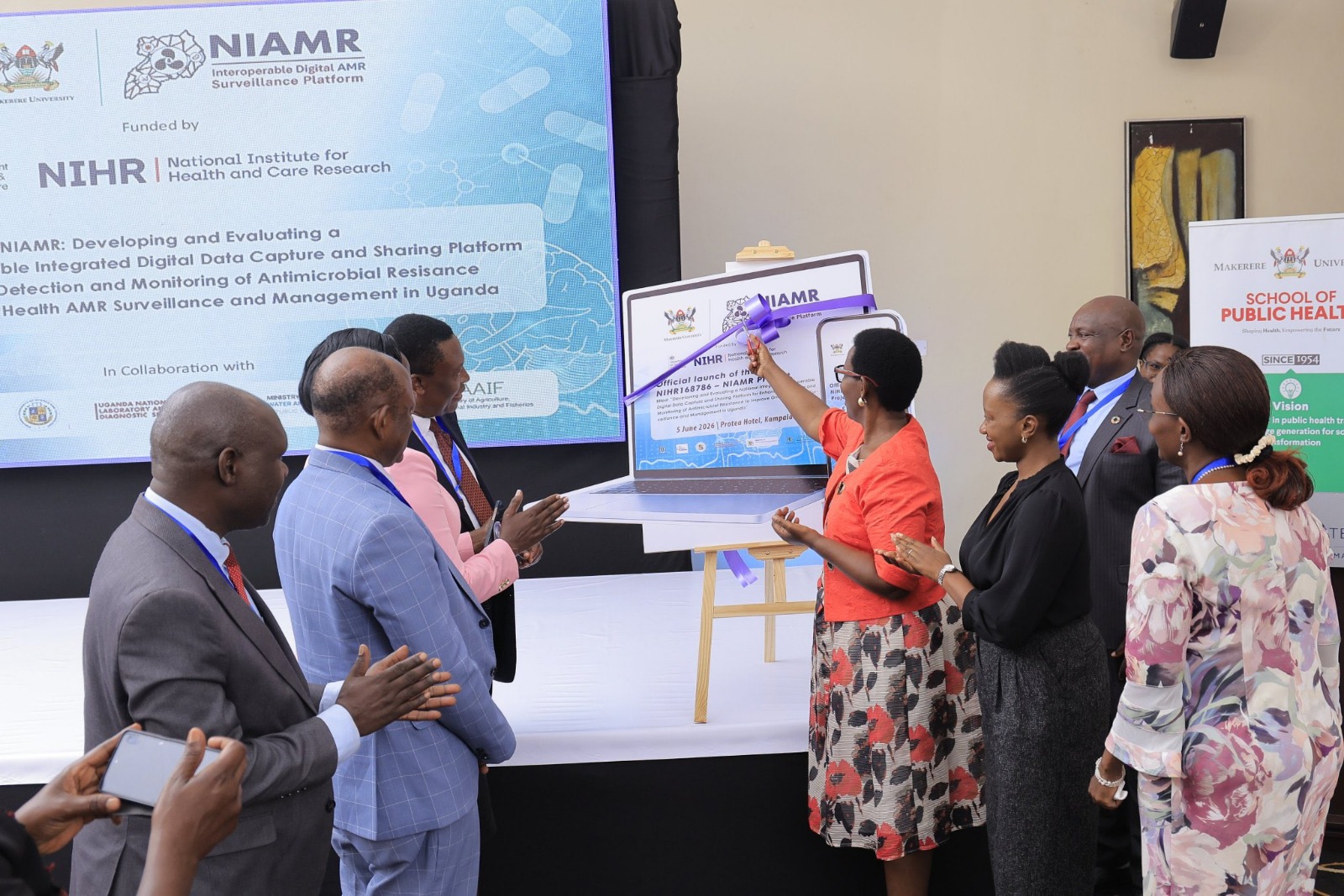
The government has launched the National Integrated Interoperable Digital Antimicrobial Resistance (AMR) Surveillance Platform, a major step towards enhancing the detection, monitoring, and management of antimicrobial resistance across Uganda.
The platform was officially launched by the Permanent Secretary in the Ministry of Health, Diana Atwine, during the launch of the National Project to Enhance the Detection and Monitoring of Antimicrobial Resistance (NIAMR).
Antimicrobial resistance occurs when bacteria, viruses, fungi, and parasites develop resistance to medicines that were previously effective in treating infections. The phenomenon has emerged as a significant global public health challenge, leading to prolonged illnesses, higher treatment costs, avoidable deaths, and increased strain on health systems.
Speaking at the launch, Dr. Atwine said the new digital platform would strengthen surveillance by integrating data from the human, animal, and environmental health sectors under the One Health approach. She noted that the system will enable timely detection, analysis, and response to emerging resistance trends across the country.
“The growing threat of antimicrobial resistance requires coordinated and innovative responses. This platform will help us monitor resistance patterns more effectively and support evidence-based interventions to protect public health,” she said.
Dr. Atwine also emphasized the importance of investing in local capacity and home-grown solutions to address national health challenges.
“As a country, we must continue investing in local capacity to generate solutions to our own challenges. Building strong Ugandan institutions, expertise, and digital systems is essential for safeguarding the health and wellbeing of future generations,” she added.
The Vice Chancellor of Makerere University, Barnabas Nawangwe, who attended the launch, reaffirmed the university’s commitment to research and innovation in addressing national development priorities.
Prof. Nawangwe revealed that nearly half of the funding under the Makerere University Research and Innovations Fund is dedicated to health-related research, underscoring government’s strategic investment in university-led solutions to national challenges.
He praised the collaboration between Makerere University and Mbarara University of Science and Technology in implementing the NIAMR project and commended Josephine Nabukenya and her team for harnessing digital technologies and artificial intelligence to strengthen national antimicrobial resistance surveillance and management.
Prof. Nawangwe expressed confidence that the project would generate critical evidence to guide policy formulation and decision-making in the health sector.
“The integration of digital technologies and artificial intelligence in AMR surveillance will provide valuable insights for policymakers and health practitioners, enabling more effective responses to emerging threats,” he said.
The launch comes as Uganda intensifies efforts to combat antimicrobial resistance, which experts warn could undermine decades of medical progress if left unchecked. The new platform is expected to improve data sharing, coordination, and response mechanisms among key stakeholders, ultimately strengthening the country’s preparedness against resistant infections.