Beyond the Mine: Can Uganda build an industrial future from its resource wealth?
For Uganda, the stakes are high. As countries worldwide race to secure supplies of critical minerals needed for clean energy technologies, Uganda possesses resources that could significantly enhance its economic prospects. However, experts at the roundtable cautioned that mineral abundance alone does not guarantee prosperity.
For decades, Uganda’s vast mineral endowment has been viewed as a sleeping giant within the country’s economy. Beneath its soil lie significant deposits of rare earth elements, graphite, nickel, copper, cobalt, iron ore, phosphate, tungsten and tin. These are minerals that are increasingly becoming the backbone of the global energy transition and advanced manufacturing industries.
Yet despite this abundance, mining contributes only about 2.2 percent to Uganda’s Gross Domestic Product (GDP), raising a critical question for policymakers and investors alike: how can the country transform its mineral wealth into sustainable economic growth, jobs and industrial development?
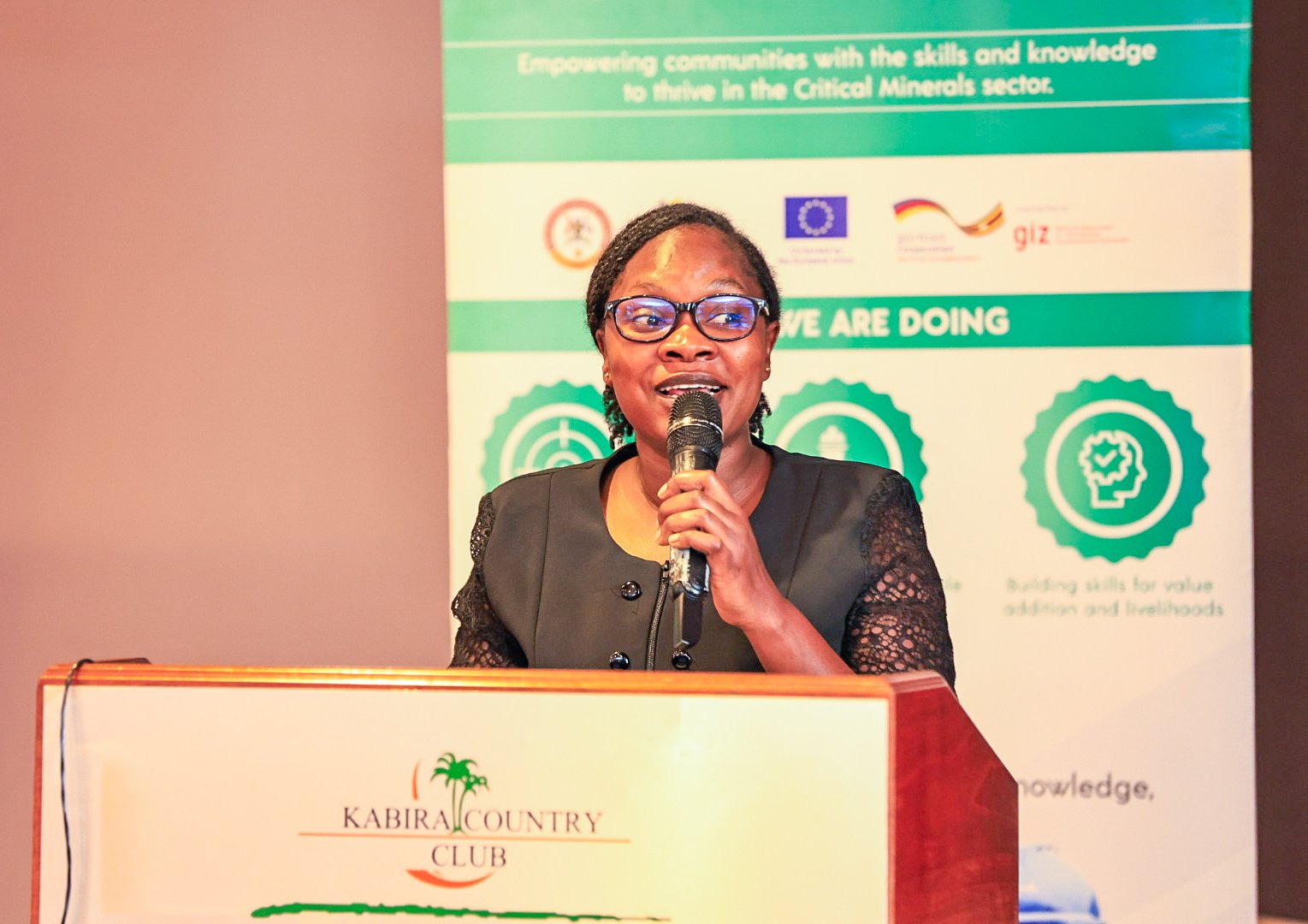
That question took centre stage during a recent Policy Roundtable on Uganda’s Mining Sector held in Kampala under the Training, Equipping, Nurturing to Thrive (TENT) Grant Initiative, where government officials, industry players, academics and development partners examined the opportunities and constraints facing one of Uganda’s most promising sectors.
Beyond Extraction
According to Susan Nakanwagi, a Environment & Natural Resources Governance Consultant, Uganda’s challenge is not a shortage of mineral resources but rather its ability to convert those resources into lasting economic value.
“Uganda’s challenge is not a lack of mineral potential; it is the ability to convert that potential into sustainable projects, domestic value addition, formal employment and industrial growth,” she said.
Nakanwagi argued that the country needs a stronger industrial delivery system capable of linking mineral extraction to manufacturing, processing and export-oriented industries. Drawing lessons from countries such as Tanzania, South Africa, Serbia and China, she emphasized the need to strengthen mining governance, separate promotional functions from regulatory oversight and design policies tailored to specific mineral value chains.
Her remarks come at a time when demand for critical minerals is surging globally. Industry forecasts suggest that the global critical minerals market could exceed US$770 billion by 2040, driven largely by the expansion of renewable energy technologies, electric vehicles and battery manufacturing.
For Uganda, this presents a rare opportunity to position itself as a strategic supplier within global value chains rather than remaining a source of raw mineral exports.
Institutions and Taxes
While taxation often dominates debates on mining competitiveness, Associate Professor Susan Watundu believes the sector’s most pressing challenges lie elsewhere.
Speaking at the roundtable, Watundu argued that weak institutions, regulatory gaps and limited enforcement capacity represent greater barriers to sector growth than tax rates.
She called for stronger transfer pricing regulations, closure of legal loopholes, recapitalisation of the Uganda National Mining Company (UNMC), and the establishment of specialised fiscal oversight mechanisms to safeguard public revenues.
“Strengthening revenue integrity, promoting domestic value addition and improving governance are critical if Uganda is to fully benefit from its mineral wealth,” she noted.
Watundu also urged policymakers to adopt a sequenced approach to mining sector development, drawing lessons from Rwanda, Tanzania and Zambia. Such an approach would prioritise institutional strengthening, investment readiness and gradual development of mineral processing industries before imposing ambitious value-addition requirements.
Her recommendations align closely with Uganda’s Vision 2040 aspirations, which seek to transform the country into a modern and prosperous economy driven by industrialisation and higher-value production.
Artisanal Mining
One of the most significant insights emerging from the discussions was the critical role played by artisanal and small-scale mining (ASM), a subsector that often receives limited attention despite its enormous contribution to production and employment.
According to Henry Mukasa of GIZ Uganda, ASM accounts for nearly 90 percent of Uganda’s mineral production and employs approximately 60 percent of the sector’s workforce.
The subsector also plays an important social and economic role. Women make up nearly half of all ASM participants, making mining a major source of income, livelihood support and economic inclusion in many rural communities.
“Artisanal and small-scale mining remains a key driver of employment and local economic development,” Mukasa said, emphasizing the importance of formalising and supporting miners rather than treating the subsector solely as a regulatory challenge.
Formalisation efforts are expected to improve productivity, enhance environmental compliance, increase access to financing and strengthen miners’ participation in formal markets.
International Support
The discussions come against the backdrop of growing international support for Uganda’s mining sector reforms.
Through the Sustainable Development of the Mining Sector in Uganda Programme, implemented by GIZ Uganda and co-funded by the European Union and the German Government, stakeholders are working to strengthen governance, improve the investment climate and expand access to geological information.
The programme includes a €1.25 million investment running through 2027, aimed at supporting policy reforms and fostering sustainable sector development.
Key interventions include cooperative development for artisanal miners, business management training, access to finance and promotion of responsible mining practices.
Equally important are ongoing mineral value-chain studies focusing on strategic resources such as rare earth elements, graphite, tungsten, tin, phosphate and nickel. These assessments are expected to identify viable opportunities for domestic processing and industrial investment.
The Road to Competitiveness
For Uganda, the stakes are high. As countries worldwide race to secure supplies of critical minerals needed for clean energy technologies, Uganda possesses resources that could significantly enhance its economic prospects. However, experts at the roundtable cautioned that mineral abundance alone does not guarantee prosperity.
Success will depend on building effective institutions, attracting responsible investment, strengthening fiscal oversight, formalising artisanal mining and developing domestic processing industries capable of capturing greater value from extracted minerals.
The consensus emerging from the dialogue was clear: Uganda’s future in mining will not be determined by what lies beneath the ground, but by the policies, institutions and industrial strategies built above it.
If managed effectively, the sector could evolve from a modest contributor to GDP into a major engine of industrialisation, job creation and economic transformation—helping Uganda move closer to its Vision 2040 ambitions while positioning itself as a competitive player in the rapidly expanding global minerals economy.