Oil and gas players call for joint action to restore Uganda’s degraded environment
With Uganda seeking to maximise the economic value of its petroleum resources while pursuing broader climate and environmental objectives, stakeholders say continued cooperation will be critical.
Players in Uganda’s oil and gas industry operating in the Albertine Graben have called for stronger collaboration among government, industry, local communities and other stakeholders to address environmental degradation as the country develops its petroleum resources.
The call was made during the 2026 Joint Oil and Gas Sector World Environment Day commemorations held in Kyangwali Sub-county, Kikuube District, under the theme “Answering the Climate Call, Delivering Responsible Resource Development.”
The event brought together oil and gas companies, government agencies, local leaders and communities to highlight the need for responsible petroleum resource development while protecting Uganda’s environment and supporting long-term energy needs.
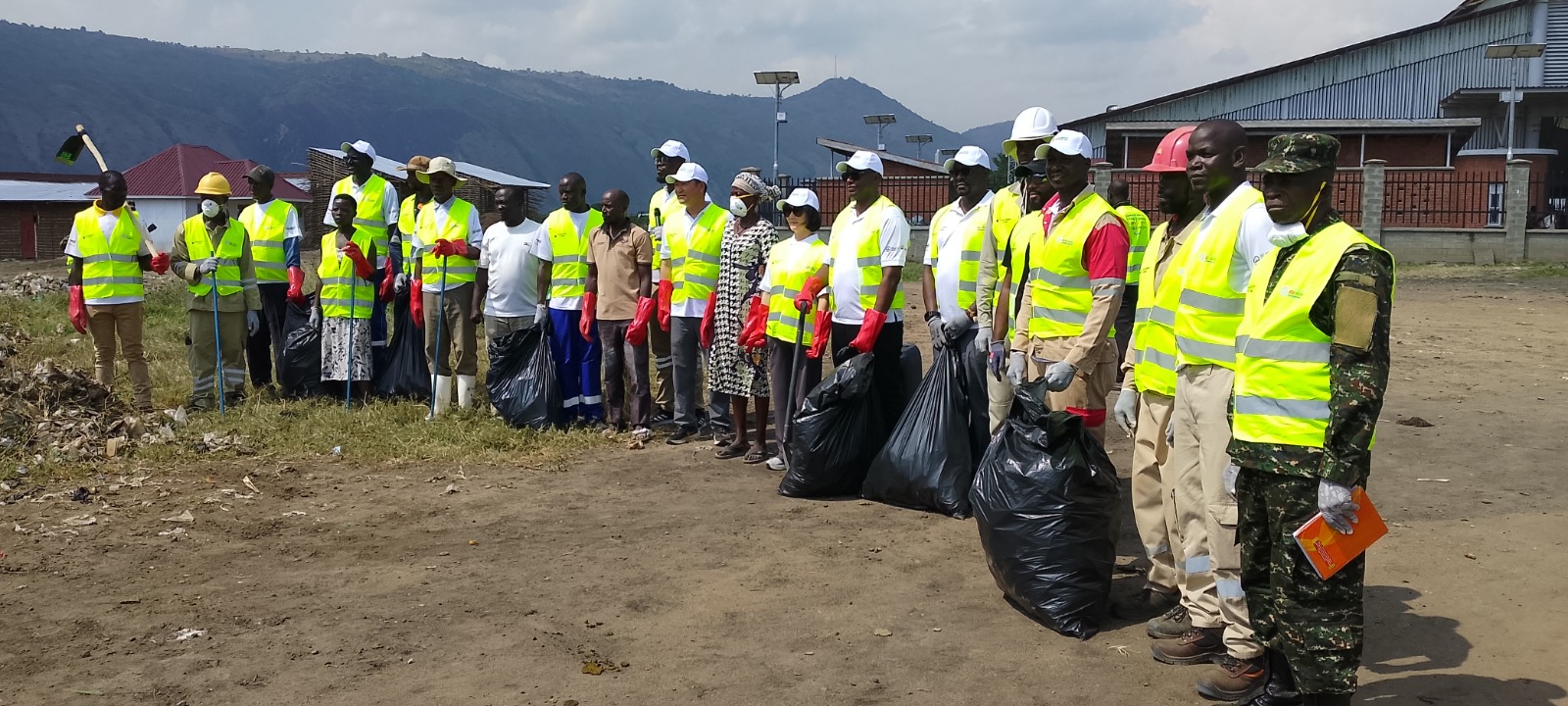
The commemorations included a community clean-up exercise at Buhuka Landing Site and symbolic tree-planting activities at Bugoma Primary School and St. Paul II Secondary School in Kyangwali Sub-county.
Dr Joseph Kobusheshe, Director of Environment, Health and Safety at the Petroleum Authority of Uganda (PAU), said the petroleum sector has a responsibility to support efforts aimed at reversing the country’s environmental degradation.
He said that about four years ago, the sector approved a number of impactful community projects and other initiatives aimed at contributing to the restoration of Uganda’s forest cover, with a target of restoring 30 percent of the country’s forest cover by 2030.
Dr Kobusheshe warned that Uganda had lost a significant proportion of its forest cover over the past five decades, creating an urgent need for collective action.
He said continued loss of forests at the current rate would have serious consequences for the country’s environment and future generations.
“We need to make sure that we restore our environment and our forest cover,” Dr Kobusheshe said, stressing that environmental protection should remain part of Uganda’s development agenda.
He added that the oil and gas industry was also implementing interventions aimed at reducing emissions associated with petroleum operations.
According to Dr Kobusheshe, the sector is pursuing measures to decarbonise its energy inputs, including the use of solar energy where feasible.
He said the initiatives are intended to minimise the amount of gas and other hydrocarbons burnt to generate energy, thereby reducing greenhouse gas emissions from oil and gas operations.
Responsible petroleum development
Andrew Otuba, Environment Manager at CNOOC Uganda Limited, the operator of the Kingfisher oil field in Buhuka, said this year’s theme was timely and particularly relevant to Uganda’s emerging petroleum industry.
Otuba said the development of Uganda’s petroleum resources must go hand in hand with environmental protection, efficient resource utilisation, climate action and responsible stewardship of natural resources.
He noted that oil and gas development presents economic opportunities for Uganda, but added that these opportunities must be pursued in a manner that safeguards the environment and supports sustainable development.
“The development of petroleum resources must go hand in hand with environmental protection, efficient resource use, climate action and responsible stewardship of our natural resources,” he said.
His remarks reflect the growing emphasis within Uganda’s petroleum sector on balancing increased oil and gas production with environmental responsibilities, particularly in the Albertine Graben, which hosts some of the country’s most important ecosystems and biodiversity.
Call for stakeholder collaboration
Dr Michael Mugerwa, Deputy Chief Executive Officer of the Uganda National Oil Company (UNOC), called for greater teamwork among stakeholders involved in Uganda’s petroleum development.
He said government institutions, private-sector players, oil and gas companies, local leaders and communities must work together to address environmental challenges.
Dr Mugerwa said the joint commemoration itself demonstrated what can be achieved when different stakeholders combine their efforts around a common objective.
He encouraged continued cooperation beyond the annual World Environment Day activities, arguing that environmental protection requires sustained action and shared responsibility.
The call for collaboration comes as Uganda moves closer to full-scale petroleum production, with stakeholders facing the challenge of ensuring that the anticipated economic benefits of oil and gas development are accompanied by effective environmental protection.
Solar power for health facility
As part of the environmental initiatives, the joint venture of oil and gas companies operating in the Albertine Graben installed a 10-system solar power installation at Nsozi Health Centre III in Kikuube District.
The project is expected to improve access to reliable electricity at the health facility and support the delivery of services, particularly during night hours.
Paddy Kisembo, Kikuube District LC5 Chairperson, thanked CNOOC Uganda and its partners for supporting the health facility with the solar system.
He said the installation would improve the facility’s operations, particularly at night, when reliable power is essential for healthcare workers attending to patients.
The solarisation initiative also forms part of the wider effort by the petroleum sector to promote renewable energy solutions and reduce dependence on conventional energy sources where possible.
Environment and energy transition
The 2026 joint commemoration highlighted the increasingly important relationship between Uganda’s petroleum development and the country’s environmental and climate objectives.
For industry players, responsible resource development means not only complying with environmental regulations but also investing in initiatives that benefit communities and reduce the environmental footprint of petroleum operations.
Activities such as tree planting, community clean-ups, renewable energy projects and environmental awareness campaigns are increasingly being used to complement regulatory measures and corporate environmental commitments.
With Uganda seeking to maximise the economic value of its petroleum resources while pursuing broader climate and environmental objectives, stakeholders say continued cooperation will be critical.
The joint World Environment Day activities in Kikuube therefore served both as a demonstration of the sector’s environmental commitments and a reminder that sustainable development requires shared responsibility among government, industry and communities.