Uganda’s agricultural boom faces a critical test as farmer support lags
Uganda’s agricultural economy is expanding. The next challenge is to ensure that the systems supporting the farmer grow with it.
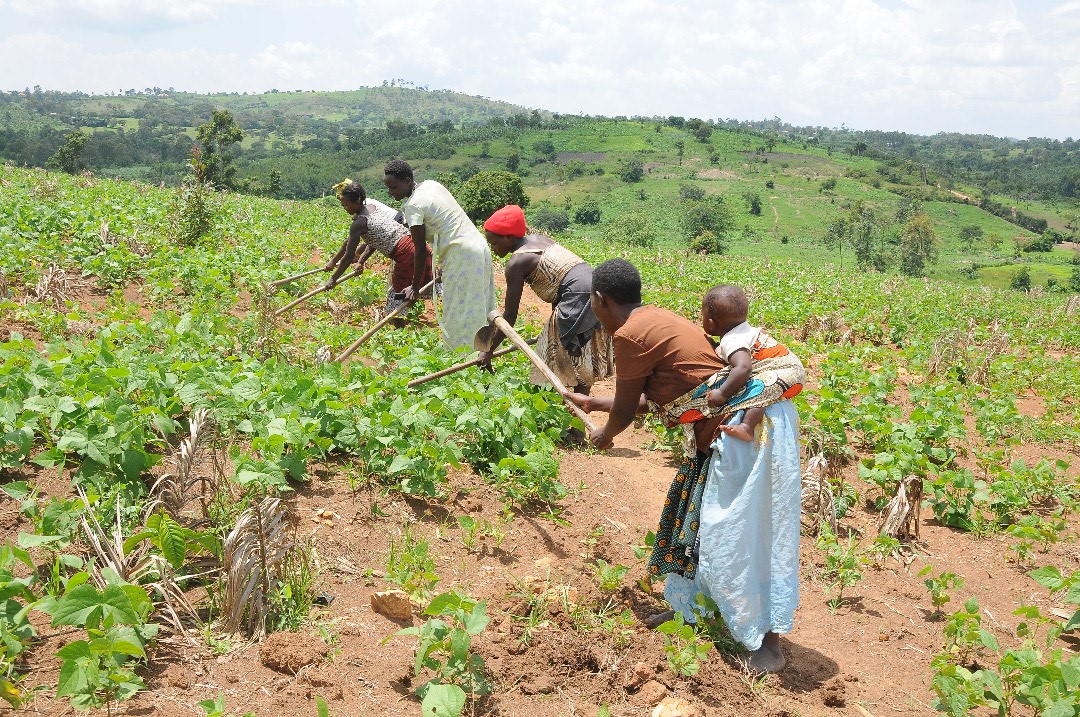
Uganda’s agricultural sector is growing faster than its historical average, earning billions of dollars from exports and expanding its contribution to the economy.
But beneath the impressive figures lies a challenge that could determine whether the growth translates into lasting prosperity for millions of farming households: the country’s ability to equip farmers with the knowledge, financing, water and reliable agricultural inputs needed to raise productivity.
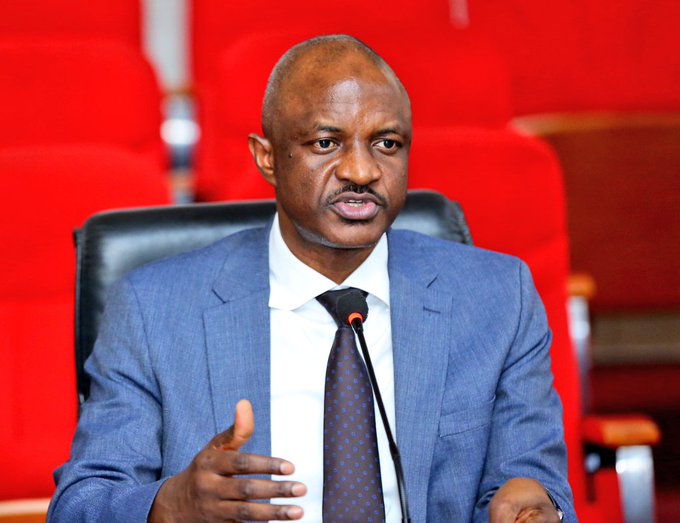
In a statement to Parliament on 21st October 2026, Agriculture Minister Frank K. Tumwebaze reported that agriculture contributed 26.2% of Uganda’s gross domestic product (GDP) in the financial year 2025/26, up from a 10-year average of 23%. Sector growth reached 6.5%, compared with a historical average of 4.2%.
The figures suggest that agriculture remains central to Uganda’s economic transformation. The ministry estimates that 7.12 million of the country’s 10.8 million households are engaged in agriculture, while the sector supports the livelihoods of more than 70% of the population.
Agriculture also accounts for an average of 40% of Uganda’s export earnings, underscoring its importance as a source of foreign exchange, employment and raw materials for industry.
Yet the ministry’s own assessment reveals a disconnect between the sector’s economic potential and the public services available to help farmers realise it.
One of the clearest examples is the shortage of agricultural extension workers. Of 9,667 approved positions, only 4,310 are filled, leaving 5,357 vacancies.
The shortfall means that the ministry’s efforts to promote improved farming methods, appropriate enterprise selection, pest control and commercial production are constrained by a limited workforce.
The government says it has procured 200 vehicles and 2,650 motorcycles to improve the mobility of extension workers, with another 1,043 motorcycles scheduled for distribution in November 2026.
However, transport alone cannot resolve the staffing gap, particularly when the ministry acknowledges that wage constraints continue to prevent recruitment in many districts.
For a sector in which productivity depends increasingly on improved seed varieties, better animal breeds, irrigation and appropriate agricultural practices, the shortage raises questions about how effectively research and public investment are reaching farmers.
Export success and the coffee economy
Uganda’s export performance offers one of the strongest indicators of agriculture’s growing commercial importance.
The value of agricultural exports rose from an average of $2.5 billion over the previous decade to $4.609 billion in calendar year 2025, according to the ministry.
Coffee remains the leading driver of this growth. Its export value increased from $845.6 million in FY2022/23 to $2.211 billion in FY2024/25, a rise of 161%. Cocoa bean exports grew even faster, climbing from $93.1 million to $620.8 million over the same period.
Combined exports of coffee, cocoa, dairy, fish and fish products, and fruits and vegetables increased from $1.284 billion in FY2022/23 to $3.429 billion in FY2024/25.
These figures demonstrate the potential of value chains to generate foreign exchange and support rural livelihoods. However, export growth alone does not establish how much individual farmers earn, how evenly the benefits are distributed or whether higher export values reflect increased production, prices or both.
That distinction matters because the long-term success of agricultural commercialisation depends on whether smallholder farmers can consistently produce marketable surpluses, meet quality standards and secure reliable buyers.
The ministry is pursuing a dual strategy: supporting smallholders through the Parish Development Model (PDM), while providing medium- and large-scale commercial farmers with access to credit, machinery and value-addition infrastructure.
The approach recognises that small plots of land cannot sustainably supply every commodity required by processors and intensive farming enterprises. Large-scale producers are expected to help meet demand for crops such as maize, soybeans and sorghum while providing market opportunities and extension support to smaller farmers.
The challenge is ensuring that these arrangements generate broad-based benefits rather than simply increasing aggregate production and export earnings.
The PDM financing question
The Parish Development Model remains the government’s principal intervention for helping smallholder households transition from subsistence farming into the money economy.
According to Tumwebaze, government has cumulatively injected UGX 4.4 trillion into the programme’s parish-level financial system. The ministry says the model has expanded access to finance through parish SACCOs, particularly for households previously underserved by formal financial institutions.
However, the minister acknowledges that the ministry faces difficulties tracking whether beneficiaries use the funds for the agricultural activities agreed upon through their SACCOs.
The final decision on how the money is spent rests with recipients, while the ministry is working with the PDM secretariat and the Ministry of Local Government to develop mechanisms to discourage diversion from intended purposes.
This disclosure highlights an important distinction between distributing finance and achieving agricultural transformation.
Access to credit can help farmers purchase seed, livestock, fertiliser and equipment. But productive investment also depends on technical guidance, suitable land, water, access to markets and the ability to manage agricultural risks.
The ministry’s request for Parliament to scrutinise how beneficiaries spend PDM funds suggests that monitoring expenditure and measuring agricultural outcomes remain important policy priorities.
The central question is not merely how much money has been disbursed, but how effectively that investment translates into higher yields, commercially viable enterprises and improved household incomes.
Irrigation: progress with implementation gaps
Climate variability presents another major test for agricultural productivity.
The ministry identifies irrigation and water for agricultural production as essential to reducing dependence on rainfall and enabling farmers to produce more reliably.
It reports that ten large- and medium-scale irrigation schemes have been completed or brought close to completion, adding 7,203 hectares to the area under formal irrigation.
The list includes schemes at Doho II in Butaleja, Mubuku II in Kasese, Ngenge in Kween, Olweny in Lira, Agoro in Lamwo and Acomai in Bukedea.
The report records seven schemes as fully completed, two medium-scale schemes and Wadelai at 95% progress.
Separately, more than 6,657 small- and medium-scale solar-powered irrigation schemes have been established across 135 districts, including 6,300 under the Uganda Intergovernmental Fiscal Transfers Programme, according to the statement.
These investments could help stabilise production, support higher-value crops and improve farmers’ resilience to irregular rainfall.
However, the minister admits that some irrigation schemes are not operating optimally because of problems involving operation, maintenance and management.
This is a significant qualification. Infrastructure creates productive capacity only when it is functional, maintained and accessible to intended beneficiaries.
The economic return on irrigation investments therefore depends not just on construction but also on sustainable management and effective use.
The government has submitted a National Irrigation Development Plan to the Ministry of Finance, Planning and Economic Development for funding.
The proposed programme would support farm-level water distribution, water harvesting and storage, rehabilitation of underused irrigation facilities, and fish production in selected areas.
Its implementation will depend on the financing framework and subsequent approvals.
Agricultural inputs and the fight against counterfeits
The availability of good-quality seed, fertiliser and other agricultural inputs is another determinant of productivity.
The ministry reports that Uganda’s National Agricultural Research Organisation has released 20 new crop varieties since 2021, including improved maize, rice, sweet potato, groundnut, bean, Irish potato and millet varieties.
Some are designed to improve yields, withstand particular pests and diseases, or enhance nutritional and processing characteristics.
But farmers can benefit from these innovations only if suitable planting materials reach them and perform as expected under local conditions.
To improve input quality, the ministry says it has upgraded the National Seed Laboratory at Kawanda and operationalised ten zonal offices to strengthen inspection and enforcement against counterfeit and substandard agricultural inputs.
It also reports that the number of agricultural export consignments intercepted in European Union markets fell from 54 cases in 2024 to 11 in 2026. The 2026 cases comprised two involving harmful organisms, seven involving documentation errors and two involving excessive pesticide residues.
The statement attributes the reduction partly to improvements in measurement and testing infrastructure, although it does not provide a detailed assessment isolating the contribution of individual interventions.
The ministry has also contracted 347,826 bags of fertiliser, each weighing 50 kilogrammes, equivalent to 17.39 million kilogrammes, for distribution to smallholder farmers growing strategic crops such as coffee, tea, cocoa and horticultural produce. Distribution was still ongoing when the statement was prepared.
Meanwhile, the government is seeking parliamentary approval for the proposed Food and Agriculture Regulatory Authority, intended to strengthen regulation of food, agricultural and veterinary inputs.
These measures address real weaknesses in the agricultural supply chain. Their impact will ultimately depend on effective enforcement, transparent distribution and farmers’ ability to obtain affordable, genuine inputs when they need them.
Funding remains a structural constraint
Despite the reported achievements, the ministry identifies inadequate and poorly structured funding as a persistent constraint.
Tumwebaze says many critical activities remain underfunded and that externally financed projects have become a dominant source of sector development funding. Some of these projects, he adds, have restrictive conditions that delay implementation and limit the government’s ability to respond quickly to farmers’ needs.
The ministry is engaging the finance ministry to increase domestic development allocations and negotiate more flexible implementation conditions with external funders.
This financing challenge cuts across several priorities, including irrigation, agricultural mechanisation, extension services and value addition.
Since 2018, government has acquired and deployed 1,080 tractors with implements and 1,350 single-axle power tillers. Yet the ministry’s target is to provide 10,000 tractors over the next five years.
Plans to establish 21 mechanisation centres are also facing land allocation and budget constraints, while a proposed cost-sharing arrangement for tractor acquisition has yet to receive Cabinet approval.
The scale of these ambitions illustrates both the government’s commitment to modernisation and the financial demands of delivering it.
Turning growth into lasting gains
Uganda has important advantages: substantial arable land, a large agricultural workforce, expanding export markets and research institutions developing improved crop varieties and livestock breeds.
The ministry’s report points to progress in mechanisation, irrigation, livestock breeding, agricultural processing and regulation.
It also outlines efforts to expand oil palm production as part of a strategy to reduce dependence on imported vegetable oil.
Uganda, it says, requires about 450,000 tonnes of vegetable oil annually but produces only around 80,000 tonnes, leaving an import gap estimated to cost $300 million a year.
Closing such gaps could create opportunities for domestic production, employment and agro-industrial development.
But the report also makes clear that agricultural transformation cannot be measured by export earnings, funds disbursed, equipment distributed or infrastructure constructed alone.
The quality of implementation matters just as much. Farmers need extension workers who can provide practical advice, functioning irrigation systems, reliable agricultural inputs, accessible markets and financing that translates into productive investment.
The shortage of extension staff, the acknowledged difficulties monitoring PDM spending, underfunded programmes and maintenance problems affecting irrigation schemes show where policy ambitions encounter implementation constraints.
For policymakers, the task is to close these gaps while sustaining the sector’s growth. For farmers, the ultimate test is whether the reported progress translates into more reliable harvests, higher and more predictable incomes, and greater resilience to pests, diseases and changing weather conditions.
Uganda’s agricultural economy is expanding. The next challenge is to ensure that the systems supporting the farmer grow with it.