
Ggoobi: Uganda’s Economic Fundamentals Remain Strong Despite Shilling Depreciation
Uganda’s immediate challenge, Ggoobi’s remarks suggest, is to manage external shocks that are putting pressure on the shilling while sustaining investment, controlling inflation and advancing the infrastructure needed to support long-term economic growth.
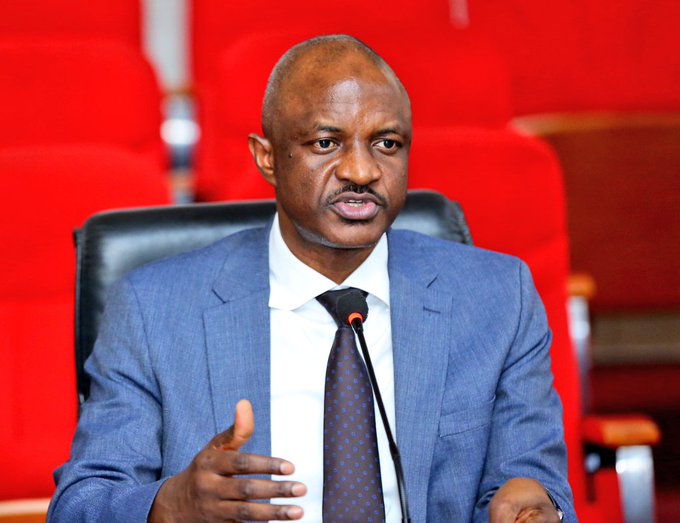
The Permanent Secretary and Secretary to the Treasury (PSST), Ramathan Ggoobi, has defended the Bank of Uganda’s monetary policy measures to stabilise the shilling and contain inflation, saying the interventions are being implemented without depleting the country’s foreign exchange reserves.
Speaking on Wednesday on UBC’s Behind the Headlines programme, Dr Ggoobi said Uganda’s economic fundamentals remained strong despite recent depreciation of the shilling, which he attributed largely to external pressures, including rising global oil prices, changes in United States monetary policy and disruptions to foreign exchange inflows.
He said the conflict in the Middle East had pushed global oil prices to about $100 per barrel, increasing domestic fuel prices and transport costs.
Higher freight and insurance charges had also raised the cost of imported goods, adding to inflationary pressures.
Ggoobi further attributed pressure on the shilling to a recent 25-basis-point increase in the US policy rate, which he said had prompted portfolio investors to shift towards US financial assets, increasing demand for dollars.
The movement of investment funds towards US securities can put pressure on emerging-market currencies as investors seek higher returns in dollar-denominated assets.
The PSST also cited disruptions to tourism receipts associated with the Ebola threat, particularly during the last quarter, alongside changes in export commodity prices, including coffee and cocoa, as factors affecting foreign exchange inflows.
These developments, he said, had contributed to a relative increase in the price of the dollar against the shilling.
Inflation within target
Ggoobi said the economy continued to expand despite the external headwinds, citing International Monetary Fund projections that Uganda could record regional-leading economic growth of 9.9% in 2027.
He acknowledged that external shocks had complicated the economic outlook but maintained that the government’s growth agenda remained on course.
On inflation, the PSST said Bank of Uganda had taken measures to contain price pressures, with inflation standing at 4.6%—a level he said remained within the central bank’s target.
He also highlighted coordination between fiscal and monetary policy, saying the government had reduced expenditure to complement the central bank’s contractionary monetary stance.
“We have to coordinate the fiscal policy and monetary policy. Government has responded to the contractionary monetary policy by releasing less money in quarter two than what Government wanted by cutting expenditure by almost Shs3 trillion,” Ggoobi said.
The reduction in government spending, he said, was intended to support efforts to contain inflation while maintaining economic stability.
Export-led growth strategy
Ggoobi said the government was pursuing its Tenfold Growth Strategy, which prioritises export promotion, import substitution, value addition and infrastructure development to expand production and strengthen the economy.
He identified the Standard Gauge Railway (SGR) as a key investment expected to lower freight costs and improve the competitiveness of Ugandan exports.
The government is also prioritising electricity generation and transmission, including the proposed Ayago hydropower project, to supply industrial and other growth centres.
Other priorities include irrigation infrastructure to support agricultural production, industrial parks to attract investment and the Parish Development Model (PDM) to bring more households into productive economic activity.
According to Ggoobi, these interventions are intended to expand domestic production, reduce supply-side constraints and help moderate inflationary pressures.
The emphasis on export growth and import substitution is also intended to increase foreign exchange earnings while reducing dependence on imported goods.
However, the effectiveness of these measures will depend on implementation, the pace at which infrastructure projects are delivered and the ability of businesses to increase production and compete in export markets.
Uganda’s immediate challenge, Ggoobi’s remarks suggest, is to manage external shocks that are putting pressure on the shilling while sustaining investment, controlling inflation and advancing the infrastructure needed to support long-term economic growth.