Cabinet tours oil projects as Uganda accelerates towards first oil in 2026
The Cabinet delegation also visited Kabalega International Airport, which was developed primarily to support oil and gas activities in the Albertine region while enhancing regional connectivity and trade.
Uganda’s newly appointed Cabinet has received a firsthand briefing on the country’s petroleum sector progress, with government officials and industry players expressing confidence that the country remains on course to achieve First Oil in 2026.
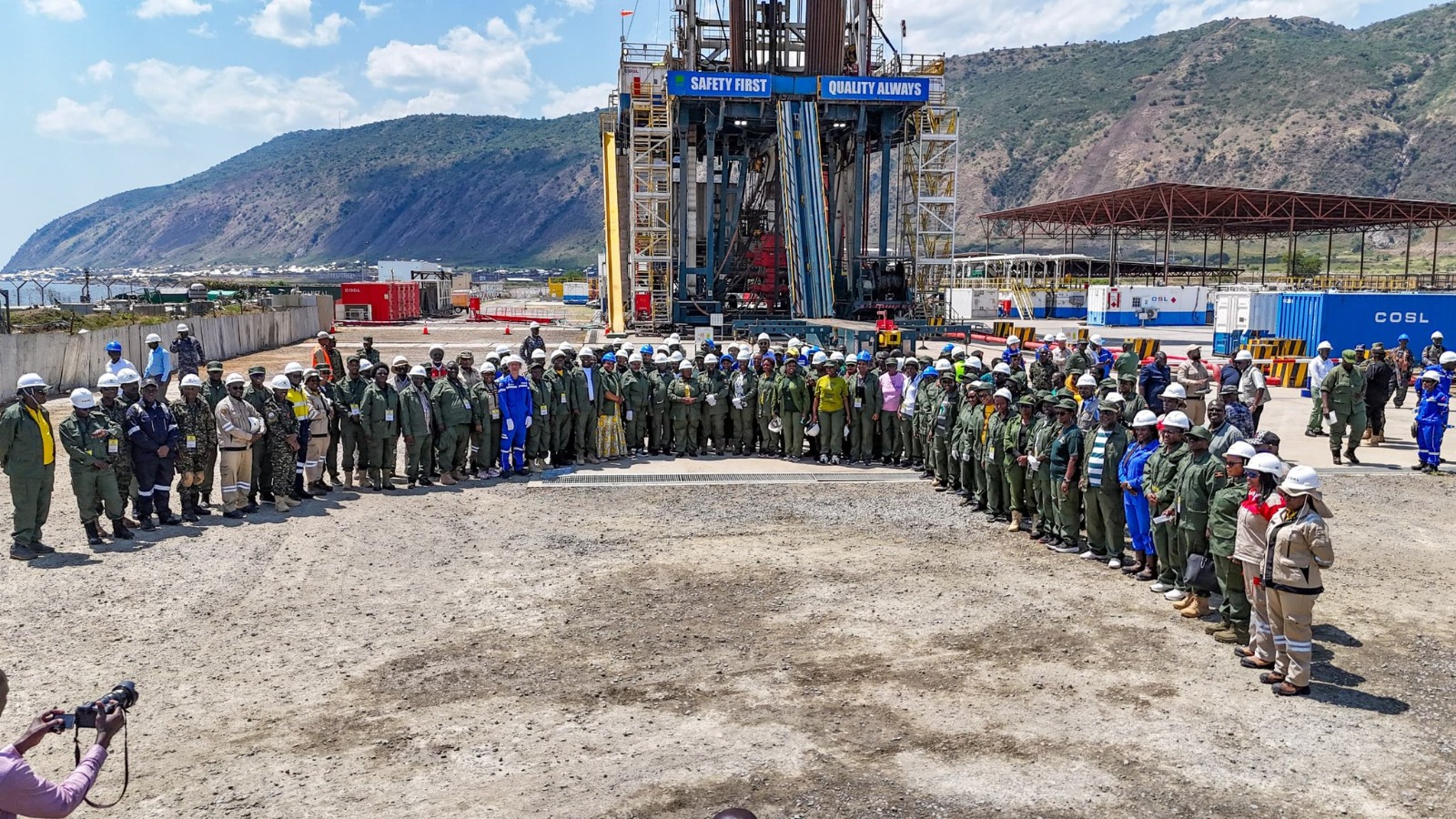
The delegation, led by Vice President Maj. (Rtd) Jessica Alupo and Prime Minister Robinah Nabbanja, recently visited key oil and gas infrastructure projects in the Albertine Graben as part of the induction programme for the 2026–2031 Cabinet.
The tour included visits to the Kingfisher Development Area in Kikuube District, East African Crude Oil Pipeline (EACOP) Pump Station 1 in Buliisa, Kabalega Industrial Park and Kabalega International Airport in Hoima District.
The leaders were received by the Permanent Secretary at the Ministry of Energy and Mineral Development, Irene Bateebe, alongside officials from the Petroleum Authority of Uganda (PAU), Uganda National Oil Company (UNOC) and China National Offshore Oil Corporation (CNOOC Uganda).
Speaking during the visit, Bateebe said Uganda’s petroleum industry represents more than the extraction of natural resources.
“Our petroleum sector is not just about resources underground – it is about vision, resilience, and responsible stewardship for generations,” she said.
The visit comes at a critical stage in Uganda’s oil development programme, with 2026 earmarked as the country’s First Oil year after decades of exploration and investment.
At the Kingfisher oil field, one of Uganda’s two major upstream petroleum development projects, PAU officials assured Cabinet that drilling activities have successfully reached the projected oil reserves underground.
The Kingfisher project, operated by CNOOC Uganda, is expected to produce up to 40,000 barrels of oil per day at peak production.
During a briefing at Well Pad 2, Cabinet members were informed that eight of the 22 wells drilled so far have already been completed and are ready for production. Officials noted that commissioning and final preparations are progressing steadily as the project moves closer to commercial production.
The delegation also toured the Central Processing Facility (CPF), where crude oil will be processed before being transported through the Kingfisher feeder pipeline into the East African Crude Oil Pipeline for export.
CNOOC Uganda officials reported that major infrastructure works have been completed and that commissioning activities are ongoing.
“The project continues to advance safely towards production while creating long-term value for Uganda through national content development and community programmes,” company officials said.
Vice President Alupo reaffirmed government’s commitment to supporting the successful implementation of Uganda’s petroleum projects.
She said government would continue to provide a conducive environment for investment, construction and future production activities to ensure the sector delivers maximum economic benefits to Ugandans.
From Kingfisher, the delegation proceeded to EACOP Pump Station 1, the starting point of the 1,443-kilometre heated crude oil pipeline that will transport Uganda’s crude oil to the export terminal at Tanga on Tanzania’s Indian Ocean coast.
The pipeline is a critical component of Uganda’s petroleum value chain and is expected to unlock access to international markets once production begins.
The Cabinet delegation also visited Kabalega International Airport, which was developed primarily to support oil and gas activities in the Albertine region while enhancing regional connectivity and trade.
Earlier in the day, the team toured Hoima City Stadium, the newly commissioned 20,000-seat multi-purpose facility that is expected to host matches during the 2027 Africa Cup of Nations (AFCON), which Uganda will co-host with Kenya and Tanzania.
UNOC Chief Executive Officer Proscovia Nabbanja said the country’s petroleum projects are steadily progressing toward production, with strong coordination among government agencies and private sector partners.
The Cabinet tour underscored the strategic importance of the petroleum sector to Uganda’s economic transformation agenda, with officials expressing optimism that the long-awaited First Oil milestone will mark the beginning of a new era of industrialisation, infrastructure development and revenue generation for the country.