COSASE orders arrest of Wangadya over failure to appear before parliament
The committee's decision to invoke its powers therefore sends a strong message to heads of government institutions that parliamentary summonses are not optional.
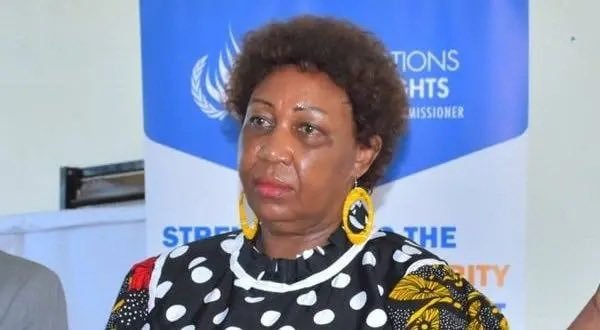
A confrontation between Parliament and the Uganda Human Rights Commission (UHRC) has escalated after a parliamentary committee ordered the arrest of the Commission’s chairperson, Mariam Wangadya, for failing to appear before legislators to answer questions arising from an audit report.
The Committee on Commissions, Statutory Authorities and State Enterprises (COSASE), chaired by Muwada Nkunyingi, directed the Criminal Investigations Directorate (CID) to arrest Wangadya and produce her before the committee at 9:00 a.m. after she failed to honour a second summons.
The dramatic order came as COSASE scrutinised the Auditor General’s report on the UHRC, with lawmakers seeking explanations from the Commission over issues contained in the audit findings.
“I want to instruct our CID to look for Mariam Wangadya, arrest her and bring her before this committee,” Nkunyingi told the committee.
The chairperson invoked Rule 218 of Parliament’s Rules of Procedure, which provides special powers to parliamentary committees to enforce the attendance of witnesses summoned to appear before them.
A summons ignored
According to COSASE, Wangadya had been given additional time to appear before the committee but failed to do so.
The committee said the reasons communicated for her absence were not satisfactory.
Instead of appearing before COSASE, Wangadya reportedly communicated through the Commission’s Accounting Officer that she would appear before another parliamentary committee.
For COSASE, that response crossed a line.
The committee argued that once a parliamentary committee summons a witness, the witness cannot independently determine which committee to appear before or substitute physical attendance with a written response without the committee’s consent.
Nkunyingi described Wangadya’s decision as an act of insubordination and potentially contemptuous of parliamentary proceedings.
The dispute therefore goes beyond a missed appointment. At its centre is a broader question about the limits of institutional independence and Parliament’s powers to hold public bodies accountable for the use of public resources.
COSASE maintains that Wangadya was specifically summoned because the Auditor General’s report contained matters requiring her personal response as head of the human rights body.
The committee has now resolved to involve Parliament Police and other enforcement mechanisms to ensure that Wangadya appears before it.
The tribunal question
The standoff unfolded against another revelation concerning the functioning of the Uganda Human Rights Commission’s tribunal.
During the COSASE proceedings, UHRC commissioners told legislators that the Commission’s tribunal last sat in December 2025.
The commissioners explained that the tribunal can only be constituted when the chairperson and at least three other members are present.
They further told the committee that the chairperson is responsible for convening and chairing tribunal sittings.
The disclosure has raised fresh questions about the growing backlog of cases before the Commission, particularly cases that have remained unresolved for extended periods.
For a body whose mandate includes investigating human rights violations and providing avenues for redress, delays in determining complaints can have significant consequences for victims seeking justice.
COSASE is scrutinising the ageing cases alongside other issues highlighted in the Auditor General’s report.
Accountability versus institutional independence
The confrontation comes at a sensitive time for Uganda’s human rights watchdog, whose constitutional mandate places it at the centre of protecting and promoting human rights.
The UHRC is constitutionally established as an independent institution, but like other public bodies, it remains subject to financial and administrative scrutiny by Parliament.
COSASE’s position is that institutional independence does not exempt public officials from appearing before Parliament when lawfully summoned.
The committee’s decision to invoke its powers therefore sends a strong message to heads of government institutions that parliamentary summonses are not optional.
At the same time, the episode is likely to intensify debate over how Parliament exercises its oversight powers when dealing with institutions constitutionally mandated to operate independently.
For now, however, COSASE’s position is unequivocal: Wangadya must appear before the committee and respond to the questions arising from the Auditor General’s report.
The committee has set 9:00 a.m. as the time for her appearance, leaving the next chapter of the standoff to the enforcement mechanisms Parliament has now activated.