Gov’t seeks UGX 893Bn loan for long-promised Jinja–Kamuli road
The Public Finance Management Act, 2015, similarly requires loan terms and conditions to be laid before Parliament and approved by resolution, reinforcing Parliament’s role as a critical gatekeeper over public borrowing.
By Grace Norah Asianut, Parliament Watch
The Government has returned to Parliament seeking approval for a €207.77 million (about Shs892.6 billion) loan to finance the long-awaited upgrading of the 127-kilometre Jinja–Mbulamuti–Kamuli–Bukungu road and 10 kilometres of roads in Jinja City, after renegotiating an earlier financing package and cutting the proposed borrowing by €22.68 million.
The revised request, tabled by Minister of Finance Henry Musasizi on August 6, 2026, represents a significant reduction from the €230.45 million loan Parliament approved in October 2025 for the same project. Parliament’s records confirm that the earlier facility was approved on October 30, 2025.
Musasizi told Parliament that the reduction followed negotiations between the Ministry of Finance, Ministry of Works and Transport, Citibank and the African Trade Investment Development Insurance (ATIDI).
“These discussions resulted in a reduction in the financing requirements for the civil works and an improvement in the financing terms,” Musasizi said.
According to the Minister, the renegotiation reduced the financing requirement by €22.68 million, equivalent to about Shs97.44 billion, from the previously approved €230.45 million to €207.77 million.
The revised financing structure also follows a change in the lending policy of Sinosure, the Chinese export credit agency that had been expected to provide insurance support for the original transaction.
Musasizi explained that Sinosure subsequently changed its policy to limit financing of non-revenue or non-self-financing projects to those not exceeding €100 million, making the original financing arrangement unsuitable for the road project.
The Ministry subsequently engaged Citibank to restructure the financing, with ATIDI now providing the insurance cover.
The reduction in the proposed loan is likely to strengthen the Government’s case before Parliament, but it does not eliminate the central question confronting legislators: is borrowing nearly Shs900 billion for the project financially and economically justified at a time when Uganda’s public debt and debt-service obligations remain under scrutiny?
Under Article 159 of the Constitution, Government may borrow from any source, but cannot borrow or raise a loan on behalf of itself or another public institution without authorisation under an Act of Parliament. The terms and conditions of the loan must be laid before Parliament and approved by resolution before they take effect.
The Public Finance Management Act, 2015, similarly requires loan terms and conditions to be laid before Parliament and approved by resolution, reinforcing Parliament’s role as a critical gatekeeper over public borrowing.
That means the latest request is not merely a financing formality. It gives Parliament another opportunity to test whether the proposed borrowing delivers sufficient public value, whether the financing terms are favourable and whether the project can be implemented without the delays and cost pressures that have affected other large infrastructure projects.
Documents tabled before Parliament indicate that the financing will be divided into two facilities.
Citibank will provide approximately €179.26 million, including insurance, under an ATIDI-covered facility for the works. A further €28.51 million will be obtained through direct commercial lending from Citibank to meet land-compensation and supervision costs, including the owner’s engineer.
The financing is therefore broader than the civil works contract alone.
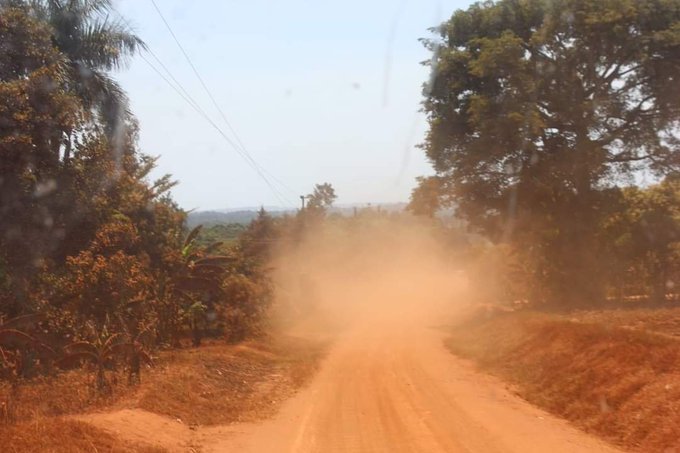
The project involves upgrading the existing 127-kilometre Class C gravel road to paved Class II standard, together with drainage and other associated infrastructure. Parliamentary documents from the earlier financing approval indicate that the upgraded road is expected to have a 20-year design life.
The project forms part of the Government’s Integrated Transport Infrastructure and Services Programme, which is aimed at expanding and improving strategic transport infrastructure.
The road is also listed in Government’s public investment and debt-management documentation under the Integrated Transport Infrastructure and Services programme. The proposed project carries significance beyond its financial figures.
The Jinja–Mbulamuti–Kamuli–Bukungu corridor has been described for years as a strategically important link for eastern Uganda. It connects Jinja and Kamuli and extends towards Bukungu in Buyende, providing access towards several districts around Lake Kyoga.
Government says the Bukungu terminus is a gateway towards Amolatar, Kaberamaido, Soroti, Nakasongola and Kayunga, potentially providing an alternative north–south route.
The corridor also has agricultural, tourism and commercial significance, linking communities and production areas to markets in Jinja and beyond. The road’s history, however, has been marked by repeated promises and delays.
It has been described locally as one of Uganda’s long-promised road projects, with the Government having pledged its tarmacking for more than two decades. The road was again identified among priority infrastructure projects before the latest financing arrangements emerged.
That history makes the latest financing request particularly sensitive. For residents who have waited years for a paved road, another loan approval without timely implementation would risk deepening public frustration.
The concerns surfaced almost immediately after Musasizi tabled the revised proposal. Patrick Nsamba Oshabe welcomed the project but questioned the criteria Government uses to determine which roads receive financing.
His concern was not necessarily opposition to the Jinja–Kamuli project, but whether Government’s borrowing priorities adequately reflect the needs of other parts of the country where communities continue to lack paved roads.
Joseph Gonzaga Ssewungu similarly asked whether Parliament had ever resolved that newly created districts should receive priority in road financing and questioned when districts such as Kalungu, which he said still lack tarmac roads, would benefit from comparable financing.
Deputy Speaker Thomas Tayebwa cautioned MPs against turning the procedural stage into a substantive debate. “These are the issues you will consider during debate… You can even refuse to pass the loan,” Tayebwa told the House.
His intervention highlights the constitutional balance at play: Government may negotiate and propose borrowing, but Parliament retains the authority to scrutinise and approve, or reject, the financing.
Tayebwa directed the relevant committees to establish whether the project aligns with approved Government work plans and gave them 45 days to complete their scrutiny and report back to the House.
One of the more important issues for Parliament to interrogate is the relationship between the proposed financing and the existing civil works contract.
According to the documents tabled before Parliament, the civil works contract, valued at approximately Shs649.57 billion, was signed with PowerChina International Group Limited on March 15, 2023, for the design and construction of the 127-kilometre road and 10 kilometres of Jinja City roads.
This creates a crucial accountability question.
If the civil works contract was signed in 2023 and Parliament approved the original financing in 2025, why has implementation not progressed at the expected pace?
Parliament’s own debate in October 2025 revealed concerns over delays to the project. During that debate, lawmakers pressed the Finance Ministry over implementation and warned that Government should address stalled projects before returning with additional borrowing requests.
The financing renegotiation may have resolved one obstacle, but Parliament still has to establish whether other bottlenecks, including land acquisition, compensation, contractor mobilisation, financing conditions and project management, could delay implementation again.
The proposed borrowing also arrives against a broader fiscal backdrop.
Uganda’s public debt rose sharply in the 2024/25 financial year, reaching about US$32.3 billion, according to Ministry of Finance figures cited by Reuters, with the debt-to-GDP ratio rising to 51.3 percent. The increase was driven largely by higher domestic borrowing, while debt-service costs have increasingly competed with spending priorities.
Government has nevertheless maintained that borrowing for productive infrastructure can support economic growth and improve the country’s productive capacity.
That argument is particularly relevant to the Jinja–Kamuli corridor. A paved road can reduce travel times and transport costs, improve access to markets, stimulate agricultural trade and strengthen connections between communities and urban centres.
But the economic case for borrowing depends ultimately on delivery.
A loan-financed road that is completed on time, within budget and to the required quality can become a productive public asset.
A delayed project, on the other hand, can leave taxpayers paying interest while the promised economic benefits remain unrealised.
The €207.77 million request therefore presents Parliament with an opportunity to look beyond the headline saving of €22.68 million.
The National Economy Committee and the relevant sector committee will need to examine the financing terms, projected repayment obligations, value for money, project readiness, land-compensation requirements, contractor performance and implementation timetable.
They will also need to establish whether the renegotiated financing genuinely represents better value for taxpayers than the original arrangement. Government has made a strong case for the road’s strategic importance.
But Parliament’s job is not simply to determine whether the road is desirable. It must determine whether this financing arrangement is affordable, sufficiently transparent, economically justified and capable of delivering the promised road without another cycle of delay and additional borrowing.
The €22.68 million saving is welcome. The bigger test, however, is whether Government can turn that saving into a project that is completed, and whether the nearly Shs900 billion borrowing ultimately produces an asset capable of paying its dividends through lower transport costs, greater trade and stronger regional connectivity.
For communities that have waited more than two decades, the question is no longer whether the road should be built.