Medical Intern Strike: FDC warns ultimatum could deepen Uganda’s health crisis
Opposition party says forcing unpaid interns back into hospitals without guaranteed welfare puts patients and young doctors at risk
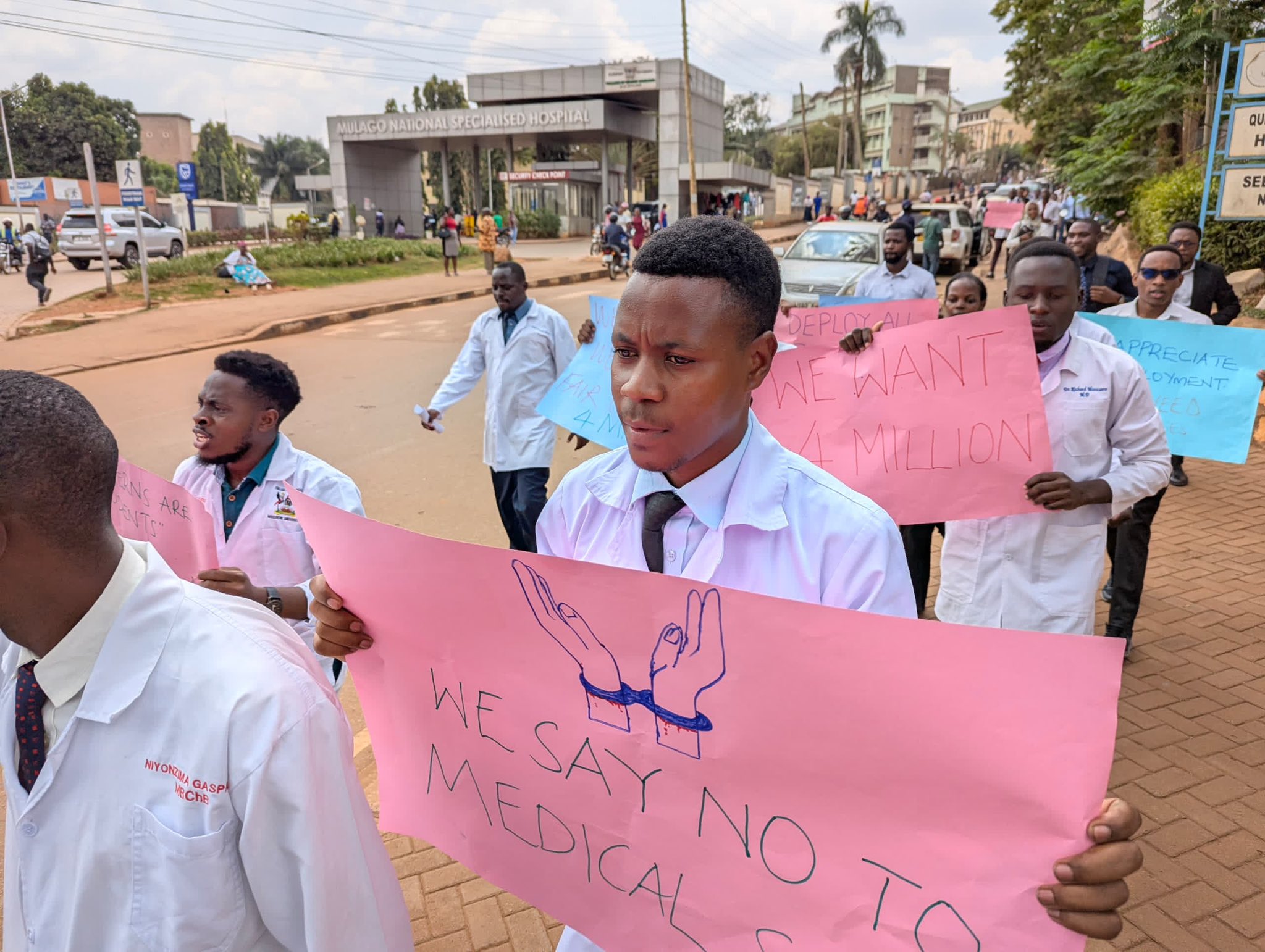
Uganda’s long-running dispute over the welfare and deployment of medical interns has taken a sharper political turn, with the Forum for Democratic Change (FDC) condemning a Ministry of Health directive ordering striking interns to report to their designated hospitals by August 14 or risk losing their internship placements.
The FDC says the ultimatum does little to address the issues at the heart of the dispute and could instead expose both medical interns and patients to greater risks in already overstretched public health facilities.
In a statement issued by FDC Vice Chairperson Robert Centenary Franco, the party argued that sending medical interns to hospitals without guaranteed pay, accommodation, food and other basic support cannot be regarded as a sustainable deployment of health workers.
“Sending an intern to run a ward without pay, without support, and not even with guarantee that they will be facilitated is not deploying them to save lives,” the party said, arguing that such an approach puts both patients and interns at risk.
The interns behind the hospital system
The controversy has drawn attention to the critical role played by medical interns in Uganda’s public health system.
According to the FDC, interns help fill a major gap in the country’s health workforce and are routinely involved in patient care in government hospitals, including work on wards, in theatres and maternity units.
The party cited an estimated doctor-to-patient ratio of about one doctor for every 24,000 Ugandans, describing the shortage as a major pressure on the health system.
It argued that medical interns have consequently become an important part of the workforce supporting public hospitals, often working long hours and attending to patients at all hours of the day and night.
The FDC says the current dispute therefore goes beyond allowances and touches on the capacity of Uganda’s health system to provide safe and reliable services.
What is driving the strike?
The Federation for Uganda Medical Interns has maintained that the strike is linked to concerns over the disputed National Education and Training for Health Policy and the absence of guarantees on equal welfare and allowances for government-sponsored and privately sponsored interns.
The FDC says the government has so far failed to resolve these concerns.
At the centre of the welfare debate is the question of how interns will be supported while undertaking compulsory practical training in public health facilities.
The opposition party argues that interns should not be expected to report to hospitals without adequate arrangements for their basic needs.
“Forcing a doctor to a hospital without food, no accommodation and nothing to start from” is not sustainable, the FDC said.
The cost of supporting interns
The debate also comes against the backdrop of competing demands on public resources.
The FDC cited Ministry of Health figures putting the annual cost of facilitating medical interns at Shs35.7 billion.
The party contrasted this with what it said is Uganda’s estimated annual expenditure of between US$150 million and US$175 million on medical treatment abroad for selected citizens.
The FDC argues that the cost of facilitating all medical interns should therefore be viewed as an investment in Uganda’s own health system rather than simply an additional expenditure.
The party has also proposed that government redirect available savings to resolve the impasse.
It cited more than Shs24 billion in savings from suspended public holiday functions as one possible source of funding for intern facilitation.
The FDC also questioned whether savings arising from changes to the parliamentary budget could be considered for the same purpose.
It referenced Speaker Jacob Oboth-Oboth’s decision to reduce the Office of the Speaker’s budget from more than Shs24 billion to approximately Shs3.9 billion to Shs4 billion, with the difference directed towards parliamentary committees.
The party argues that some of these resources could instead be considered in addressing critical gaps in the health sector.
A wider debate over Uganda’s health financing
Beyond the immediate dispute, the FDC has used the internship crisis to raise broader concerns about Uganda’s health financing system.
The party accused successive governments of failing to establish a functioning National Health Insurance Scheme for the general population and of failing to provide quality and accessible healthcare to ordinary Ugandans.
It also criticised what it described as unequal access to healthcare, arguing that political leaders and Members of Parliament are able to access private medical services and insurance while the majority of taxpayers depend on public hospitals.
The FDC says the contrast highlights the need for greater investment in public healthcare and better protection for health workers.
FDC demands
The opposition party is now calling for the Ministry of Health to withdraw the August 14 ultimatum and return to negotiations with the medical interns.
It has outlined three immediate demands:
• Withdrawal of the August 14 forfeiture ultimatum issued to medical interns.
• A written commitment from the Ministry of Health guaranteeing equal facilitation and allowances for government-sponsored and privately sponsored medical interns.
• A supplementary budget of at least Shs35.7 billion dedicated to intern facilitation, using existing government and parliamentary savings, including the Shs24 billion the party says was saved from suspended public holiday functions.
For the FDC, the dispute is ultimately about more than the fate of a group of young doctors.
It says Uganda cannot expect medical interns to help carry the weight of an overstretched public health system while leaving their basic welfare unresolved.
The government’s August 14 deadline has therefore placed the country at another critical point: whether the standoff will result in further disruption in public hospitals or push the government and medical interns back to the negotiating table.
For patients who depend on public hospitals, the outcome could have consequences far beyond the internship programme itself.