Building Bridges, Backing Growth: Herizon connects women-led enterprises to capital and regional markets
Held under the theme ‘Building Bridges for Business & Impact’, the event marked a critical milestone in the Herizon project, a strategic initiative designed to build economic opportunities for women and increase access to products and services that improve the quality of life for women in Kenya and Uganda.
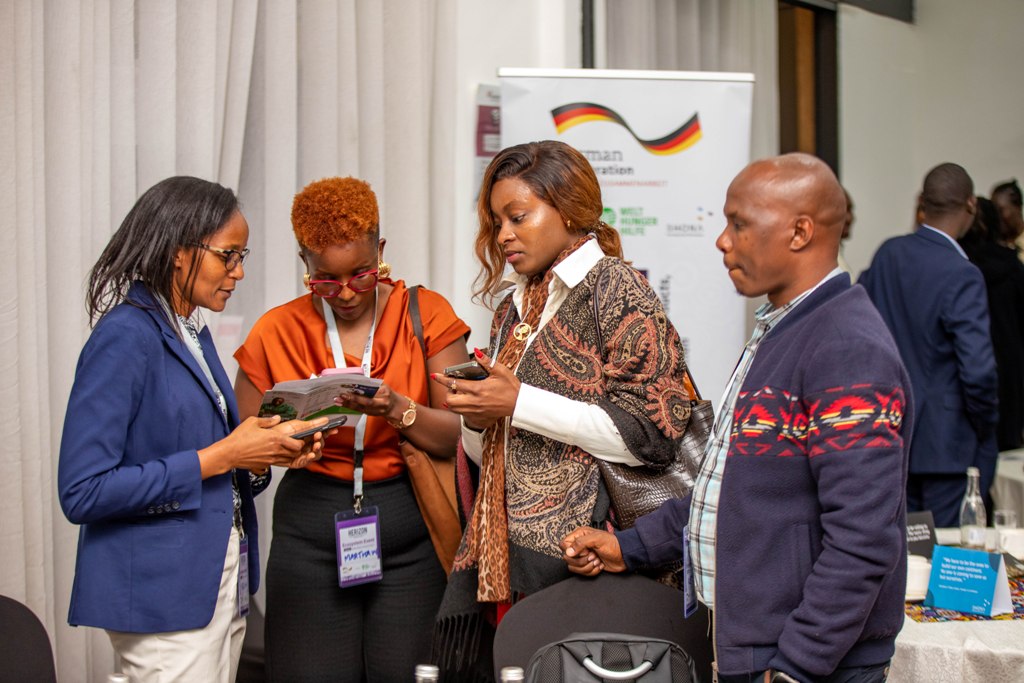
At Nairobi’s Swiss-Belinn Hotel Nairobi Westlands, founders, investors, and ecosystem leaders gathered for more than a networking forum. Convened by SHONA Group in partnership with Welthungerhilfe (WHH) and supported by Germany’s Federal Ministry for Economic Cooperation and Development (BMZ), the meeting signaled a deliberate push to rewire how women-led enterprises in East Africa access capital, markets, and cross-border opportunities.
Held under the theme “Building Bridges for Business & Impact,” the convening marked a milestone in the Herizon project, a strategic initiative aimed at expanding economic opportunities for women while improving access to products and services that enhance quality of life across Kenya and Uganda.
From Participation to Power
Women are active creators of enterprises across East Africa, yet remain structurally underserved in access to growth capital, formal markets, and regional networks. Herizon is designed to confront that imbalance directly.
By connecting founders from Kenya and Uganda with gender-lens investors and business development leaders, SHONA and WHH are strengthening regional value chains and cultivating enterprises capable of scaling sustainably beyond their home markets.
The numbers underscore the urgency. In Kenya, small and medium enterprises account for roughly 98 percent of all businesses and contribute about 40 percent of GDP. In Uganda, SMEs represent about 90 percent of the private sector, employ over 2.5 million people and contribute approximately 20 percent to GDP. Despite this economic weight, women-led enterprises continue to face disproportionate barriers, particularly in financing and cross-border trade.
The Three Levers of Scale
Guided by seasoned industry experts, participants engaged around three practical levers for growth: driving sales, embedding women more intentionally in value chains, and increasing access to investment capital within the realities of East Africa’s business landscape.
The 41 enterprises showcased operate across agriculture, climate-smart food production, nutrition, climate resilience, water and sanitation, digitalisation, skills development and broader economic empowerment; sectors that sit at the intersection of commercial viability and social impact.
“Platforms like Herizon shift the conversation from survival to scale,” said Gloria Achiro, CEO of Jather Farmers in Uganda. “When you step into a room where investors, partners and fellow entrepreneurs are actively looking for collaboration, you begin to think beyond local limitations. Cross-border learning is powerful because it expands both your market and your mindset.”
Aligning Development and Commercial Capital
The partnership behind Herizon reflects a deliberate blending of development priorities and commercial discipline. WHH’s focus on inclusive growth and resilient livelihoods complements SHONA’s SME development and capital mobilisation model. The result is an approach that treats ecosystem strengthening as both systemic reform and deal-making.
“Achieving long-term, systemic transformation in East Africa requires building resilient markets that serve the needs of the population,” said Jovia Nampiina, WHH Sector Advisor for Economic Empowerment and Youth Skills. “Through the Herizon Program, we are focusing on enterprises driving innovation in climate-smart food production, nutrition and WASH. When we strengthen women-led businesses in these sectors, we don’t just generate economic returns; we build community resilience against climate change and secure sustainable, inclusive growth for the region.”
For SHONA Group, the event reinforced its long-term commitment to building what it calls “Good Businesses” — enterprises that generate value not only for shareholders, but also for customers, employees, suppliers, communities and the environment.
“We are deliberate about building bridges where gaps exist,” said Joachim Ewechu, SHONA’s CEO. “Bridges between capital and entrepreneurs. Bridges between markets and ambition. Bridges between Kenya and Uganda. When women-led enterprises are connected to affordable capital and strategic networks, the result is not incremental growth;it is structural transformation.”
A Regional Growth Thesis
Herizon underscores a clear proposition: sustainable economic development in East Africa will not emerge from isolated grants or fragmented interventions. It will be built through intentional ecosystem design, disciplined capital deployment, and cross-border collaboration.
By convening entrepreneurs and investors under one roof and grounding conversations in practical growth levers, SHONA and its partners are advancing a regional growth thesis anchored in inclusion, resilience, and scale.
If the energy in Nairobi is any indication, the future of women-led enterprise in East Africa will not be defined by constraints but by connection.