Uganda strengthens paediatric healthcare training as Mbarara University signs landmark MOU with international humanitarian organisation
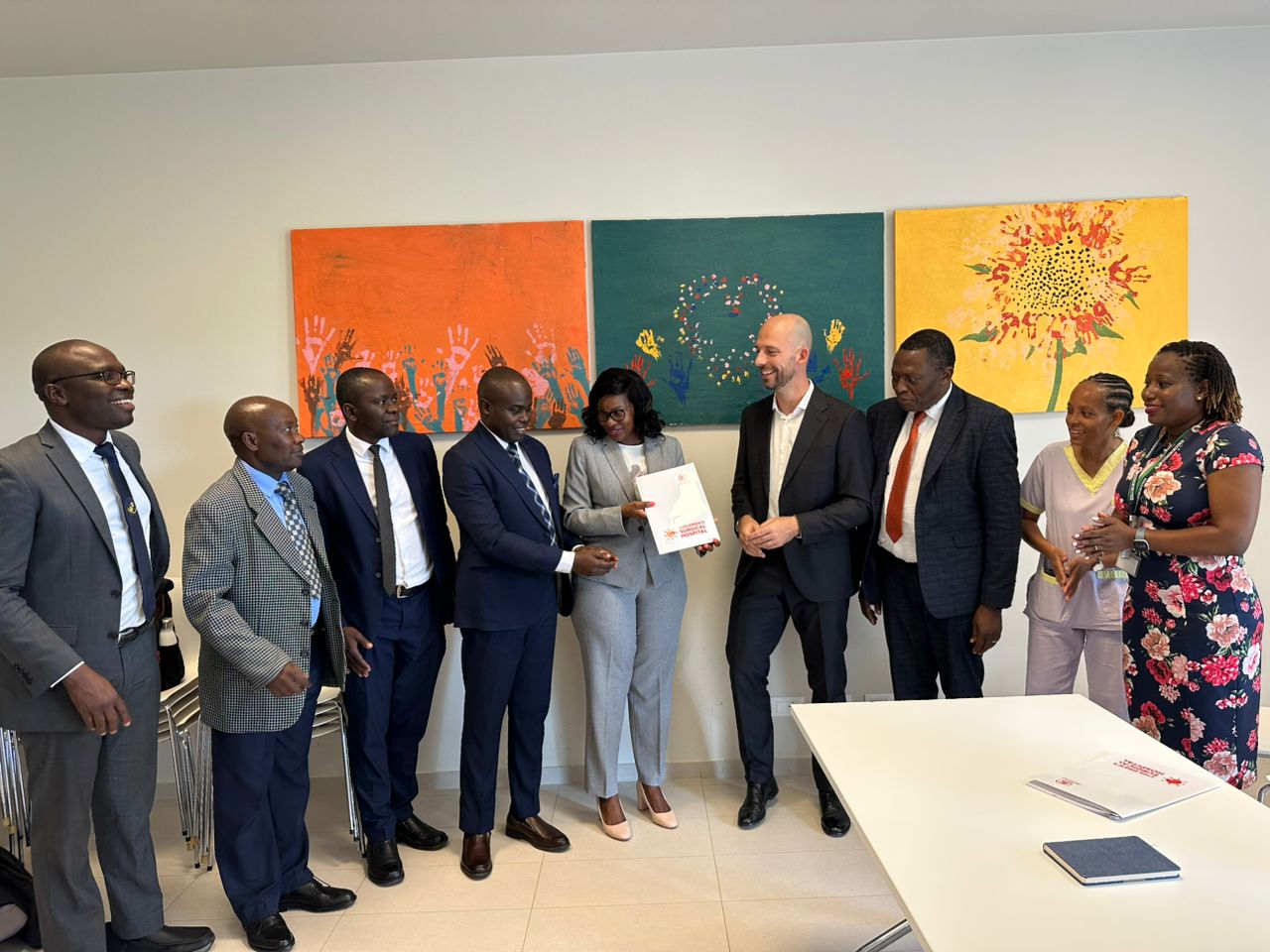
A new educational partnership between Mbarara University of Science and Technology and the Children’s Surgical Hospital in Entebbe promises to transform postgraduate medical training in paediatric surgery, anaesthesia, and child health, witnessed by Uganda’s most senior health official
Uganda has taken a significant step toward strengthening the quality of specialised medical training for its health professionals, with the signing of a Memorandum of Understanding between Mbarara University of Science and Technology (MUST) and Emergency, an international humanitarian organisation dedicated to providing free, high-quality medical care to people affected by war and poverty.
The signing ceremony was witnessed by Prof. Charles Olaro, the Director General of Health Services at Uganda’s Ministry of Health, a signal of the government’s recognition of the partnership’s strategic importance to the country’s postgraduate medical education agenda.
The MOU, signed at Emergency’s Children’s Surgical Hospital in Entebbe, establishes a formal educational collaboration between the two institutions, creating a structured framework through which Ugandan health professionals will access advanced training in some of the most critical and historically under-resourced areas of child healthcare.
At its core, the memorandum is designed to support postgraduate medical education and skills development across three specialist disciplines that carry an enormous burden in Uganda’s public health system: paediatric surgery, anaesthesia, and paediatrics, as well as related medical fields connected to the care of children in complex clinical settings.
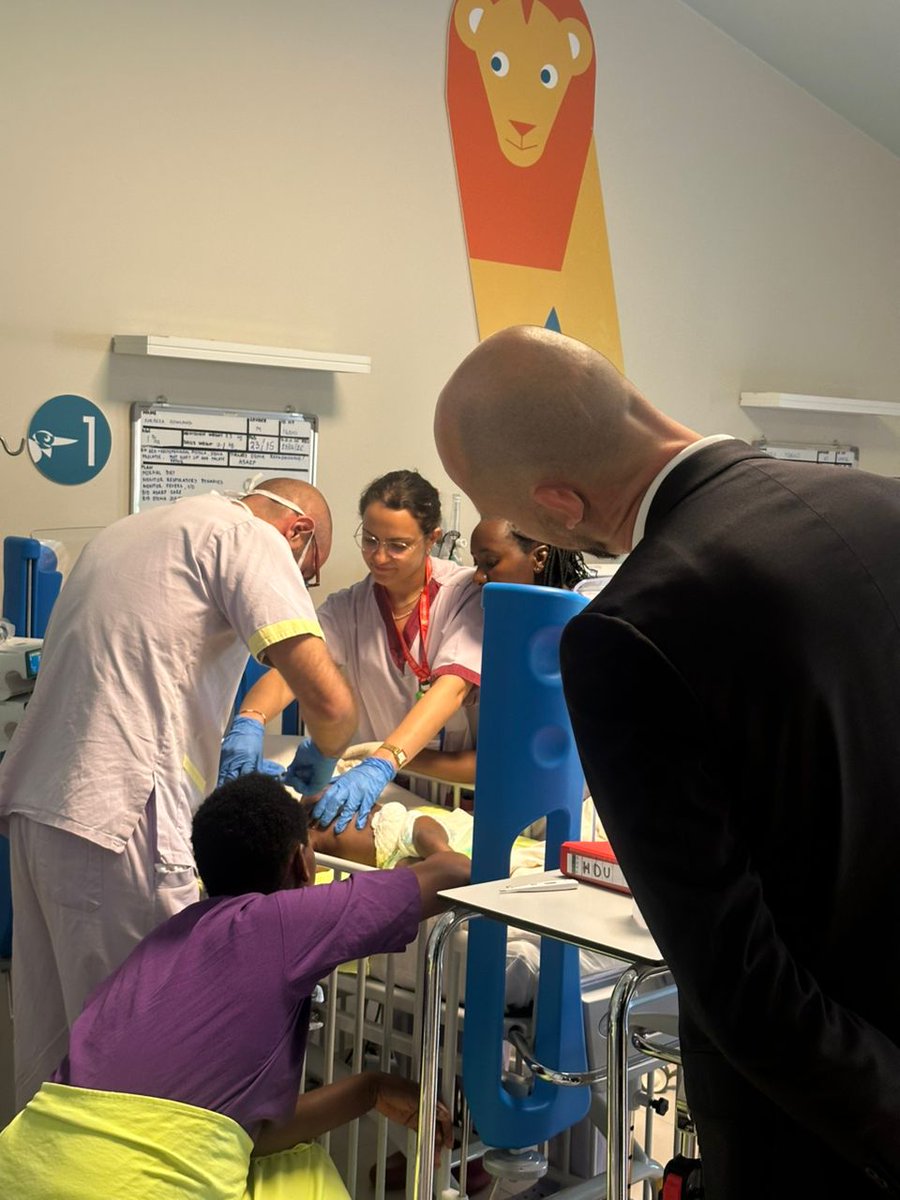
The partnership leverages Emergency’s Children’s Surgical Hospital in Entebbe, a facility already recognised for delivering high-quality, free surgical and medical care to vulnerable children, as a centre of practical, hands-on learning for postgraduate trainees from Mbarara University of Science and Technology.
For MUST, one of Uganda’s leading health sciences universities, the MOU represents a significant expansion of its postgraduate training capacity, connecting its students and faculty to an institution with deep operational experience in delivering specialised paediatric care under challenging conditions.
For Emergency, the partnership reflects the organisation’s broader philosophy that sustainable improvement in healthcare in developing contexts requires not only the provision of services but the deliberate transfer of knowledge and skills to local professionals who will carry that capacity forward long after any individual humanitarian intervention.
Uganda faces a persistent and well-documented shortage of specialists in surgical and anaesthetic care, particularly in the paediatric domain. Children requiring surgical intervention, whether for congenital conditions, traumatic injuries, or oncological diseases, frequently face long distances to access care, extended waiting times, or, in the worst cases, no access at all.
The deficit is not simply one of facilities and equipment. It is fundamentally one of trained human capital. Uganda produces too few paediatric surgeons, too few paediatric anaesthetists, and too few specialists in the complex, multi-disciplinary care that seriously ill children require. Strengthening the postgraduate training pipeline in these disciplines is one of the most direct and sustainable interventions available to address this gap.
The MUST-Emergency MOU addresses this challenge at the level where it is most consequential: the formation of the specialists themselves. By establishing a structured educational collaboration that gives postgraduate trainees access to Emergency’s clinical environment, expertise, and international standards of care, the agreement aims to produce a cohort of Ugandan specialists who are better prepared, more confident, and more capable than would be possible through domestic training alone.
Prof. Olaro’s presence at the signing underscored the Ministry of Health’s recognition that partnerships of this kind, linking Ugandan academic institutions to international organisations with proven clinical and educational track records, are central to the government’s strategy for building a stronger, more specialised health workforce.
Mbarara University of Science and Technology is one of Uganda’s most respected health sciences institutions, with a long track record of training doctors, nurses, and other health professionals who go on to serve in Uganda’s public and private health systems. Its postgraduate medical programmes have grown significantly in recent years, reflecting both the university’s ambition and the national need for more specialist-level training capacity.
Emergency is an Italian humanitarian organisation founded in 1994, operating in conflict-affected and low-income contexts across Africa, Asia, and the Middle East. Its work is built on the principle that high-quality medical care is a fundamental human right, and it operates some of the most technically advanced surgical facilities in the regions where it works. Its Children’s Surgical Hospital in Entebbe, one of the few dedicated paediatric surgical facilities in East Africa offering free care, serves as both a treatment centre and, through partnerships like the one now formalised with MUST, a centre of medical education and professional development.
The signing of this MOU arrives at a moment when Uganda’s health sector is navigating both significant challenges and genuine opportunities. The country’s population, young, growing, and predominantly rural, places enormous demands on a health system that is simultaneously expanding its infrastructure and working to fill persistent gaps in specialist capacity.