Busoga Kingdom, UNICEF sign landmark partnership to protect and empower 2.2 million children
The agreement was signed on Friday at the Royal Palace in Igenge by the Kyabazinga of Busoga, His Majesty William Gabula Nadiope IV, and UNICEF Uganda Country Representative Dr. Robin Nandy, in a ceremony attended by government officials, kingdom leaders, development partners, school representatives and young people.
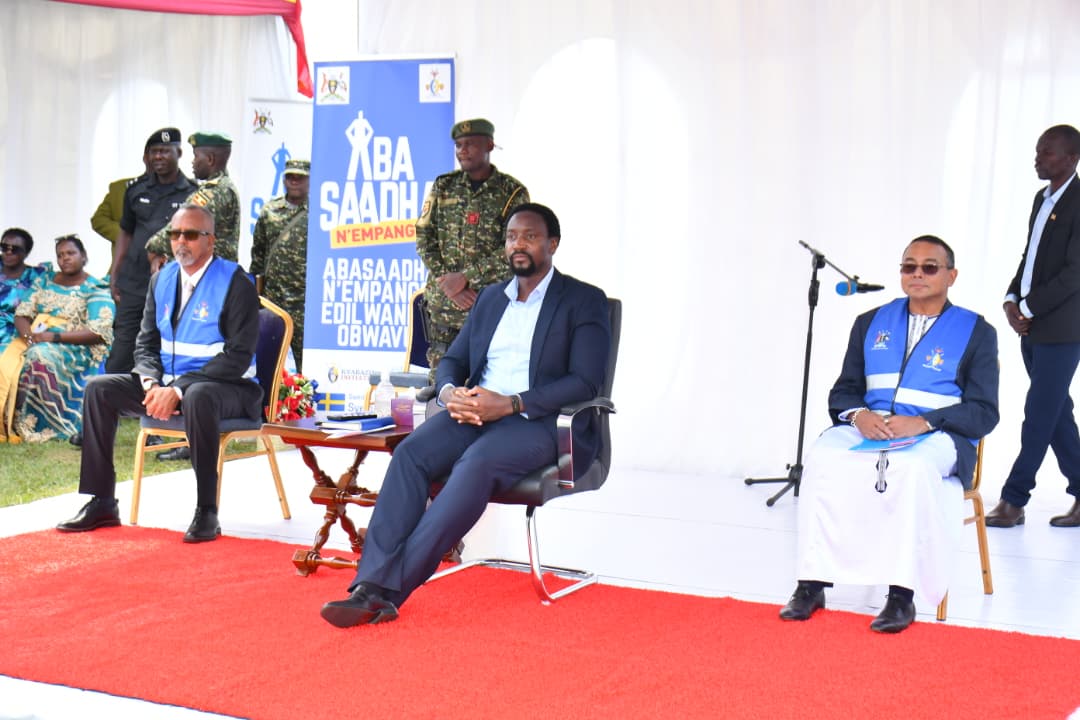
JINJA — Busoga Kingdom and UNICEF Uganda have signed a landmark Memorandum of Understanding (MoU) aimed at improving the welfare, protection and development of more than 2.2 million children in the region.
The agreement was signed on Friday at the Royal Palace in Igenge by the Kyabazinga of Busoga, His Majesty William Gabula Nadiope IV, and UNICEF Uganda Country Representative Dr. Robin Nandy, in a ceremony attended by government officials, kingdom leaders, development partners, school representatives and young people.
The partnership, implemented through the Kyabazinga Initiatives, seeks to strengthen collaboration in child health, education, child protection, safeguarding, and community development through sustainable and culturally grounded approaches.
The event was attended by the Second Deputy Prime Minister, Owek. Alhaji Osman Ahmed Noor, kingdom royals, clan leaders, chiefs, development partners, more than 300 sub-county kingdom field officers and youth representatives.
Speaking during the ceremony, Kyabazinga Gabula said the partnership reflects a shared commitment to transforming the lives of children and creating a better future for Busoga and Uganda.
He said the foundation of the MoU was linked to his role as the UN National Goodwill Ambassador and Male Engagement Champion in ending teenage pregnancies, as well as his engagement with children during his time at Yale University in 2025.
The King said feedback from more than 200,000 learners and consultations with stakeholders revealed key challenges affecting children, including school dropouts, teenage pregnancies and child marriages.
“Among our key outputs were ensuring that children are in school at least up to the age of 18 years so that they are mentored, responsible and well-groomed into skilled, empowered and thriving leaders of tomorrow,” he said.
The Kyabazinga said the partnership will focus on reducing teenage pregnancies, child marriages, school dropout rates, improving maternal and child health, promoting safe water and sanitation, strengthening household incomes and encouraging community involvement in child protection.
He said the kingdom’s structures, including chiefs, clan leaders, the Royal Council, Cabinet and Kyabazinga Initiatives, would provide platforms for positive change and community mobilisation.
Dr. Robin Nandy described the agreement as a commitment to every child in Busoga, saying all children have a right to survive, thrive and achieve their full potential.
“We are united by a simple but powerful truth: Every child deserves to survive, thrive and fulfil their potential. These are not privileges, but their rights,” Nandy said.
The UNICEF representative highlighted four key areas of focus under the partnership: improving child health and nutrition through immunisation and information sharing, promoting quality education with emphasis on girls and early childhood development, protecting children from violence and harmful practices, and creating platforms for children to advocate for their rights.
Quoting a Lusoga saying, “Omwana takuzibwa mulala” — meaning a child does not grow up in one home alone — Nandy said raising children requires collective responsibility.
“We commit to being the village with you,” he said.
The Second Deputy Prime Minister and Kyabazinga Initiatives Board Chairperson, Owek. Osman Ahmed Noor, said the MoU represented more than a formal agreement.
“It is a promise that children’s voices will be heard, their dreams protected and their future nurtured,” he said.
He added that the kingdom was not only seeking financial assistance but a strategic partner with technical expertise and shared values.
“We were not merely seeking financial support. We were seeking a strategic partner with technical expertise and shared values,” Owek. Osman said.
The Executive Director of Kyabazinga Initiatives, Owek. Yudaya Babirye Kigenyi, said the partnership builds on existing efforts supported by UNICEF, UN agencies and government institutions to strengthen grassroots structures.
She said support received has helped train chiefs, clan leaders, kingdom officials, media, religious leaders and school heads, while establishing systems for data monitoring, child protection and community engagement.
Among the support provided are motorcycles for chiefdom coordinators, office equipment, computers, reflector jackets, community radio materials and a Kingdom situation room for evidence generation and monitoring.
Babirye also highlighted the kingdom’s education programme, “Eisomero n’Empikyi” (School is the Winning Master Card), which seeks to improve education outcomes and nurture culturally grounded young people.
She said 316 sub-county programme officers, many of them volunteers, are working with cultural and government leaders to prevent school dropouts, protect children and improve community action.
The officers also support efforts in health, food security and household income improvement to address poverty-related challenges.
The signing ceremony included the review of children’s feedback reports by the Kyabazinga and UNICEF officials, recognition of partners, presentation of equipment and testimonies from school clubs and village safeguarding committees.
Stakeholders said the partnership will establish joint coordination mechanisms to monitor progress, combining UNICEF’s technical expertise with the kingdom’s cultural leadership and community reach.
The ultimate goal, leaders said, is to build a Busoga where every child is protected, educated, healthy and able to fulfil their potential.