East Africa reforms signal lower trade costs but demand fiscal discipline from partner states
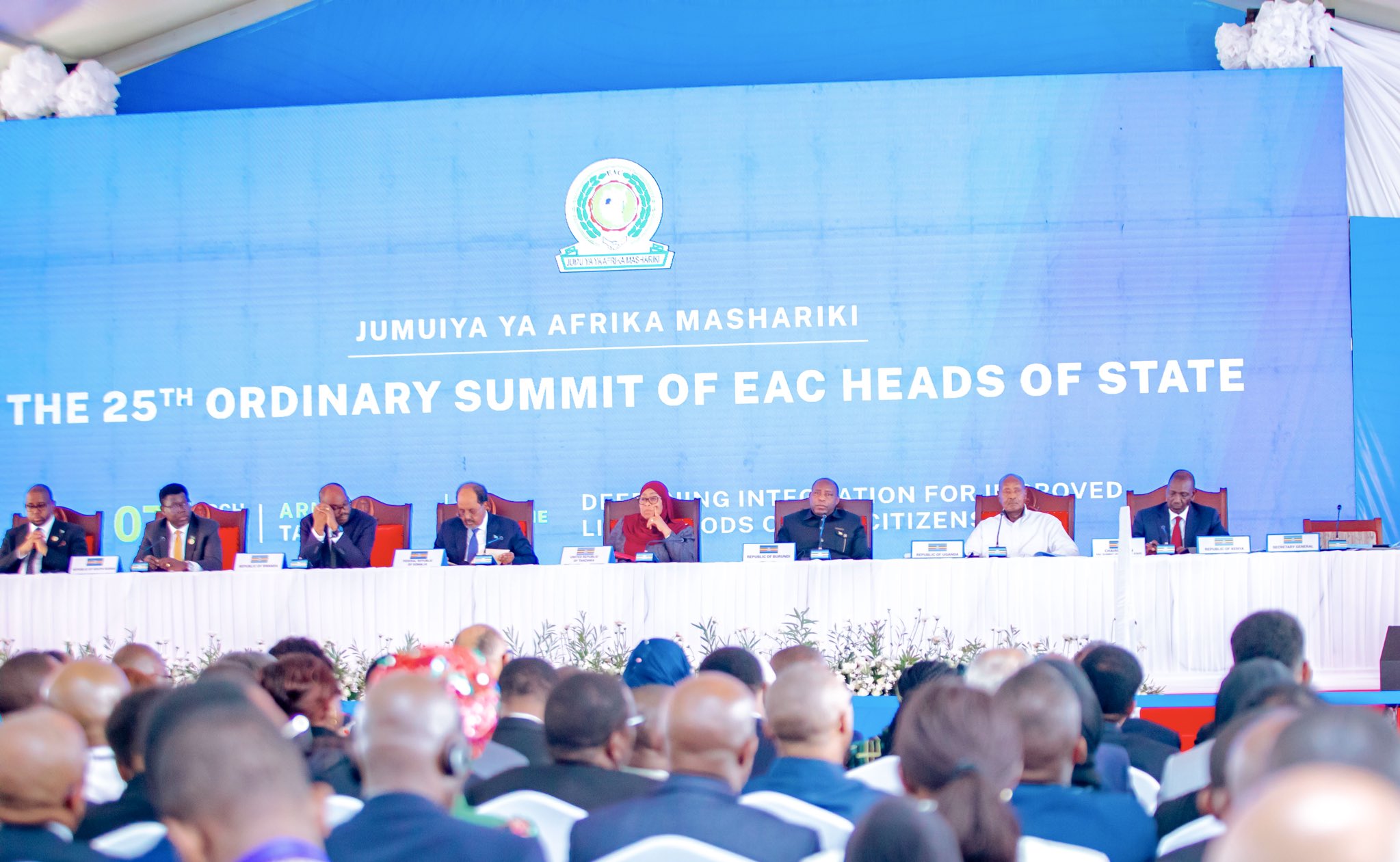
The outcomes of the 25th Ordinary Summit of Heads of State, held in Arusha in March 2026, reflect a deliberate shift toward fixing long-standing structural bottlenecks that have slowed regional integration and frustrated private sector growth.
A fresh wave of policy decisions by the East African Community is poised to reshape the business environment across the region, promising lower trade costs, improved market access, and stronger institutional stability, if fully implemented.
The outcomes of the 25th Ordinary Summit of Heads of State, held in Arusha in March 2026, reflect a deliberate shift toward fixing long-standing structural bottlenecks that have slowed regional integration and frustrated private sector growth.
A Test of Political Will
At the heart of the reforms is a new financing model for the bloc, replacing the previous contribution formula with a 50:50 structure, half equal contributions and half based on economic size.
For businesses, this change signals potential stability in the operations of regional institutions that underpin trade facilitation, dispute resolution, and infrastructure coordination. Chronic delays in remittances by member states have historically undermined EAC programmes, leading to stalled initiatives and uncertainty.
The revised formula introduces a more equitable system tied to GDP performance, effectively asking stronger economies to shoulder a larger burden. While this enhances fairness, it also tests political commitment, particularly among larger economies that may face higher contributions.
Complementing this is a one-off 50% waiver on arrears owed by partner states—an incentive designed to reset compliance and restore financial credibility. However, analysts note that without strict enforcement mechanisms, the risk of recurring defaults remains.
Non-Tariff Barriers
Perhaps the most immediate impact for businesses lies in the directive to eliminate all outstanding non-tariff barriers (NTBs) by June 2026.
Despite tariff liberalisation under the Customs Union, NTBs—ranging from quotas and discriminatory taxes to administrative restrictions, have remained the biggest obstacle to intra-regional trade. The policy brief indicates that 27 such barriers are still unresolved, affecting key sectors such as dairy, sugar, and tobacco.
For exporters and manufacturers, the removal of these barriers could unlock significant efficiencies. Reduced delays at borders, fewer compliance hurdles, and predictable market access would directly translate into lower operational costs and improved competitiveness.
However, implementation remains the biggest hurdle. Many NTBs are embedded in national laws and fiscal policies, meaning their removal will require politically sensitive reforms at the domestic level.
Unlocking Liquidity and Speed
A major highlight of the Summit is the launch of the EAC Customs Bond, a digital, region-wide guarantee system designed to replace multiple national transit bonds.
From a business perspective, this is a transformative development. By allowing traders to use a single bond across multiple borders, the system is expected to:
- Reduce the cost of transit trade
- Cut cargo clearance times
- Improve cash flow by freeing up capital previously tied in multiple guarantees
Estimates suggest that up to $2 billion in liquidity could be unlocked for reinvestment in trade and production.
This reform directly benefits logistics firms, manufacturers, and exporters operating along key corridors such as Mombasa–Kampala–Kigali and Dar es Salaam–DRC routes.
Market Expansion
The directive to fast-track the integration of newer member states—particularly the Democratic Republic of Congo, Somalia, and South Sudan—signals an expansion of the EAC market to over 300 million people.
For businesses, this presents enormous opportunities in sectors such as construction, agriculture, financial services, and consumer goods. The DRC alone offers vast demand potential and natural resource linkages.
However, the benefits hinge on these countries fully implementing EAC protocols, including the Customs Union and Common Market frameworks. Until then, regulatory inconsistencies and weak infrastructure could limit immediate gains.
Governance Reforms
Institutional reforms, including the adoption of a two-thirds quorum for decision-making, aim to address inefficiencies in EAC governance. This is expected to accelerate policy decisions in a bloc that has grown from three to eight member states.
Additionally, linking eligibility for top EAC positions to compliance with regional obligations introduces a new layer of accountability—potentially driving faster implementation of agreed reforms.
High Potential, High Execution Risk
Collectively, the Summit decisions represent one of the most comprehensive attempts to align policy, finance, and trade facilitation within the EAC framework.
For the private sector, the direction is clear: lower costs, wider markets, and improved efficiency. But the pace and consistency of implementation will determine whether these gains materialize.
The region’s track record suggests cautious optimism. While policy frameworks are often robust, execution at the national level has historically lagged.
If partner states follow through—particularly on NTBs, financing compliance, and customs harmonisation—the EAC could significantly enhance its position as one of Africa’s most attractive regional markets for trade and investment.
Failure to do so, however, risks reinforcing the very bottlenecks these reforms are designed to eliminate.