ESG moves from boardroom buzzword to business imperative in East Africa
The shift reflects a broader global trend where investors, regulators and consumers increasingly evaluate businesses based on their environmental stewardship, governance structures and social impact.

Environmental, Social and Governance (ESG) principles are rapidly evolving from corporate social responsibility initiatives into a core business strategy as companies across East Africa seek to strengthen resilience, attract investment and meet emerging regulatory requirements.
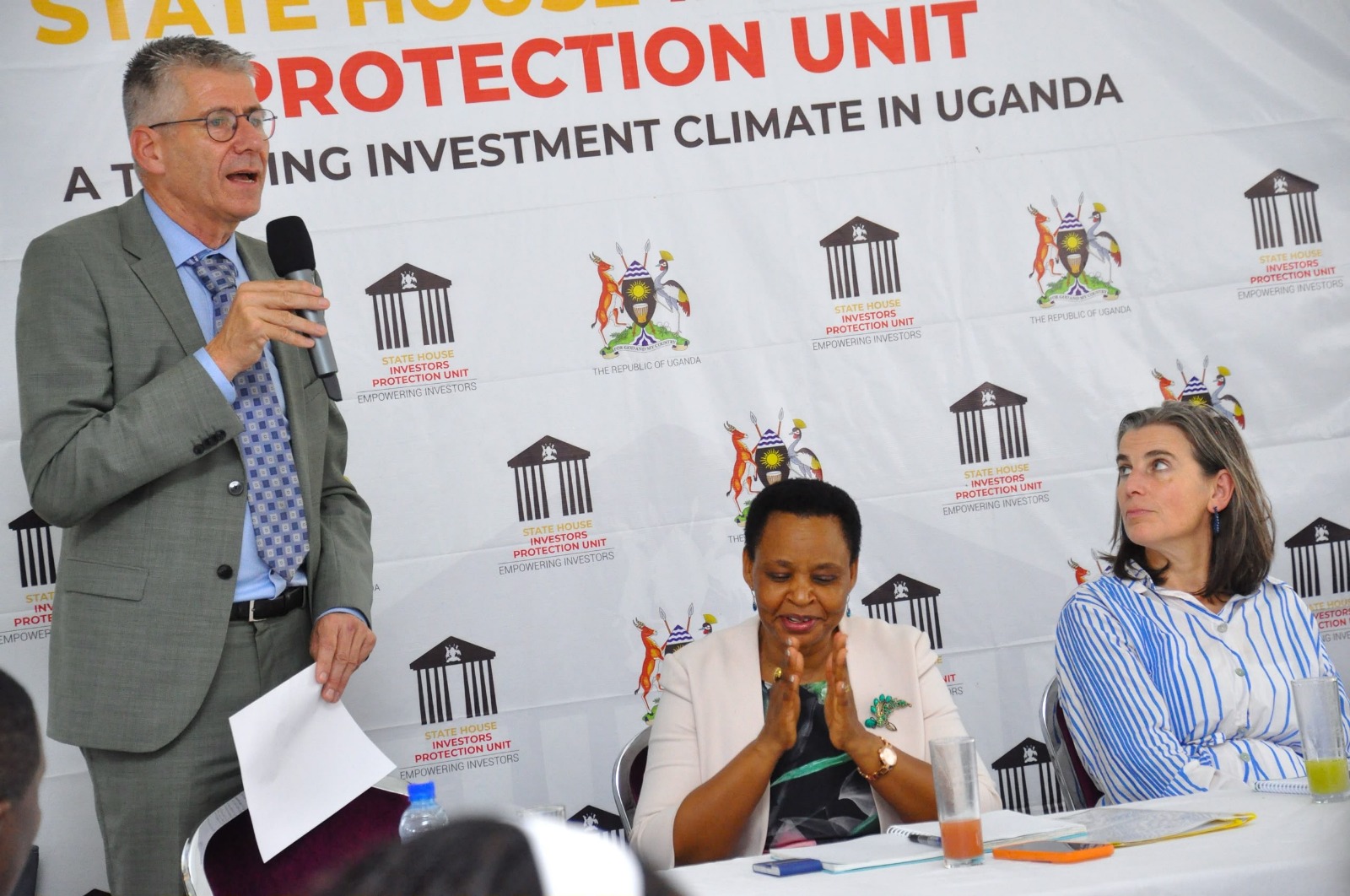
This was the key message at the second annual East Africa Environmental, Social and Governance (ESG) Summit hosted by Capital One Group (COG), which brought together corporate executives, policymakers, sustainability experts and financial sector leaders to examine the future of ESG implementation in the region.
The summit highlighted a growing consensus among businesses that ESG is no longer a public relations exercise but a critical driver of long-term competitiveness and enterprise value.
From CSR to Strategic ESG
According to Paul Mwirigi Muriungi, Managing Director and Head of Strategy at Capital One Group East Africa and convener of the summit, many organisations are beginning to recognize that traditional Corporate Social Responsibility (CSR) approaches are insufficient for addressing modern business risks.
“Traditionally, marketing agencies have supported clients through Corporate Social Responsibility, community engagement or social investments. But very little of that filtered down to the people responsible for driving ESG internally,” Muriungi said.
He noted that Capital One Group identified a significant gap in helping organisations operationalize ESG rather than treating it as a communications function.
“We have found out from both experience and in-house research that the majority of corporate reputation crises firms face, whether environmental impacts, social friction or governance failures, could actually be mitigated if they aggressively pursued their ESG mandates from the start,” he added.
The shift reflects a broader global trend where investors, regulators and consumers increasingly evaluate businesses based on their environmental stewardship, governance structures and social impact.
Businesses Understand ESG, But Execution Remains Weak
Findings from a recent ESG survey conducted jointly by Capital One Group and market research firm Kasi Insight reveal that while awareness of ESG concepts is high among Ugandan businesses, implementation remains a major challenge.
Ernest Ssekisonge, Managing Director of Kasi Insight, said the survey covered more than 70 enterprises across ten sectors including financial services, manufacturing, fast-moving consumer goods, hospitality and non-governmental organizations.
“The overarching takeaway from our findings is the urgent need to move from knowing to doing,” Ssekisonge said.
He explained that many businesses understand ESG principles but fail to systematically document initiatives or measure their impact on operations and financial performance.
“We discovered that while Ugandan businesses have a remarkably high understanding of ESG pillars and concepts, very few actually document what they are doing or actively measure the real impact on their business operations,” he said.
The research found strong confidence in ESG’s future, with 89 percent of surveyed businesses agreeing that ESG will play a central role in shaping business success in Uganda.
Different Priorities for Corporates and SMEs
The summit also revealed stark differences in how large corporations and small businesses approach ESG.
For established corporations, governance structures and social impact programs dominate sustainability discussions. Small and medium enterprises (SMEs), however, view ESG primarily as a pathway to financing and new markets.
“Due to the high cost of capital, SMEs look at ESG primarily through the lens of unlocking market access and securing financial access,” Ssekisonge said.
Yet many SMEs face a significant barrier: the upfront cost of ESG implementation.
“We have to be honest: ESG starts with rigorous research, such as a materiality test, and research is expensive. This is exactly where many Ugandan SMEs get stuck because they simply do not have the liquid capital to invest heavily upfront,” he noted.
Despite these challenges, Ssekisonge argued that businesses that invest in ESG assessments are better positioned to identify opportunities, attract investors and secure strategic partnerships.
Call for a Ugandan ESG Framework
A recurring theme throughout the summit was the need to develop ESG frameworks tailored to local realities rather than relying entirely on imported standards.
“We cannot simply adopt Western ESG frameworks and transplant them directly down here. The execution environments are completely different,” Ssekisonge said.
He urged businesses, practitioners and policymakers to collaborate in designing a context-specific ESG framework capable of addressing Uganda’s unique economic and social circumstances.
The research identified four strategic priorities needed to accelerate ESG adoption in Uganda: building trust and reputation through credible case studies, developing practical implementation tools, demonstrating clear financial returns and investing in skills development.
Sustainability Reporting Set to Become Mandatory
While many Ugandan companies are still navigating voluntary ESG adoption, developments in neighboring Kenya suggest that mandatory sustainability reporting is fast approaching.
Elvis Moenga, Manager for Standards and Technical Services at the Institute of Certified Public Accountants of Kenya (ICPAK), outlined how international sustainability reporting standards are transforming corporate reporting.
He explained that the International Sustainability Standards Board’s IFRS S1 and IFRS S2 standards were introduced to bring consistency and credibility to sustainability disclosures.
“Before these standards were developed, the global reporting landscape was highly fragmented,” Moenga said. “IFRS S1 and S2 have arrived to establish a de-facto global baseline that ensures disclosures are fit for purpose and auditable in the exact same way as traditional financial statements.”
Unlike broader sustainability frameworks that focus on a company’s impact on society and the environment, Moenga emphasized that IFRS standards are designed to assess how sustainability risks and opportunities affect enterprise value.
“It is a highly investor-focused framework,” he said.
Kenya Sets the Pace
Kenya has already established a phased roadmap toward mandatory ESG reporting.
According to Moenga, sustainability disclosures have been voluntary since 2024 but will become compulsory for Public Interest Entities, including listed companies, banks and insurance firms, beginning January 2027.
The requirements will subsequently extend to large non-public interest entities in 2028 and SMEs in 2029.
“This is no longer a voluntary corporate public relations exercise; it is a binding regulatory requirement,” he said.
The transition is expected to present significant operational challenges, particularly around data collection and reporting systems.
Moenga said financial institutions are already expressing concerns about the technological investments required to comply with the new standards.
“The biggest upcoming headache is data infrastructure. Unlocking compliance requires organizations to completely rethink and reorganize their core banking systems to capture clean, consistent and auditable metrics,” he explained.
Preparing for the Future
Experts at the summit urged companies not to wait for regulation before acting.
Moenga encouraged businesses to conduct sustainability readiness assessments to identify gaps in governance structures, reporting systems and internal capabilities.
Ssekisonge similarly advised firms to begin with baseline research and materiality assessments before developing ESG strategies.
“You do not need to be 100 percent perfect across all three pillars on day one,” he said. “Look at the data, find the exact areas where your specific business can create the highest, most meaningful impact, and run with that.”
As East African economies become increasingly integrated into global supply chains and capital markets, speakers agreed that ESG is rapidly becoming a prerequisite for doing business rather than an optional add-on.
For Ugandan companies, the challenge now lies not in understanding ESG, but in translating awareness into measurable action that delivers value for shareholders, communities and the broader economy.