
Finance ministry and Bank of Uganda deepen fiscal-monetary coordination to safeguard growth and stability
Uganda's fiscal authority and central bank operate under a formal memorandum of understanding that establishes channels for information sharing and policy coordination.
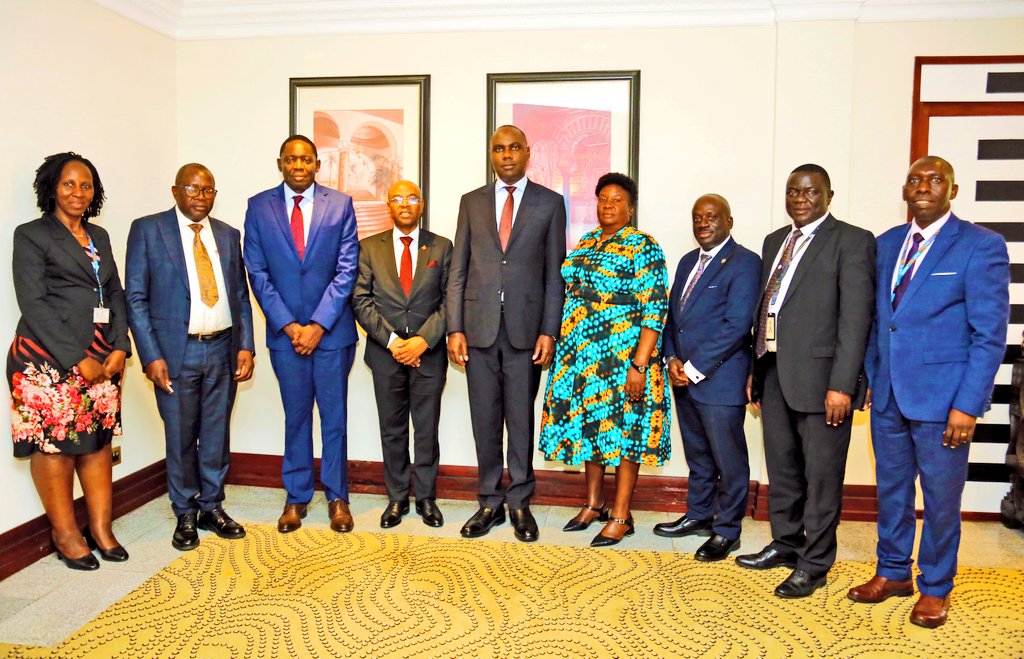
The Finance Ministry and the Bank of Uganda have moved to deepen coordination between fiscal and monetary policy in a fresh push to preserve macroeconomic stability, strengthen financial markets and safeguard Uganda from renewed international financial scrutiny.
Finance Minister Henry Musasizi, accompanied by Minister of State for General Duties Ciccy Mulondo, held high-level talks with Michael Atingi-Ego, Deputy Governor Augustus Nuwagaba and senior officials of the Bank of Uganda to align government spending plans with the central bank’s inflation-control and financial stability objectives.
The meeting, described by officials as part of an ongoing monetary-fiscal policy coordination framework, focused on fiscal consolidation, prudent public expenditure management, improved cash-flow forecasting and the clearance of domestic arrears, all of which have implications for interest rates, liquidity conditions and investor confidence.
A united front on macroeconomic management
Uganda’s fiscal authority and central bank operate under a formal memorandum of understanding that establishes channels for information sharing and policy coordination.
The latest engagement signals an effort to tighten that collaboration as the country navigates rising development financing needs while maintaining low inflation and exchange-rate stability.
For investors and financial markets, the significance lies in the government’s commitment to fiscal discipline at a time when large infrastructure, energy and industrialization projects continue to require substantial public resources.
Officials indicated that stronger cash-flow management and expenditure forecasting would help reduce unexpected government borrowing pressures that can complicate the Bank of Uganda’s monetary policy operations.
Domestic arrears and central bank capitalization
One of the key agenda items was the clearance of domestic arrears, an issue that has long concerned contractors, suppliers and the private sector.
Unpaid government obligations can tighten liquidity for businesses, increase borrowing costs and weaken confidence in public finances. Their resolution is expected to improve cash circulation within the economy and support private-sector activity.
The discussions also covered capitalization of the Bank of Uganda, a matter viewed as important for strengthening the central bank’s balance sheet and enhancing its capacity to conduct monetary policy and financial stability operations effectively.
Reforming Uganda’s bond market
Beyond macroeconomic management, the two institutions examined reforms aimed at deepening Uganda’s fixed-income and financial markets.
Particular attention was given to the local currency bond market and a review of the primary dealer market-maker system.
Financial analysts say reforms in this area could improve liquidity in government securities trading, attract more institutional investors and reduce reliance on foreign-currency borrowing.
A more developed domestic bond market would also provide government with a broader investor base while creating additional investment opportunities for pension funds, insurance companies and asset managers.
Avoiding a return to the FATF grey list
Another critical issue discussed was the strengthening of anti-money laundering and counter-terrorism financing mechanisms.
Uganda has made significant efforts in recent years to improve compliance with international financial standards after previously facing scrutiny from the Financial Action Task Force.
Officials agreed that enhanced coordination between fiscal and monetary authorities would be essential in preventing a return to the FATF grey list, which can raise transaction costs, deter investment and complicate cross-border financial flows.
Support for the central bank
Minister Musasizi pledged continued government support for the Bank of Uganda in executing its mandate.
For the Treasury, maintaining a credible and independent central bank remains critical to preserving investor confidence, containing inflation and supporting sustainable economic growth.
Governor Atingi-Ego said the central bank remained committed to a coordinated partnership with the Finance Ministry based on transparency, policy alignment and respect for each institution’s mandate.
“We will safeguard macroeconomic stability and advance sustainable inclusive growth for Uganda,” the Governor said.
Why the meeting matters
For businesses, banks and investors, the meeting sends an important signal that Uganda’s economic managers are seeking closer alignment between government spending decisions and monetary policy objectives.
Such coordination can help:
* Keep inflation under control.
* Reduce volatility in interest rates.
* Improve predictability in government borrowing.
* Strengthen confidence in public finances.
* Support the development of deeper capital markets.
As Uganda pursues its broader agenda of industrialization, infrastructure expansion and economic transformation, effective coordination between the Ministry of Finance and the Bank of Uganda is increasingly viewed as a cornerstone of maintaining stability while financing growth.
The latest engagement suggests that both institutions are positioning themselves not only to manage short-term macroeconomic risks, but also to build the financial architecture needed to support Uganda’s long-term development ambitions.
For business magazine readers, the key takeaway is that Uganda’s fiscal and monetary authorities are presenting a more coordinated policy front, a move likely to be welcomed by investors seeking stability, transparency and predictable economic management.