From Civilisation to De-Civilisation: The Unmaking of a Nation-State in Uganda, 1894 to Present
De-civilisation, as defined here, is not a return to some pre-colonial state of being. Rather, it is a descent into a new form of politico-military authoritarianism that systematically hollows out institutions, replaces public accountability with private patronage, and substitutes genuine citizenship with enforced submission.
From Civilisation to De-Civilisation: The Unmaking of a Nation-State in Uganda, 1894 to Present
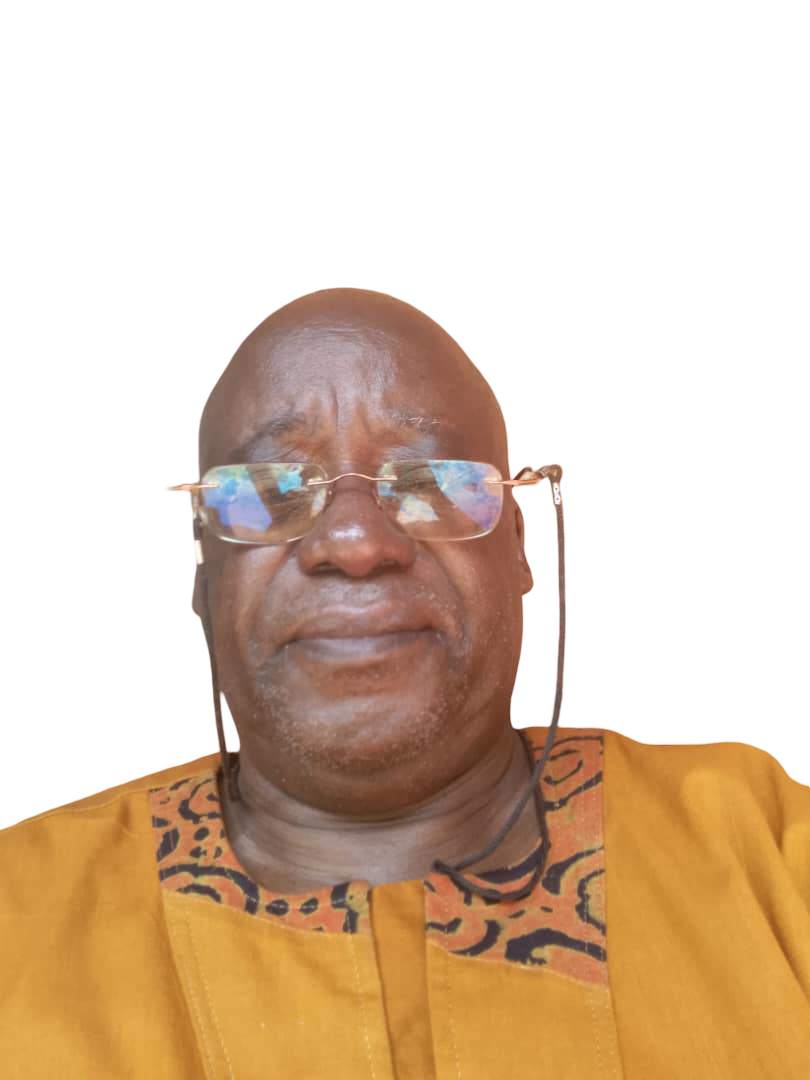
By Oweyegha-Afunaduula
Conservation Biologist and member of Center for Critical Thinking and Alternative Analysis
Introduction
The concept of civilisation is neither static nor unidirectional. It implies a progressive movement toward social arrangements that guarantee human dignity, democratic participation, the rule of law, and the flourishing of human potential. For Uganda, the journey from 1894—marked by the arrival of colonial forces and the Kabaka-led Buganda agreement—to the present represents not a linear progression but a complex and, in recent decades, deeply troubling trajectory. This essay argues that while the colonial and immediate post-colonial periods initiated a specific, if flawed, version of “civilisation,” the period from 1986 to the present represents a systematic process of de-civilisation: the active dismantling of the core pillars of a modern, democratic society.
De-civilisation, as defined here, is not a return to some pre-colonial state of being. Rather, it is a descent into a new form of politico-military authoritarianism that systematically hollows out institutions, replaces public accountability with private patronage, and substitutes genuine citizenship with enforced submission. By analysing key indicators of civilisation—democratic governance, human rights, the rule of law, civil liberties, participation and inclusion, justice and security, accountability, protection of minorities, free media, and education—this essay will measure the gap between the promise of a post-independence state and the reality of what has become a “garrison state” governed through fear and silence.
Part I: The Hollowing Out of the State
Democratic Governance: The Rise of Electoral Autocracy and the Promise of Perpetuity
The democratic project in Uganda has undergone a profound transformation—from the hopeful multiparty experiments of the early independence era to what can only be described as a system of “democratic deception.” Regular elections are held, but their credibility has deteriorated to the point where international observers and Ugandan citizens alike view them with profound scepticism.
The Democracy Index 2024, produced by the Economist Intelligence Unit, places Uganda among 36 countries globally classified as “hybrid regimes”—nations that combine electoral democracy with authoritarian tendencies. According to the Index, while Uganda holds regular elections, these are plagued by irregularities that make it impossible for them to be free and fair. The report notes that “the dominant NRM consistently wins elections deemed neither free nor fair,” and that “the government has repeatedly used public-health and security restrictions to stymie opposition groups” .
Uganda’s scores across key democratic indicators are revealing: 3.42 out of 10 in electoral process and pluralism; 3.57 in the functioning of government; and 3.89 in political participation . These figures paint a picture of a system where the forms of democracy persist but the substance has long evaporated.
The 2026 elections exemplified this deterioration. Despite repeated government assurances that the internet would remain open during the electoral period, a leaked directive from the Uganda Communications Commission ordered all mobile network operators to suspend public internet access effective 13 January 2026—two days before voting commenced . The shutdown was comprehensive: social media platforms, messaging apps, and online publishing tools went dark. Journalists could not report in real time. Election observers were unable to transmit findings. Civil society organisations lost their primary means of coordination. As the Association for Progressive Communications observed, “Elections conducted in digital darkness cannot be free, fair or credible” .
This systematic manipulation of the electoral environment transforms elections from genuine exercises in popular choice into what can only be termed “ritualised coronations” for the perennial President. The captured Parliament of Uganda serves as a rubber stamp for executive decrees, with minimal parliamentary oversight and growing autonomy of the executive from civilian institutions . Ministers reportedly have little ability to influence legislation in which the government has a particular interest, though there may be more consultation on ordinary policy matters .
Most alarming is the trajectory toward hereditary presidency, a prospect rendered explicit by statements from the highest levels of power. President Yoweri Museveni has repeatedly asserted that when he leaves power, Uganda will be difficult to rule—a statement that carries the implicit threat that only someone of his making, his lineage, can possibly manage the country he has shaped in his image for four decades. This is not merely boastful rhetoric; it is a foundational claim for dynastic succession, an assertion that the presidency has become a personal possession rather than a public trust.
Even more chilling is the declaration by Gen Muhoozi Kainerugaba, the President’s son and Chief of Defence Forces, that no civilian will ever rule Uganda again. Speaking in the context of his father’s long tenure and his own rising political profile, this statement represents the most explicit articulation yet of the regime’s fundamental project: the permanent displacement of civilian democratic governance by military rule, cloaked in the language of continuity and stability. As one analyst observed, “The military’s political role is not temporary or transitional, but appears designed to be permanent” .
The rise of the Special Forces Command (SFC), led by Muhoozi, as what researchers describe as a “praetorian guard” mirrors the emergence of dynastic authoritarianism in countries like Togo and Equatorial Guinea . In February 2026, opposition leader Robert Kyagulanyi (Bobi Wine) alleged before the Geneva Summit for Human Rights and Democracy that Gen Muhoozi had issued orders that he be taken “dead or alive” following the elections—a chilling indication of how military power is being deployed in service of familial succession .
The Rule of Law Replaced by Rule by Law
The distinction between the “rule of law”—where law serves as an impartial framework constraining all actors, including the state—and “rule by law”—where law becomes merely an instrument of state power—is central to understanding Uganda’s de-civilisation. The latter now prevails.
The 1995 Constitution, despite its flaws, envisioned a military under civilian control. Yet successive legislative and administrative actions have systematically undermined this vision. The Terrorism Act has been deployed selectively against opposition figures. Most significantly, the UPDF Amendment Bill 2025, tabled for first reading in May 2025, seeks to expand military court jurisdiction in ways that directly contravene a Supreme Court ruling that outlawed the trial of civilians in military courts .
According to analysis of the bill, Section 195 grants the General Court Martial “unlimited original jurisdiction to try any offence under this Act and under any other written law committed by a person subject to military law.” The vague definition of who qualifies as a “person subject to military law” raises fears that civilians—including those accused of terrorism, possessing arms, or simply criticising the government—could be targeted . As Kira Municipality MP Ssemujju Nganda observed, “They are not seeking to address issues raised by the Supreme Court. They are trying to tactically restore military courts but claiming that the Supreme Court allowed them” .
The UPDF (Amendment) Act has been described by researchers as “an undeclared coup d’état” that undermines Article 1 of the Constitution, which vests power in the people . The African Commission on Human and Peoples’ Rights has repeatedly urged states to restrict military jurisdiction to military personnel and offenses—a principle this legislation explicitly undermines .
This transformation represents a fundamental shift in the relationship between citizen and state. When law becomes a weapon to be wielded against those who challenge power, rather than a shield protecting the vulnerable, the foundations of civilised society erode.
Part II: The Architecture of Control
The Militarised State and the Erosion of Civil Liberties
Perhaps the most visible manifestation of Uganda’s de-civilisation is the progressive militarisation of every aspect of governance and social life. A July 2025 report titled “The Military and Transition Politics in Uganda” warns that the Uganda People’s Defence Forces (UPDF) is tightening its grip on power and threatening the country’s fragile democratic foundations. Based on a seven-month investigation, the authors argue that the military has become “the single most decisive factor” in Uganda’s political transition .
The report traces how the UPDF has been restructured to concentrate authority around the Commander-in-Chief, with minimal parliamentary oversight and growing autonomy from civilian institutions. Despite promises of reform, the military continues to act as a tool for suppressing dissent, harassing opposition leaders, and enforcing regime survival. Examples cited include the deployment of soldiers into Parliament during debates on the Coffee Bill, and the violent clampdown on opposition supporters during the March 2025 Kawempe by-election .
The authors argue that the military’s influence now spans far beyond security, infiltrating religion, cultural institutions, public administration, foreign policy, and the economy—forming what they call a growing “military-industrial complex” . Special units such as the Special Forces Command (SFC) have been implicated in abductions, torture, and extrajudicial operations with impunity.
This militarisation extends to the surveillance state. The network of intelligence agencies—ISO (Internal Security Organisation), ESO (External Security Organisation), DISO (District Internal Security Officers), GISO (Gombolola Internal Security Officers), and VISO (Village Internal Security Officers)—creates a pervasive atmosphere of monitoring that transforms Ugandan society into what can only be described as a “gigantic prison.” Citizens understand that their communications, associations, and movements are subject to constant surveillance.
A revealing incident occurred in mid-2025 when two media professionals, Mr Tom Gawaya Tegulle and Mr Ivan Okuda, discovered that their cell phones had been under surveillance and audio recordings of their conversations were publicly dumped on social media by a senior army officer involved in public relations . As commentator Moses Khisa observed, “By dumping on a public platform phone conversation recordings, ostensibly meant to be intelligence material, it appears the goal is to sow fear and anxiety, to demoralise citizens from engaging in normal and healthy civic discourse” .
This represents a fundamental departure from earlier periods of Museveni’s rule, when a key tactic was precisely allowing open debate and discussion to gauge the public pulse. The shift toward intimidation as the primary mode of governance signals a regime increasingly insecure and willing to sacrifice legitimacy for control. “Rule by fear,” Khisa notes, “is unsustainable” .
Gen Muhoozi’s declaration that no civilian will ever rule Uganda again must be understood in this context. It is not merely a prediction but a programme—an assertion that the military’s capture of the state is now permanent, that civilian governance belongs to the past, and that Ugandans must reconcile themselves to perpetual rule by uniformed power. This is de-civilisation in its most naked form: the explicit rejection of the foundational principle of modern democratic governance.
Human Rights and Justice: A Luxury for the Powerful
In contemporary Uganda, human rights have become subordinate to the single imperative of power retention by the President’s family. The consequences are borne most heavily by those who dare to participate in leadership outside the NRM framework.
The cases of Dr Kizza Besigye and Hon. Robert Kyagulanyi (Bobi Wine) exemplify this reality. Dr Besigye, a former bush war ally turned perennial presidential challenger, has faced arbitrary detention, violent disruption of his political activities, and legal harassment spanning two decades. In January 2026, the Congressional Black Caucus issued a statement expressing concern over “the detention of opposition leaders such as Kizza Besigye” and “threats by Uganda’s military chief against presidential candidate Robert Kyagulanyi” .
Following the January 2026 elections, Kyagulanyi reported going into hiding, alleging that security operatives were pursuing him and that his life was in danger. He further claimed that security forces raided his home in Magere, tortured family members, and forced his wife and children to flee the country for safety . Several of his deputies, including Lina Zedriga (Northern region), Jolly Jackline Tukamushaba (Western region), and Muwanga Kivumbi (Buganda region), were arrested and face various charges ranging from incitement to violence to treason .
Beyond these high-profile cases, countless youth languish behind bars simply for attempting to participate in political processes outside the ruling party framework. The Congressional Black Caucus statement noted that prior elections “have been marred by arbitrary arrests, forced disappearances, extrajudicial killings, and other coercive measures intended to stifle the will of the people” . These actions, the statement continued, “betray Uganda’s constitutional principles.”
The justice system, rather than providing redress, has been systematically compromised. The “clogging” of the judicial bench with “cadre judges”—appointed based on loyalty rather than legal expertise or independence—ensures that politically sensitive cases receive “directions from above.” The tendency toward what has been termed a “Mafia State” and “Deep State” means that justice is increasingly reserved for the minority in power, while ordinary citizens experience only its absence or its weaponization against them .
President Museveni’s assertion that Uganda will be difficult to rule after his departure reinforces this reality. It suggests that he and his inner circle have made themselves indispensable—that without them, the country would descend into chaos. This self-serving narrative conveniently obscures the fact that it is precisely their mode of rule that has rendered democratic alternation so fraught. By systematically weakening institutions, criminalising opposition, and centralising power in the presidency and the military, they have created the very conditions they cite as justification for their perpetuation in power.
Part III: The Management of Society and Thought
The Illusion of Participation and the Death of Accountability
The constitutional framework of Uganda envisions a multiparty democracy with meaningful citizen participation. The reality could not be more different. Participation and inclusion have been systematically hollowed out, replaced by enforced conformity to the NRM as the sole legitimate political expression.
The Democracy Index notes that “restrictive registration requirements and candidate eligibility rules, limited media coverage, and violent harassment by state authorities and paramilitary groups hinder opposition parties’ ability to compete in practice” . The Electoral Commission, appointed entirely by the President, is widely distrusted. As Bobi Wine observed in October 2024, “If the Commission was not appointed by Museveni, elections in the country would be free and fair” .
The 2026 election saw increasingly fewer Ugandans exercising their right to vote—not necessarily through formal abstention, but through the effective disenfranchisement created by an electoral environment designed to produce predetermined outcomes. The internet shutdown alone, implemented without warning or justification, prevented millions from accessing information essential to informed voting .
For those in power, “inclusion” has been redefined to mean everyone—born or unborn—being incorporated into the NRM fold. The consciences of politicians are routinely purchased, whether through patronage appointments, access to state resources, or direct financial inducements, creating the false impression that all Uganda is NRM. As the Democracy Index notes, “The Executive secures passage of key legislation through inducement, harassment, and intimidation of the legislative branch” .
Gen Muhoozi’s declaration that no civilian will ever rule Uganda again represents the logical endpoint of this trajectory. If civilian rule is permanently foreclosed, then participation and inclusion become meaningless concepts. Citizens may be permitted to vote, but their votes will never determine who governs them. The military, operating through the presidency and its familial networks, has claimed the ultimate authority—the power to decide not only who holds office but what form of government is permissible.
Accountability and transparency have suffered correspondingly. The Inspector General of Government reportedly loses UGX 10 trillion annually to corruption . When the former IGG attempted to introduce a system that had proven effective in eliminating corruption in Singapore, the President reportedly blocked its application, reasoning that if implemented, the corrupt would simply take their loot out of the country and Uganda would lose . This defence of corruption at the highest levels transforms it from a failure of governance into a bastion of state power—a tool for purchasing loyalty and enriching the elite while the population bears the cost.
Corruption is concentrated in sectors controlled by the ruling elite. Operation Wealth Creation (OWC), a military-led programme under the NRM, sidelines agricultural professionals and weakens the Ministry of Agriculture while receiving billions in annual allocations. This has been described as turning OWC into “a money-making venture for military elites,” accelerating the de-institutionalisation of the agricultural sector . Similarly, major sectors of the economy—including gold, now Uganda’s largest export—are dominated by networks that evade or minimise taxes while indigenous entrepreneurs are squeezed out through over-taxation and exclusion .
President Museveni’s statement about Uganda’s future ungovernability serves another purpose in this context: it positions him and his family as the only guarantee against the chaos that would supposedly follow their departure. This is the classic authoritarian argument—”It’s either us or catastrophe”—and it becomes self-fulfilling when the regime systematically dismantles every alternative source of authority, every independent institution, every potential successor.
The Attack on Truth: Free Media and Intellectual Death
A civilised society requires not only free institutions but also the free circulation of ideas and the cultivation of critical intelligence. Both have come under sustained attack in Uganda.
The media—print, electronic, and digital—operates under constant surveillance and threat of closure. The Uganda Communications Commission (UCC) exercises broad powers to intimidate and sanction outlets that deviate from official narratives. Self-censorship has become widespread as journalists and editors calculate the risks of reporting on politically sensitive matters . The January 2026 internet shutdown represented the culmination of these pressures—a moment when the state demonstrated its willingness to sever the population entirely from the digital public sphere to manage an electoral outcome .
Digital authoritarianism is accelerating. The leaked UCC directive ordering the internet shutdown, the targeting of individual journalists through surveillance and public exposure of private communications, and the chilling effect on online expression all point to a regime determined to control not only what citizens say but what they can know and share .
Even more fundamental is what can only be described as the state’s project of engineering intellectual death. The preferred education system produces what might be termed “educated fools”—individuals who have acquired credentials but not the capacity for critical thought, domesticated and tortured individuals who cannot effectively participate in the total liberation of humanity beyond the military liberation achieved by those who seized power in 1986 .
The marginalisation of humanities and social sciences in universities, the silencing of critical voices in academia, and the disconnection of educational institutions from society’s real needs all contribute to this intellectual death . What is required instead is a more holistic education embracing interdisciplinarity, crossdisciplinarity, transdisciplinarity, and extradisciplinarity—approaches that liberate the mind and raise awareness effectively, especially in an age of Internet and AI.
The colonial-era schools that once produced some of East Africa’s finest minds are decaying. Private schools dominate, exploiting poor families desperate for educational opportunity. Government plans to rehabilitate infrastructure, while welcome, are too little and too late . Meanwhile, public financing flows to private hospitals and projects serving the elite while public healthcare collapses and preventable deaths rise .
Gen Muhoozi’s declaration and his father’s prophecy about Uganda’s future ungovernability reinforce this intellectual closure. If the military is to rule in perpetuity, then critical thought becomes not merely unnecessary but dangerous. The regime requires compliance, not creativity; obedience, not inquiry. The educational system is being reshaped accordingly.
The Trajectory of De-Civilisation
The evidence across every indicator is consistent and overwhelming. Democratic governance has been replaced by electoral autocracy. The rule of law has given way to rule by law. Civil liberties exist only within the shrinking boundaries of regime tolerance. Participation and inclusion have been redefined as enforced conformity. Justice is reserved for the powerful, accountability for the weak. Minorities are protected only when they align with the minority in power. Free media operates under constant threat. Education produces compliance rather than critical intelligence.
This is the meaning of de-civilisation: not a return to some imagined past, but the systematic dismantling of the institutional and cultural foundations upon which a modern, democratic, and humane society depends. The 1995 Constitution’s vision of a military subordinate to civilian control, of an independent judiciary, of free political competition, of fundamental rights guaranteed to all—this vision has been progressively hollowed out, replaced by what researchers describe as a “Warrior-Mad-King” scenario marked by military coercion, personalised rule, and the erosion of constitutionalism .
The statements by President Museveni and Gen Muhoozi Kainerugaba provide the ideological framework for this transformation. When the President declares that Uganda will be difficult to rule after his departure, he is not merely speculating about the future; he is constructing a justification for his own perpetuation and that of his family. When his son declares that no civilian will ever rule Uganda again, he is not merely expressing an opinion; he is announcing a programme—the permanent military capture of the state, the final extinguishing of democratic possibility.
These statements must be understood together. The father’s prophecy of ungovernability creates the demand for a strong, continuous, military-backed authority. The son’s declaration supplies the answer: that authority will be military, it will be continuous, and it will be theirs. Together, they articulate a vision of Uganda’s future that is the antithesis of civilisation as defined at the outset of this essay.
The costs of de-civilisation are borne most heavily by ordinary Ugandans. Democracy has eroded, inequality has risen, sovereignty has weakened, national identity has frayed, and environmental stress has increased . Thousands of young people have been pushed into domestic and international servitude, especially in the Middle East—by 2024, 317,555 Ugandans were working in the Middle East, 84.45% of them women, in conditions that amount to modern slavery . Land grabbing by individuals linked to dominant power structures has displaced indigenous communities, destroying cultural institutions and agro-ecological systems . Food insecurity and future dependency loom.
The trajectory raises profound questions about Uganda’s future. A comparison with other authoritarian regimes is instructive but not reassuring. As one commentator notes, “While Uganda has oscillated between quasi-democratic rule and prolonged dictatorship, its authoritarian episodes have lacked the disciplined, development-driven model that helped countries such as Singapore escape poverty” . Colonial administration delivered much of Uganda’s early infrastructure, but on an extractive model that left the country struggling to build value-added industries. Post-independence leaders have each exercised varying degrees of power, but none replicated the developmental model of state-led authoritarianism credited with lifting other nations out of poverty .
Conclusion: The Path to Reclaiming Civilisation
The military liberation of 1986, whatever its initial promise, has proven incomplete. The urgent task now is a total liberation—mental, psychological, spiritual, social, political, ecological, cultural, ethical, and moral. This requires a new kind of politics and a new, holistic education capable of awakening the populace from the fear and silence that have become the hallmarks of contemporary Ugandan life.
The international community has a role to play. The Congressional Black Caucus has called for “targeted sanctions” against those responsible for human rights violations . Bobi Wine, addressing the Geneva Summit for Human Rights and Democracy, urged Uganda’s development partners to reconsider financial aid extended to the government and explore legal remedies for citizens denied justice . These calls deserve serious consideration.
But ultimately, the work of re-civilising Uganda must be done by Ugandans themselves. It requires rebuilding institutions from the ground up—not as patronage vehicles for the powerful but as genuine expressions of the common good. It requires reclaiming education as a liberative practice rather than a disciplinary one. It requires reviving a public sphere where ideas can be exchanged freely and without fear. It requires, in short, the patient and persistent work of democratic renewal.
The statements by President Museveni and Gen Muhoozi must be confronted directly. The claim that Uganda will be difficult to rule after Museveni is a self-serving prophecy that the regime has worked to fulfil by destroying every alternative centre of power and authority. The declaration that no civilian will ever rule Uganda again is an assault on the very idea of democratic citizenship—a declaration that must be met with the unwavering assertion that civilians, and civilians alone, must determine who governs them.
The alternative is a nation where power, not people, dictates the future. As the Centre for Critical Thinking and Alternative Analysis has warned, “The cost of inaction is a nation where power, not people, dictates the future” . The choice between civilisation and de-civilisation remains open. It is for Ugandans—and those who stand in solidarity with them—to ensure that the choice is made wisely.