dfcu and Rotary partnership targets communicable and non-communicable diseases through nationwide community outreach programs
The initiative is underpinned by a three-year UGX 1 billion commitment from dfcu Bank to Rotary Uganda, signalling a shift from short-term corporate social responsibility projects to long-term, systems-focused investment in public health. The partnership leverages Rotary’s grassroots community networks and trust, combined with dfcu’s institutional capacity, to expand access to care at scale.
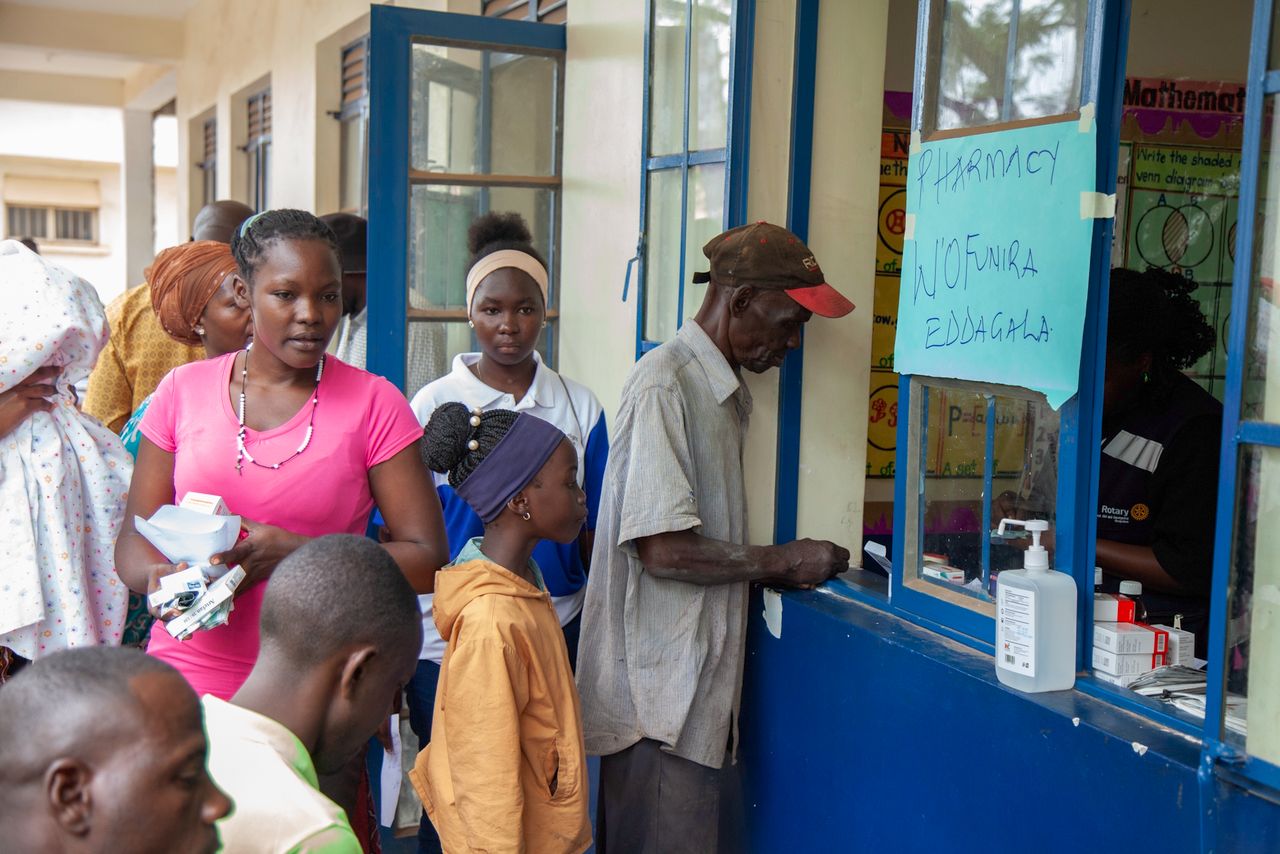
By mid-morning, the grounds of Nakivubo Blue Primary School had filled with quiet urgency—mothers balancing toddlers, boda boda riders comparing notes on blood pressure readings, and elderly couples seated patiently under shaded areas. The scene reflected a persistent reality across many Ugandan communities: access to healthcare remains uneven, with distance and cost still limiting timely medical attention.
In response, dfcu Bank, working alongside Rotary Uganda, Joint Medical Stores, Mengo Blood Bank, and Organisation for Promotion of Health, is scaling up efforts to bring essential healthcare services closer to underserved populations through sustained community outreach.
The free medical camp at Nakivubo forms part of a growing network of family health days launched in 2025, targeting communities from Mbuya to Kasenyi Landing Site, as well as towns such as Mbarara, Ibanda, and Masaka. Each outreach is structured to reduce barriers to care by offering services directly within communities, eliminating transport costs and long waiting times often associated with formal health facilities.
Speaking at the event, Marjorie Brenda Namyalo, Charter President of the Rotary Club of Kampala Blue Hearts—dfcu Bank’s staff-led Rotary club—said the camps are designed to address both communicable and non-communicable diseases. These include malaria, HIV/AIDS, diabetes, hypertension, sickle cell disease, and dental conditions, alongside general consultations and blood donation drives.
“With an expected turnout of between 1,500 and 2,000 people per outreach, the model is built for continuity, including referral pathways for specialised treatment,” she noted.
The initiative is underpinned by a three-year UGX 1 billion commitment from dfcu Bank to Rotary Uganda, signalling a shift from short-term corporate social responsibility projects to long-term, systems-focused investment in public health. The partnership leverages Rotary’s grassroots community networks and trust, combined with dfcu’s institutional capacity, to expand access to care at scale.
Since its inception, the programme has delivered measurable outcomes across 12 medical camps nationwide, reaching more than 20,290 individuals with essential healthcare services. A total of 18,790 general consultations have been conducted, alongside 2,236 surgical procedures, including 22 paediatric heart surgeries. Preventive services have also expanded, with 1,433 cancer screenings and over 4,264 sickle cell screenings carried out, in addition to maternal health support and the collection of more than 244 units of donated blood.
Implemented through Rotary districts 9213 and 9214, the outreach model continues to strengthen local health systems while improving community health awareness and continuity of care across more than six regions in Uganda.
The establishment of the Rotary Club of Kampala Blue Hearts in August 2025—Uganda’s first corporate Rotary club composed of dfcu Bank staff—further institutionalises this approach, embedding community health investment within the bank’s long-term strategy.
As Uganda continues to grapple with gaps in healthcare access, the dfcu–Rotary partnership is positioning itself as a scalable model for private sector-led interventions that extend beyond philanthropy toward sustainable, system-wide impact.