UBOS survey shows rise in female-headed households, increase in smaller families
One-member households increased from 7.8 percent in 2021/22 to 10.2 percent in 2024/25, suggesting a gradual rise in smaller family units. Meanwhile, households with more than five members declined from 44.6 percent to 42.1 percent.
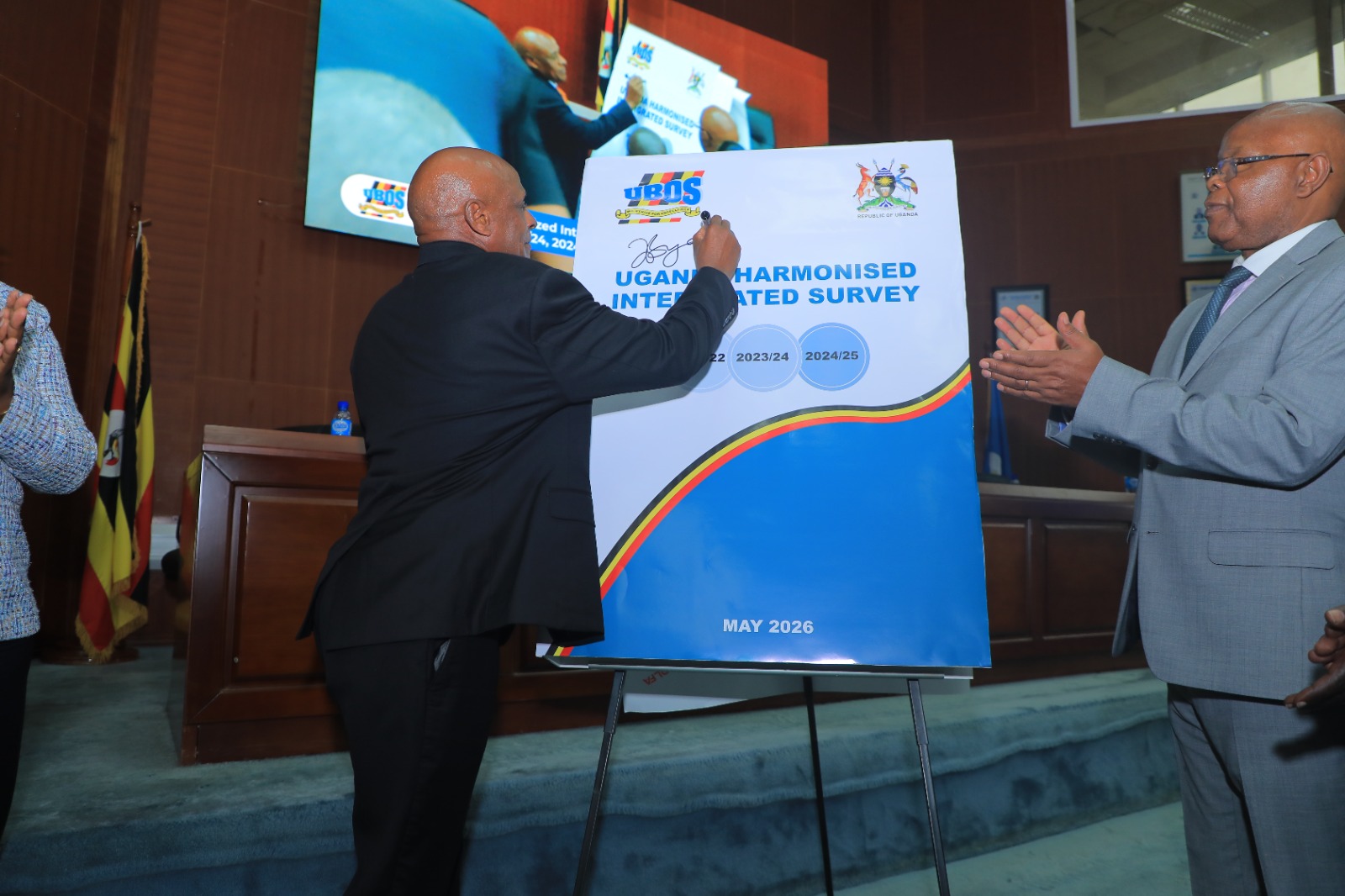
The latest Uganda Harmonized Integrated Survey (UHIS) report by the Uganda Bureau of Statistics has revealed notable shifts in Uganda’s population characteristics, including a rise in female-headed households, growing literacy levels, and an increase in school attendance among children.
The findings, covering the survey waves of 2021/22, 2023/24 and 2024/25, were disseminated in Kampala on Wednesday.
According to the report, the proportion of male-headed households declined from 66.3 percent in 2021/22 to 64.3 percent in 2024/25, while female-headed households increased from 33.7 percent to 35.7 percent over the same period.
The survey also pointed to changes in household composition. One-member households increased from 7.8 percent in 2021/22 to 10.2 percent in 2024/25, suggesting a gradual rise in smaller family units. Meanwhile, households with more than five members declined from 44.6 percent to 42.1 percent.
Education indicators registered significant improvement during the three survey years. The proportion of children aged between six and 12 years attending school rose from 85.5 percent in 2021/22 to 94.6 percent in 2024/25.
Girls slightly outperformed boys in school attendance in the latest survey year, with attendance rates standing at 94.9 percent for females compared to 94.3 percent for males.
The report further showed that literacy levels among persons aged 10 years and above improved substantially. National literacy rates increased from 73.6 percent in 2021/22 to 85.3 percent in 2024/25.
Male literacy remained higher at 92 percent in 2024/25 compared to 80.2 percent among females. However, the gap narrowed as female literacy improved steadily over the survey period.
Rural areas recorded the biggest gains in literacy. The literacy rate in rural communities rose from 67.8 percent in 2021/22 to 83.2 percent in 2024/25, while urban literacy increased from 84.5 percent to 91.1 percent.
The survey also tracked learner retention. Among pupils who were in Primary Seven in 2021/22, about 75.5 percent were still in school by 2024/25. At secondary level, 41.5 percent of learners who were in Senior Four in 2021/22 remained in school in 2024/25.
UBOS said the harmonized survey programme is intended to provide annual socio-economic and demographic data to support planning, policy formulation, and monitoring of national development programmes.