Daphine Ayebare takes over UJOA leadership amid judiciary reform debate
A long-serving judicial officer, Ayebare has built her career within Uganda’s magistracy, handling both criminal and civil cases while steadily rising through the Judiciary’s ranks.
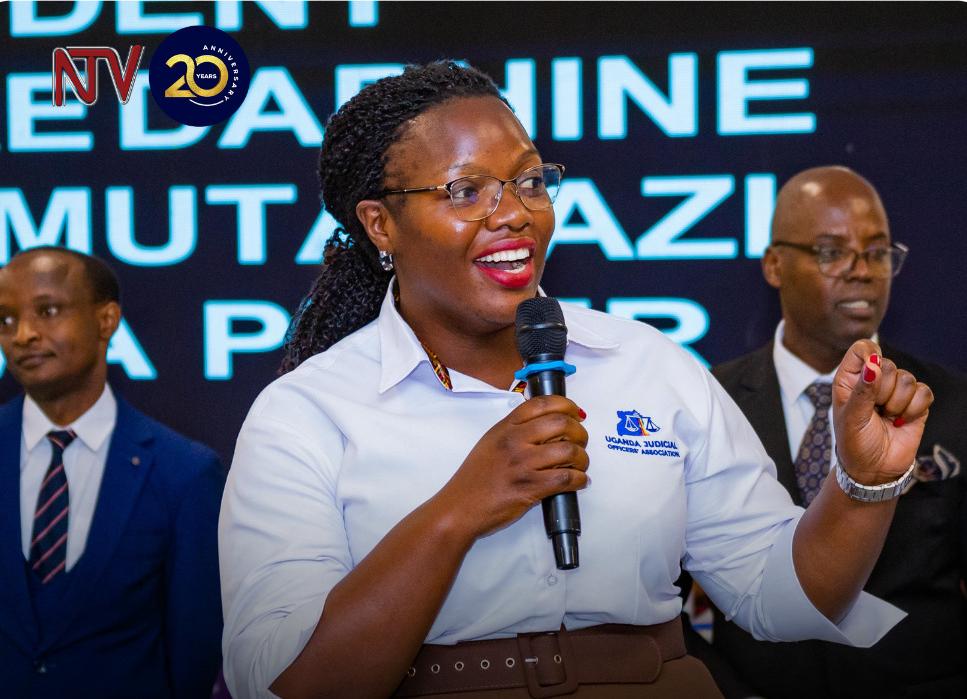
Chief Magistrate Daphine Ayebare has been elected president of the Uganda Judicial Officers Association (UJOA), placing her at the forefront of efforts to shape the welfare, professionalism and public image of Uganda’s Judiciary during a period of growing national scrutiny.
Ayebare was voted into office during the association’s Annual General Meeting held at the Supreme Court in Kampala, succeeding High Court Judge Olive Kazaarwe Mukwaya, who made history in 2024 as UJOA’s first female president.
Her election now makes her the second woman to lead the influential association that represents judicial officers across Uganda.
A long-serving judicial officer, Ayebare has built her career within Uganda’s magistracy, handling both criminal and civil cases while steadily rising through the Judiciary’s ranks. Over the years, she has also become known within legal circles for her involvement in issues concerning judicial officers’ welfare, court administration and institutional discipline.
Prior to her election, she served as UJOA vice president, where she worked alongside Justice Kazaarwe in advocating for better working conditions for magistrates and registrars, many of whom have repeatedly raised concerns over salaries, workload, delayed promotions and limited operational resources in courts across the country.
Her elevation comes at a sensitive time for the Judiciary, which continues to face criticism over case backlog, delays in delivering justice and corruption allegations involving some court officials.
During the meeting, Principal Judge Dr. Jane Frances Abodo, representing Chief Justice Flavian Zeija, challenged judicial officers to uphold integrity and professionalism despite increasing public pressure on the institution.
She urged magistrates and registrars to resist influence from politicians, wealthy individuals and other external actors seeking to interfere with the justice system.
Observers say Ayebare’s leadership will likely be tested by demands for internal reforms within the Judiciary as well as expectations from the public for faster and more transparent justice delivery.
In her acceptance speech, Ayebare pledged to promote unity among judicial officers and strengthen collaboration with Judiciary leadership to address persistent challenges affecting courts.
She also committed herself to defending the independence and dignity of judicial officers while advocating for reforms aimed at improving service delivery in the justice sector.
Chief Magistrate Conrad Obol Oroya was elected vice president during the same elections.
The Uganda Judicial Officers Association is a professional body that brings together magistrates, registrars and other judicial officers to advocate for their welfare, professional growth and institutional reforms within Uganda’s Judiciary.
Ayebare’s election is being viewed by some within the legal fraternity as a continuation of the growing visibility of female leadership in Uganda’s justice system, where women have increasingly assumed senior positions in recent years.