Ebola Frontline: How authorities in Uganda are preparing to stop the outbreak before it spreads
The officials leading this response are not complacent, but they are not panicking either. The border surveillance is active. The laboratory in Kasese is running. The contact tracing of Kampala's two confirmed cases is underway. The West. from Arua to Kisoro, is being watched.
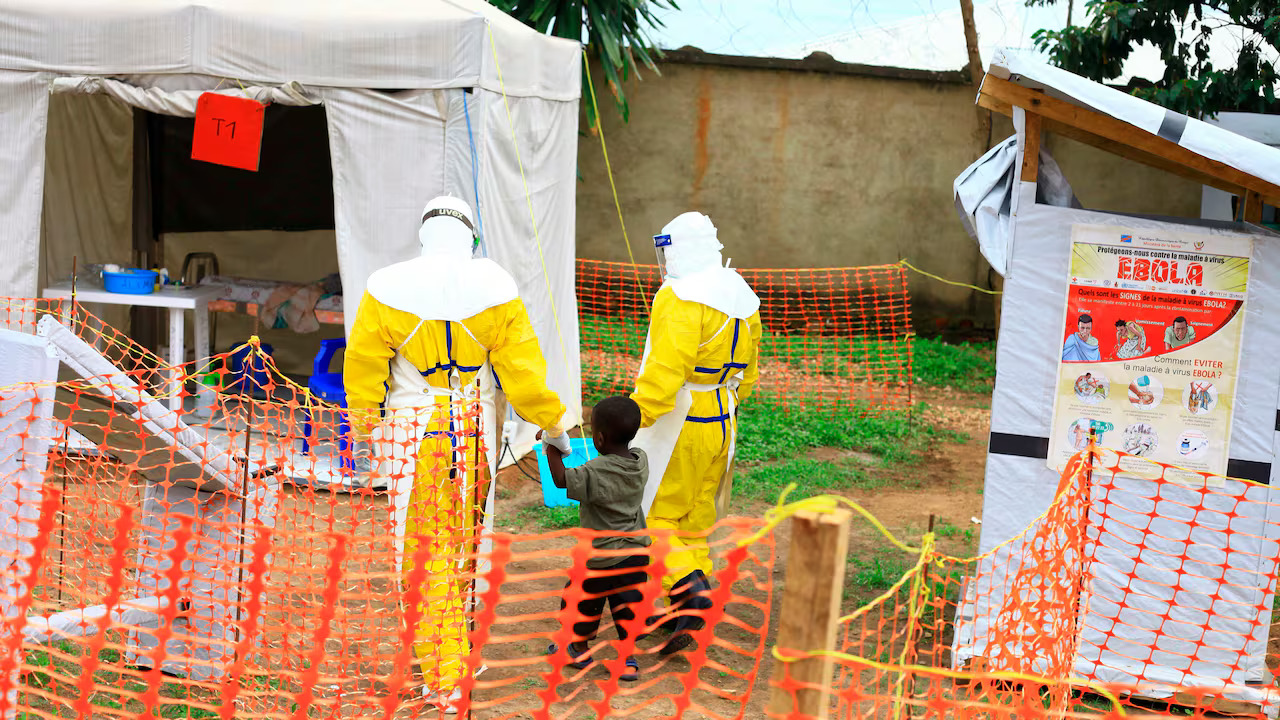
Along a stretch of Uganda’s western border running more than a thousand kilometres from Arua in the north to Kisoro in the south, something quiet but consequential is happening. Surveillance teams have been deployed across every district. A laboratory has been established in Kasese. Health workers are screening, watching and waiting.
This is Uganda’s first line of defence against an Ebola outbreak that has already crossed its border.
“We have conducted a risk assessment and established that the western border from Arua to Kisoro is highly risky,” said Prof. Charles Olaro, one of Uganda’s senior health officials overseeing the response. “We have deployed surveillance teams across all districts along that stretch, as well as a laboratory in Kasese.”
The government’s message is measured but urgent: Uganda has been here before, and it has always come out the other side. The question is whether the systems built through hard experience are equal to the scale of what is coming.
A Country That Has Learned From Its Scars
Uganda is, by the grim measure of experience, one of the world’s most Ebola-tested nations. Since the virus first appeared on Ugandan soil in 2000, the country has navigated multiple outbreaks — Sudan virus, Marburg, and now, for only the third time in recorded history, the Bundibugyo strain, the rarest and least understood of Ebola’s variants.
Each outbreak has left behind not just grief, but institutional knowledge. The laboratories, the rapid response protocols, the community health networks, all were forged in previous emergencies.
“The country has experience from previous outbreaks, which we have always managed to contain and address in the shortest time possible,” said Dr. Diana Atwine, Permanent Secretary at the Ministry of Health. “With the capacity we have built, we are able to detect any outbreak anywhere in the country within 24 hours. We are also able to test for any disease.”
That claim, 24-hour detection anywhere in the country, would have been impossible a decade ago. It reflects years of investment in laboratory infrastructure, trained personnel and surveillance networks that now extend deep into rural and border districts.
“This time as well,” Dr. Atwine added, “we are confident that we shall overcome it.”
The Bundibugyo Challenge
Confidence, however, must be tempered by the specific nature of this outbreak. The Bundibugyo virus is not the Ebola strain the world knows best. The better-known Zaire strain, responsible for the catastrophic 2014-2016 West African epidemic, now has an approved vaccine, ERVEBO, and established treatment protocols. Bundibugyo has neither.
This is only the third time the Bundibugyo strain has been confirmed in human populations. The first was in Uganda’s Bundibugyo district in 2007. The second was in the DRC in 2012. Now it has returned, erupting in Ituri Province in eastern DRC before crossing into Kampala through travellers who had no way of knowing they were infected.
As of May 16, the DRC outbreak had generated over 300 suspected cases and 88 deaths. Uganda has confirmed two cases in Kampala — both imported, both involving individuals who had recently travelled from Ituri. The World Health Organization has declared the situation a Public Health Emergency of International Concern, its highest alert level.
What makes Bundibugyo particularly difficult is that its early symptoms, fever, headache, nausea, cough, red eyes, can easily be mistaken for malaria, typhoid or other common illnesses that Ugandans navigate routinely. By the time unexplained bleeding or severe chest pain appears, the disease has typically progressed significantly, and the risk of transmission to caregivers and family members has multiplied.
Know The Signs And Act Immediately
Health authorities are urging every Ugandan to familiarise themselves with Ebola’s warning signs, which include:
Fever, severe headache, muscle pain, nausea and vomiting, diarrhoea, cough, rash, chest pain, red eyes, and unexplained bleeding from any part of the body.
No single symptom confirms Ebola, but any combination of these symptoms in someone who has recently been in contact with a sick person, attended a burial, or travelled from eastern DRC or border areas should trigger an immediate call to the emergency line: 0800-100-066.
Time is the critical variable. Early reporting does not just save the individual, it breaks the chain of transmission and protects entire families and communities.
What Not To Do
In previous Ugandan outbreaks, some of the most dangerous moments came not in hospitals but in homes and at funerals. Ebola’s cultural context in East and Central Africa, where the body of a loved one is washed, touched and mourned in intimate proximity, has historically driven some of the most damaging transmission clusters.
Health authorities are issuing a firm but compassionate message: do not handle the bodies of anyone suspected to have died from Ebola-like symptoms. Alert health teams, who are trained and equipped to conduct safe and dignified burials that honour the deceased while protecting the living.
Equally, the instinct to care for a sick family member at home, admirable in any other circumstance, becomes dangerous when Ebola is a possibility. Anyone showing symptoms must be taken immediately to a health facility, not nursed at home.
Basic protective measures apply to everyone: wash hands regularly with soap and water or alcohol-based sanitiser, avoid contact with anyone who is unwell with fever or bleeding symptoms, and stay alert for official guidance.
The Community Is The Vaccine
With no approved vaccine for the Bundibugyo strain, Uganda’s most powerful tool against this outbreak is not pharmaceutical, it is human. Community cooperation, early reporting and trust in health workers are the functional equivalents of the vaccines that do not yet exist.
The Uganda Red Cross Society, which has mobilised alongside government health teams, put it plainly: “Early reporting, strict adherence to health protocols, and strong community cooperation remain critical in protecting families, preventing transmission, and saving lives.”
That means cooperating with surveillance teams and contact tracers, not hiding sick relatives from health authorities, submitting to screening at border points without resistance, and sharing accurate information rather than rumour.
Uganda Red Cross has urged communities to “report immediately any suspected Ebola cases to the nearest health facility or surveillance team” and to “support response efforts aimed at early detection and rapid containment.”
The Numbers That Matter
Uganda has two emergency contacts the public must know:
• Ministry of Health Ebola Hotline: 0800-100-066 — free to call, for reporting suspected cases
• Uganda Red Cross: 0800-211-088 — for response to any suspected or confirmed case
• Free SMS reporting: 6767
These lines are active and staffed. Using them quickly could be the difference between a contained cluster and a community-wide outbreak.
The Road Ahead
Uganda has beaten Ebola before — in 2000, in 2007, in 2011, in 2012 and in 2022. Each time, the response was imperfect and the cost in lives was real. But each time, the outbreak was stopped.
The officials leading this response are not complacent, but they are not panicking either. The border surveillance is active. The laboratory in Kasese is running. The contact tracing of Kampala’s two confirmed cases is underway. The West. from Arua to Kisoro, is being watched.
What cannot be deployed by government decree, however, is the vigilance of millions of ordinary Ugandans going about their daily lives. That is the resource health authorities are now calling on.
“Together,” the Uganda Red Cross said, “we can strengthen the response and help stop the spread of Ebola in Uganda.”
Uganda has done it before. The tools are in place. The next move belongs to every one of us.