EU injects €8 million into Uganda’s Ebola fight
The funds will be channeled through the International Federation of Red Cross and Red Crescent Societies to support Uganda’s Ebola response team in addressing critical areas including coordination, surveillance, infection prevention and control, case management, border screening, operational support and logistics.
The European Union has announced an emergency funding package of 8 million Euros to support Uganda’s response to the ongoing Ebola outbreak, in a move aimed at strengthening surveillance, treatment, and prevention efforts across the country.
The funds will be channeled through the International Federation of Red Cross and Red Crescent Societies to support Uganda’s Ebola response team in addressing critical areas including coordination, surveillance, infection prevention and control, case management, border screening, operational support and logistics.
Speaking to reporters during a visit to the Bunyoro sub-region on Tuesday, Jan Sadek said the Ebola fight requires collective action from both Uganda and its development partners.
Sadek revealed that the EU will further extend an additional 1 million Euros to the Uganda Red Cross Society to facilitate coordination of emergency activities aimed at containing the outbreak.
According to Sadek, the funding will bolster interventions such as risk communication, surveillance and contact tracing, emergency medical services, safe and dignified burials, hygiene promotion, and community engagement.
He emphasized that the EU stands in solidarity with Uganda in combating the deadly virus and noted that the emergency support is intended to ensure rapid containment of the outbreak before it escalates into a wider public health and economic crisis.
Uganda’s Ministry of Health has so far confirmed two cases of the Ebola Bundibugyo virus strain in the country.
The ministry says at least 127 contacts linked to the confirmed cases are currently under monitoring, including several health workers at Kibuli Muslim Hospital who treated the deceased patient.
Health experts describe the Bundibugyo strain as one of the three Ebola virus strains known to cause Ebola Virus Disease, although it remains the least common.
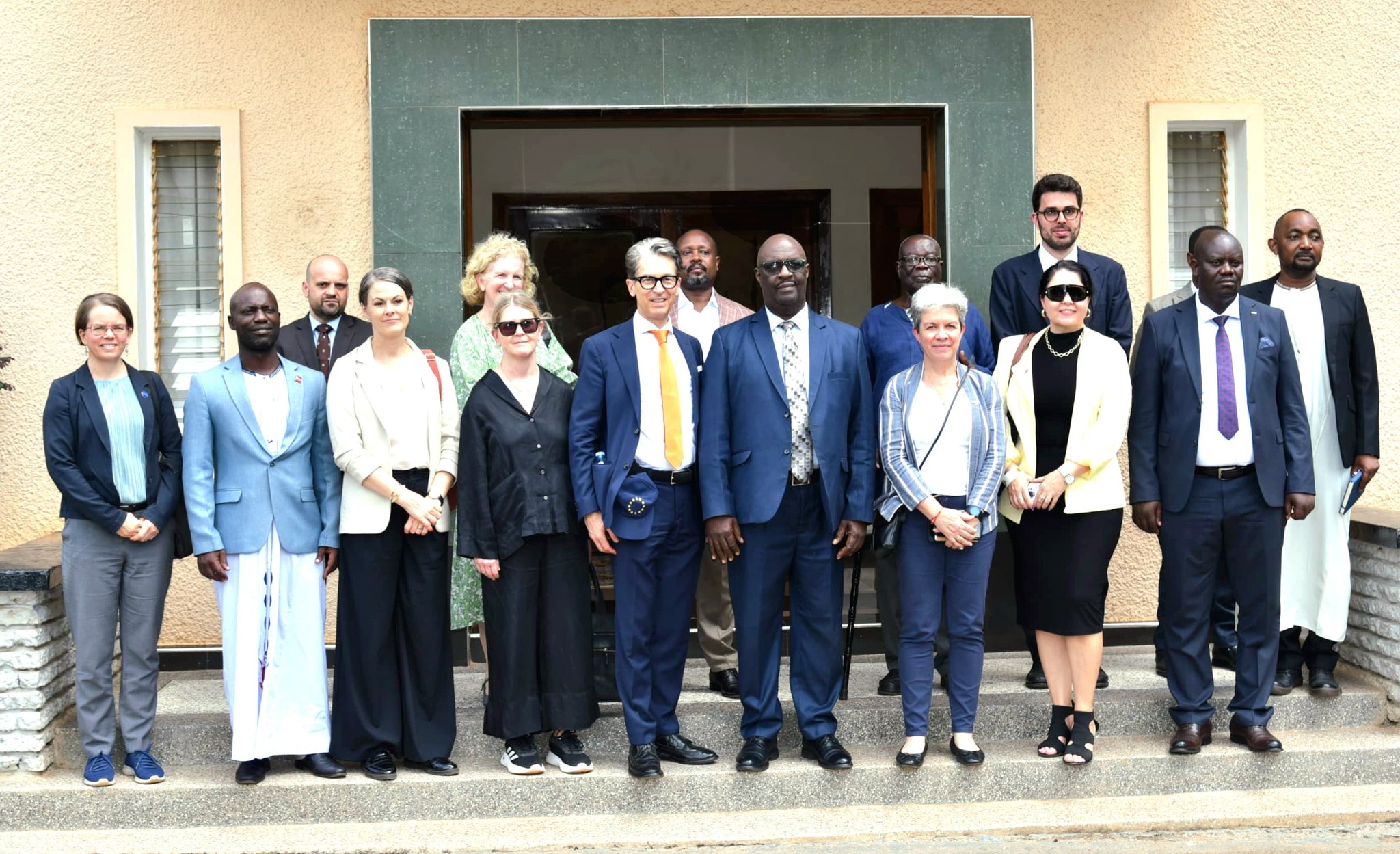
The EU Ambassadors, led by Sadek, are currently undertaking their annual joint mission in the Bunyoro sub-region to better understand the area’s opportunities, challenges, history, culture and development priorities.
During the visit, the delegation held meetings with Andrew Byakutaga at the Bunyoro Kitara Kingdom offices and later met leaders at the Hoima City Council headquarters.
Edward Isingoma used the meeting to outline key sectors where the EU could provide further support, while Byakutaga urged the ambassadors to invest in agriculture-related institutions, noting that farming remains the backbone of livelihoods in Bunyoro.
Sadek said the EU’s broader interests in the region include promoting tourism, advancing human rights within the oil and gas sector, and supporting coffee production.