Uganda safe for tourism despite Ebola threat, Museveni tells global travel industry at tourism expo launch
The President sought to calm fears among tourists, investors and tourism operators, arguing that Ebola is manageable when detected early and should not trigger panic. “I really saw that many people were panicking,” Museveni said as he opened the expo attended by tourism stakeholders, investors, international buyers and government officials.
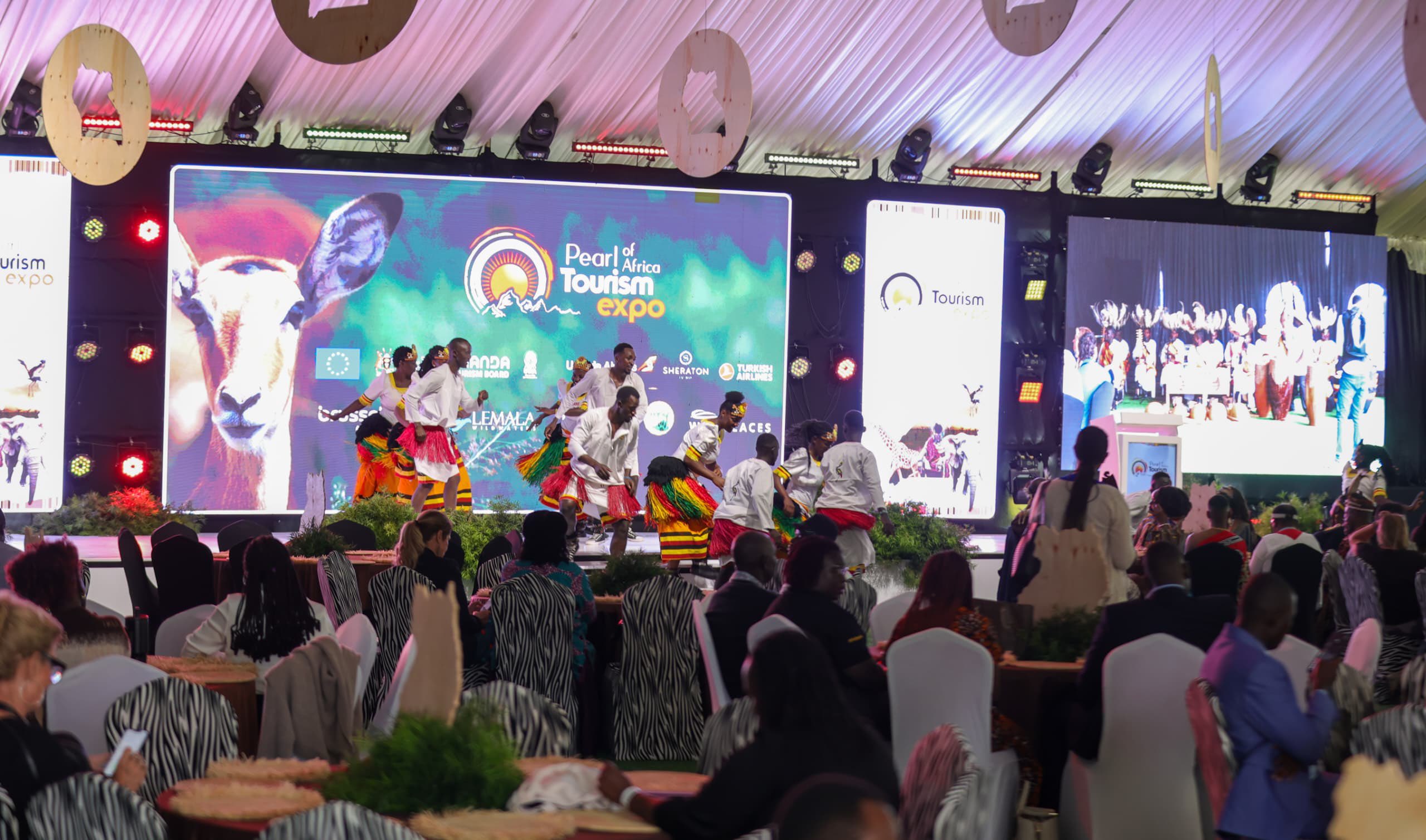
Pearl of Africa Tourism Expo 2026 officially opened in Kampala on Wednesday with Yoweri Kaguta Museveni using the platform to reassure the international community about Uganda’s handling of the recent Ebola outbreak while positioning the country as one of Africa’s safest and most attractive tourism destinations.
Launching the 10th edition of the tourism expo at Speke Resort Munyonyo, President Museveni blended public health messaging with economic diplomacy, highlighting Uganda’s climate, geography, peace and culture as major competitive advantages in the global tourism market.
His remarks come at a sensitive moment for Uganda’s tourism sector, which has been recovering strongly following the COVID-19 pandemic but is now facing renewed concerns after imported Ebola cases linked to neighbouring Democratic Republic of the Congo.
The President sought to calm fears among tourists, investors and tourism operators, arguing that Ebola is manageable when detected early and should not trigger panic.
“I really saw that many people were panicking,” Museveni said as he opened the expo attended by tourism stakeholders, investors, international buyers and government officials.
He explained that unlike COVID-19, Ebola spreads through close physical contact rather than airborne transmission, making it easier to contain through early detection, isolation and medical intervention.
“Ebola spreads through intimate contact and an infected person only develops visible signs after several days,” he said. “If it is reported early, it is treatable because what kills many patients is the high fever and dehydration, and these can be controlled by doctors.”
Museveni disclosed that the outbreak originated from Congo, with infected individuals crossing into Uganda, but said government had rejected blanket border closures in favour of targeted containment measures.
Instead, authorities will close busy cross-border markets in high-risk areas such as Ntoroko while maintaining broader economic and regional movement.
“When we met with the task force, we did not agree with closing borders completely,” he said. “We shall continue working; there is no cause for alarm.”
The President’s reassurance reflects the delicate balance Uganda faces between safeguarding public health and protecting sectors such as tourism, trade and hospitality that are highly sensitive to travel advisories and international perception.
Tourism remains one of Uganda’s leading foreign exchange earners and a major employer, making stability and global confidence critical to the sector’s continued recovery.
Beyond the Ebola message, Museveni used the expo to market Uganda’s natural and geographical advantages, describing the country as uniquely positioned along the Equator yet protected from extreme temperatures by its altitude.
“In Uganda, you do not have extreme temperatures. The climate remains comfortable throughout the year and that is part of Uganda’s uniqueness,” he said.
The President revisited the famous description by former British Prime Minister Winston Churchill, who referred to Uganda as the “Pearl of Africa,” saying the country’s appeal extends beyond scenery to include culture, food and peace.
“When you are talking of Uganda as a tourism destination, you are talking about comfort, culture, food and peace,” Museveni noted.
He also promoted Africa’s indigenous foods as healthier and more organic compared to heavily processed diets elsewhere, linking food tourism and wellness tourism to Uganda’s broader tourism offering.
“Africa can save the world from bad foods because our foods are rich and original,” he said, adding that he has relied on indigenous foods throughout his life.
The President further linked tourism growth to Uganda’s broader economic transformation, declaring that the country had already attained lower-middle-income status and was now targeting upper-middle-income status.
According to Museveni, Uganda’s economic growth is being driven by commercial agriculture, manufacturing and services — sectors that increasingly intersect with tourism through hospitality, transport, agribusiness and infrastructure development.
He also hinted at upcoming reforms aimed at making Uganda more accessible to visitors through friendlier visa arrangements and longer stay periods for tourists.
“In the new government, we are going to extend visas for tourists and remove the short-term visa restrictions,” he said.
Tourism sector leaders at the event credited the recovery of Uganda’s tourism industry to improved infrastructure, political stability and increased international visibility.
Doreen Katusiime said peace and stability under Museveni’s leadership had enabled tourism growth by restoring confidence in previously conflict-affected regions and improving border security.
She added that investments in roads and transport networks had significantly improved access to tourism destinations across the country.
“Tourism has recovered strongly after the pandemic and we are on the right trajectory,” Katusiime said.
She also pointed to international conferences hosted by Uganda, including the Non-Aligned Movement Summit 2024 and the G77 + China Summit 2024, as evidence of growing international confidence in the country.
Preparations for the upcoming Africa Cup of Nations 2027 were also cited as an opportunity to further raise Uganda’s global profile and attract new tourism flows.
Juliana Kagwa praised Museveni for supporting the tourism sector and said the expo had gained momentum because of the President’s endorsement.
“The day you accepted to grace our tourism expo was the day we achieved critical mass,” Kagwa said.
She explained that Uganda’s tourism strategy focuses on differentiating the country from competing destinations by emphasizing authentic experiences, nature, adventure and culture.
Meanwhile, Pearl Hoareau Kakooza revealed that Uganda’s tourism budget had increased by 12 percent, positioning the sector for expansion.
She also reported rising visitor numbers from Europe and expressed optimism that AFCON preparations would boost arrivals and infrastructure investment.
The President of the Uganda Tourism Association, Yogi Biriggwa, emphasized that peace and security remain central to tourism growth.
“It is peace that creates the right conditions for tourism to thrive,” she said.
As Uganda seeks to strengthen its position as a regional tourism hub, the Pearl of Africa Tourism Expo continues to serve as a key marketing platform bringing together tour operators, investors, airlines, hospitality companies and international travel buyers to showcase Uganda’s tourism potential to the world.