
Kasi exits Centenary Bank CEO role after transformative tenure as leadership shifts to group structure
Kasi’s exit from day-to-day leadership of the bank closes a significant chapter in Uganda’s banking sector. Appointed in 2010, he presided over a period of sustained growth that saw Centenary Bank deepen its footprint as the country’s leading indigenous commercial microfinance institution.
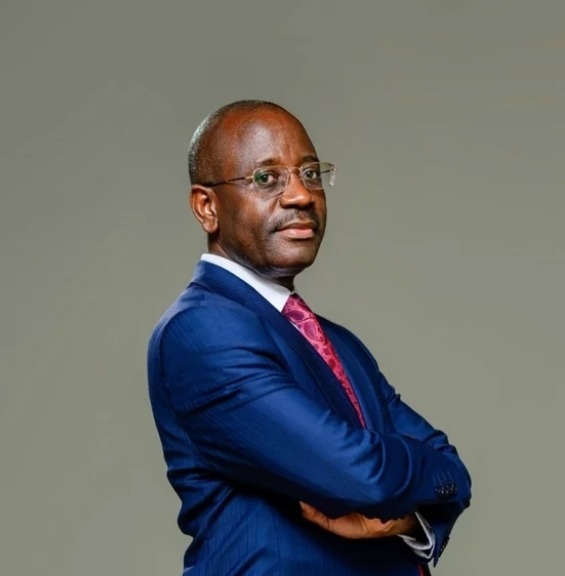
Kasi exits Centenary Bank CEO role after transformative tenure as leadership shifts to group structure
A major leadership transition is underway at Centenary Bank, marking the end of an era defined by steady expansion, financial inclusion, and institutional transformation.
After more than a decade at the helm, Fabian Kasi is stepping down as Managing Director to take on a broader role as Group Chief Executive Officer of Centenary Group, a move that signals both succession planning and a strategic pivot toward regional growth.
He will be succeeded by Godfrey Byekwaso, a certified public accountant tasked with steering Uganda’s second-largest bank by key financial metrics through its next phase.
End of a defining leadership chapter
Kasi’s exit from day-to-day leadership of the bank closes a significant chapter in Uganda’s banking sector. Appointed in 2010, he presided over a period of sustained growth that saw Centenary Bank deepen its footprint as the country’s leading indigenous commercial microfinance institution.
During his tenure, the bank expanded its reach across rural and underserved communities, reinforcing its core mission of financial inclusion. From a modest balance sheet, the institution grew into one of Uganda’s largest lenders, with assets surpassing UGX 7 trillion in recent years and a strong presence across agriculture, small businesses, and low-income households.
Industry analysts credit Kasi with stabilising and modernising the bank while maintaining its identity as a “people’s bank,” balancing profitability with social impact, a model that has increasingly attracted attention across East Africa.
From bank CEO to group architect
Kasi’s transition to Group CEO reflects the maturation of the Centenary structure itself. Established in 2019, the group model was designed to separate banking operations from broader investments in technology, social impact, and regional expansion.
In his new role, Kasi is expected to focus on scaling the group’s footprint beyond Uganda, strengthening subsidiaries such as Centenary Bank Malawi and advancing investments in digital infrastructure, including data services and fintech platforms.
The move aligns with a wider trend in African banking, where large institutions are evolving into diversified financial groups to capture new growth opportunities and respond to regulatory changes.
Byekwaso takes charge at a critical juncture
Incoming Managing Director Godfrey Byekwaso inherits a bank at scale but facing new pressures. With a balance sheet of UGX 8.6 trillion, deposits of UGX 5.27 trillion, and a customer base exceeding 3.4 million, Centenary Bank remains a dominant player in Uganda’s financial system.
However, the operating environment is shifting. Increased competition, digital disruption, and tightening regulatory frameworks are forcing banks to rethink traditional models. Byekwaso’s leadership will likely be judged on his ability to sustain growth while accelerating digital transformation and improving efficiency.
His appointment also underscores a carefully managed internal succession strategy, ensuring continuity in leadership while allowing the institution to adapt to a more complex operating landscape.
Strategic implications for the sector
The leadership transition at Centenary Bank is more than a routine executive reshuffle, it reflects broader structural changes within Uganda’s banking industry.
By elevating Kasi to a group-wide role, Centenary is positioning itself for regional expansion and diversification, moving beyond a single-bank model to a multi-entity financial ecosystem. At the same time, the appointment of a new Managing Director signals a renewed focus on operational execution at the bank level.
For the sector, the shift highlights the growing importance of governance, succession planning, and institutional longevity, key factors as Uganda’s financial industry matures and integrates more deeply into regional markets.
As Kasi steps into his new role, his legacy at Centenary Bank is already defined: transforming a locally rooted institution into a national powerhouse while laying the groundwork for its next evolution beyond Uganda’s borders.