Gown That Devours Its Weaver: Military trials and the unmaking of the 1995 Uganda constitution
The story of military trials of civilians is not merely a story about jurisdiction or legal procedure. It is the story of how the Constitution's design flaws have matured into instruments of repression.
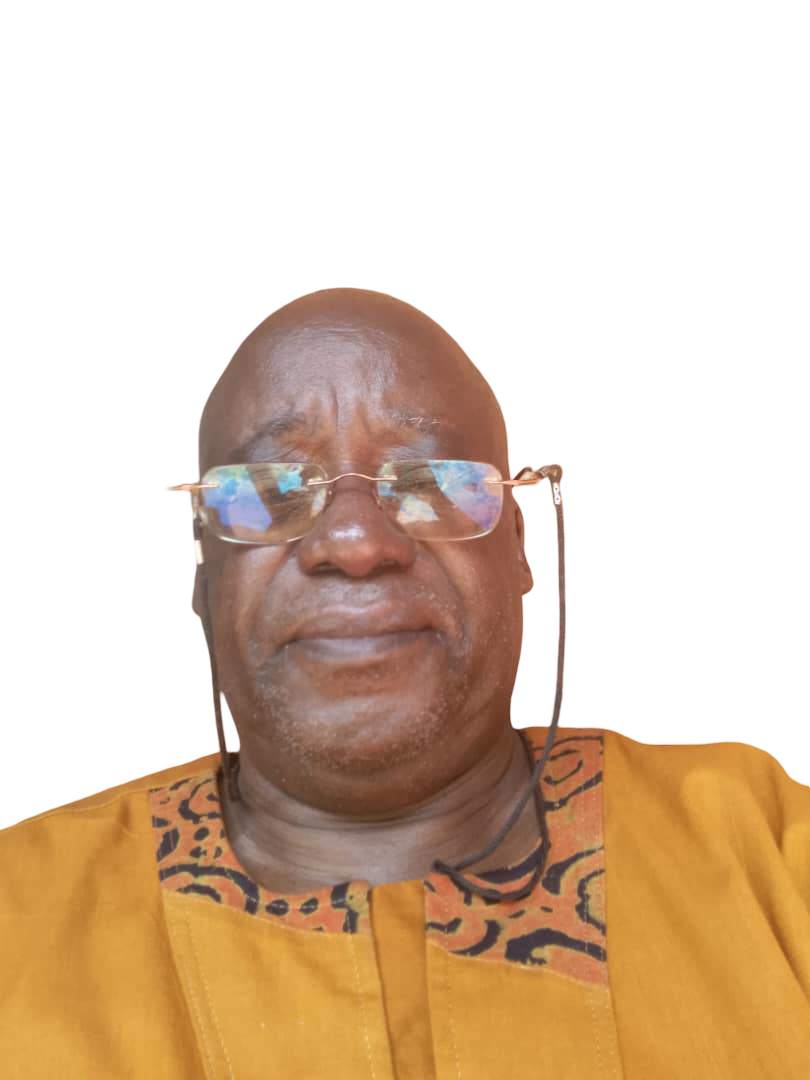
By Oweyegha-Afunaduula
Conservation Biologist and member of Centers for Critical Thinking and Alternative Analysis
Prologue: The Paper Tiger and Its Shadow
When the National Resistance Movement Army captured Kampala in 1986, it carried with it a Ten-Point Programme that sang of democracy, human rights, and the erasure of extrajudicial killings. The combatants of Luwero had emerged from the bush with promises to sweep away the “swine” who had misgoverned Uganda—a term President Tibuhaburwa Museveni deployed with characteristic pungency to describe the very rulers whose methods would, decades later, find comfortable accommodation in the state house on Entebbe Road.
Yet beneath this emancipatory rhetoric lay a mission that extended beyond Uganda’s borders: the capture of Kigali and the restoration of instruments of power to Tutsi rulers who had fought alongside their Ugandan counterparts in the Luwero bush. This transnational ambition, long whispered in the corridors of power, would eventually cast a long shadow over the constitutional promises made to the people of Uganda.
The new rulers, to hoodwink Ugandans, set about crafting a Constitution that would enshrine their Twenty Principles—an elaboration of the original Ten. The 1995 Constitution emerged as a document of profound contradiction: it declared that all power and resources belonged to the people of Uganda, yet it placed that power in the hands of a single individual; it created a Parliament, yet failed to delink the National Resistance Movement from the renamed Uganda People’s Defence Forces; it recognised traditional rulers, yet rendered them powerless spectators in their own kingdoms.
These architectural flaws—the concentration of power in the presidency, the fusion of party and army, the hollowing out of traditional authority—would transform the Ten-Point Programme into what it has become: a paper tiger whose roars now echo only in state-controlled media while its teeth sink into the flesh of Ugandans who dare to organise in alternative political formations.
The story of military trials of civilians is not merely a story about jurisdiction or legal procedure. It is the story of how the Constitution’s design flaws have matured into instruments of repression; how the army and the presidency have emerged as the principal eroders of human rights, freedoms, democracy, and justice; and how the unstable stability we witness today—the peace of the graveyard, the security of the barracks—cannot survive beyond President Museveni and the personalist NRM that has become indistinguishable from the man who leads it.
This treatise dwells on one violation among many: the trial of civilians before military courts. But in doing so, it illuminates the entire architecture of constitutional decay. For in the military court, we see in microcosm everything that has gone wrong with Uganda’s governance: the subordination of law to power, the fusion of civilian and military authority, the manipulation of institutions, and the gradual, grinding erasure of the Ugandan citizen as a rights-bearing subject.
The treatise is both wide-ranging and pertinent. The breadth of the treatise mirrors the readth of the problem: Military trials of civilians do not stand alone. They are fed by the same currents that produce:
* The manipulation of the Parliament of Uganda
* The subordination of the Judiciary of Uganda
* The suppression of intellectual life
* The digital Surveillance of the citizens
* The kidnapping of the opponents of the National Resistance Movement (NRM) while deceptively insisting that they do not exist
* The hollowing of citizenship itself
To address only the legal question – whether Section 119 of the UPDF Act 2025 violates Article 27 – would be to miss the forest for the trees. The forest is constitutionalism itself. The trees are the violations.
The treatise is pertinent. We must decide! Wi we be a country governed by law or by men? Will we accept the slow.normalisation of military power over civilian life, or will we demand the restoration of the constitutional order?
Part One: The Constitutional Architecture of a Contradiction
The Drafting History and Its Buried Truths
The 1995 Constitution emerged from the Constituent Assembly debates with a curious silence on the status of courts martial. Unlike the constitutions of Botswana or Lesotho, which explicitly define the relationship between military courts and civilian judiciaries, Uganda’s foundational document left the question hanging . Article 129(1) established the courts of judicature—Supreme Court, Court of Appeal, High Court, and such subordinate courts as Parliament might establish—but made no mention of military tribunals. Article 120(3)(b) empowered the Director of Public Prosecutions to institute proceedings “in any court with competent jurisdiction other than a court martial,” implying that military courts existed but occupied a separate sphere. Article 210 required Parliament to make laws regulating the organs of the Uganda Peoples’ Defence Forces.
This constitutional ambiguity was no accident. During the Constituent Assembly, delegates grappled with fundamental questions: Were courts martial courts of judicature within the meaning of Article 129, or were they disciplinary organs falling under Article 210? Did they have jurisdiction over civilians? Over non-service offences? The drafting history reveals that delegates agreed courts martial were indeed courts of judicature—but the history is maddeningly silent on whether they could try civilians .
What the delegates did agree upon was that the right to a fair hearing, guaranteed by Article 28, must extend to military proceedings. They insisted that before a court martial imposed sentence—particularly the death sentence—there must be “due process as provided for in the Constitution.” They warned against “cases of arbitrary deprivation of life in military courts,” drawing on historical experience that in military tribunals, “due process as stipulated in the Constitution is not strictly adhered to” .
The army representatives pushed back. While conceding that constitutional guarantees should apply, they drew a distinction between “courts” under Article 129 and “disciplinary courts or service courts.” The latter, they argued, required expeditious proceedings to maintain “operation efficiency” . This distinction—between justice and discipline, between rights and efficiency—would prove fateful.
The UPDF Act and Its Creeping Jurisdiction
When Parliament enacted the Uganda Peoples’ Defence Forces Act in 2005, it claimed to be acting under Article 210—regulating the organs of the defence forces. The long title of the Act made no mention of Article 129 or the establishment of courts of judicature. Yet the Act proceeded to create courts martial with jurisdiction over civilians.
Section 119(1) defined “persons subject to military law” to include not only serving officers but also:
- “(g) every person, not otherwise subject to military law, who aids or abets a person subject to military law in the commission of a service offence”
- “(h) every person found in unlawful possession of: (i) arms, ammunition or equipment ordinarily being the monopoly of the Defence Forces; or (ii) other classified stores as prescribed”
These provisions, innocuous in their drafting, opened the door to a systematic expansion of military jurisdiction. The General Court Martial was empowered to try civilians for offences ranging from unlawful possession of firearms to treason—offences with no necessary connection to military service or discipline .
The constitutional question was obvious: Could Parliament, acting under Article 210, confer on military courts a jurisdiction that the Constitution itself did not contemplate? The drafting history suggested not. The delegates had understood courts martial as disciplinary bodies for soldiers, not parallel justice systems for civilians. Yet the UPDF Act proceeded as if this history did not exist.
Part Two: The Jurisprudence of Resistance
The Constitutional Court’s Landmark Ruling
In 2015, more than 100 civilians, led by Capt (rtd) Amon Byarugaba Hasibu Kasiita and Mathias Rugira, petitioned the Constitutional Court. Their argument was simple and profound: military courts were trying civilians in contravention of the Constitution. These courts, they contended, lacked the independence and impartiality required by Article 28. They were empaneled by non-lawyers who struggled with complex evidentiary issues. Civilians charged before them were only allowed military lawyers whose allegiance lay with the armed forces .
The Attorney General opposed the petition, arguing that Section 119(1) did not create offences but merely delineated persons subject to military law. The General Court Martial, he contended, had unlimited jurisdiction to try civil offences within the confines of the Act.
In December 2022, the Constitutional Court delivered its judgment. In a majority decision of three to two, the justices held that under the 1995 Constitution, trying civilians is the role of civilian courts of judicature. Justice Elizabeth Musoke, writing the lead judgment, declared:
“I would declare that the UPDF Act, 2005 to the extent that it may be understood as conferring jurisdiction on military courts to try civilians is unconstitutional and therefore null and void.”
The court ordered that all pending criminal cases involving civilians before military courts be immediately transferred to competent civilian courts and taken over by the Director of Public Prosecutions. However, in a concession that would prove significant, the court validated convictions and sentences passed prior to its judgment. Future trials of civilians by military courts would be “invalid, null and void” .
Justices Kenneth Kakuru and Geoffrey Kiryabwire concurred. The Deputy Chief Justice and Justice Monica Mugenyi dissented. The court martial, the majority held, was intended as a disciplinary court for the Uganda Peoples’ Defence Forces—nothing more.
The Supreme Court Affirms: A Landmark Decision
On January 31, 2025, the Supreme Court delivered its judgment in the Kabaziguruka case, affirming and strengthening the Constitutional Court’s ruling. Chief Justice Alfonse Chigamoy Owiny-Dollo, writing for the majority, held that military courts lack jurisdiction to try civilians. Their structure and procedures, he found, violate the constitutional guarantees of a fair hearing and access to independent and impartial courts .
The Chief Justice’s reasoning cut to the heart of the matter. Military courts, he observed, derive their authority from the military high command, not from the judiciary. They lack the structural independence required by the Constitution. To illustrate the absurdity of military jurisdiction over civilians, he offered a memorable analogy:
“Imagine me, the Chief Justice of Uganda, who has never done any military training, leading a battlefield and defending the country against an enemy.”
The court ordered all ongoing criminal trials of civilians before military courts to cease immediately. All affected cases were to be transferred to ordinary courts of law with competent jurisdiction. The provisions of the UPDF Act establishing military courts, the court held, do not contain sufficient constitutional safeguards to ensure independence and impartiality as required under Articles 21, 28(1), 44(c), and 128(1) of the Constitution .
Justice Catherine Bamugemereire, one of the seven judges, declared the military court a “military tribunal” lacking constitutional authority to try civilians. Its structure and procedures, she ruled, violate the principles of fairness and impartiality enshrined in the Constitution. When soldiers commit offences against civilians, she added, they should be tried in civil courts .
The ruling was unambiguous, authoritative, and final. Or so it seemed.
The Chief Justice on Courage and Conscience
In September 2025, addressing the 8th Benedicto Kiwanuka Memorial Lecture, Chief Justice Owiny-Dollo reflected on the ruling. He had no patience, he said, for suggestions that he needed courage to decide as he did. For him, it was never about bravery. It was about the law, and the oath he took to uphold it.
“I never required even an iota of courage to interpret the Constitution versus the UPDF Act. No courage at all.”
He pushed back against the very framing of judicial decision-making as an act of courage. To him, the late Chief Justice Benedicto Kiwanuka—abducted and murdered by Idi Amin’s soldiers in 1972—was not a man who summoned courage to defy power. He was a man who stood by his oath. The idea that courage is necessary, Owiny-Dollo argued, implies that judges must weigh their decisions against fear or pressure. That misses the point.
“If it requires a judge to be courageous to render justice, that is very dangerous.”
The courage a judge would need, he suggested, would be to come up with a ruling contrary to the law. By this standard, the Supreme Court’s judgment was not courageous—it was simply faithful.
Yet even as the Chief Justice spoke, the impact of his ruling remained uncertain. While the Supreme Court had ordered the military to halt all ongoing civilian trials and transfer cases to civilian courts, many suspects remained in detention. And in Parliament, forces were already mobilising to undo what the court had done.
Part Three: The Legislature’s Revenge
The UPDF (Amendment) Act 2025
In May 2025, Parliament passed the Uganda People’s Defence Forces (Amendment) Act. President Museveni signed it into law in June. The Act reinstated the military’s authority to try civilians in certain circumstances .
The amendment appeared to address some of the Supreme Court’s concerns. It provided that those presiding over military tribunals should have relevant legal qualifications and training. It stated that while performing their judicial functions, they should be independent and impartial . But the substance remained: civilians could still be tried by military courts if found with military hardware, or if accused of aiding or abetting soldiers in the commission of service offences.
The government’s justification was framed in terms of security and efficiency. Army spokesperson Col Chris Magezi wrote on X: “The law will deal decisively with armed violent criminals, deter the formation of militant political groups that seek to subvert democratic processes, and ensure national security is bound on a firm foundational base. If it ain’t broke, don’t fix it!”
President Museveni had earlier described the Supreme Court’s verdict as the “wrong decision,” adding that “the country is not governed by the judges. It is governed by the people.” He defended military courts as necessary to deal with “rampant activities of criminals and terrorists that were using guns to kill people indiscriminately.” Civilian courts, he argued, were too busy to “handle these gun-wielding criminals quickly” .
The Mechanics of Defiance
How did Parliament purport to override a Supreme Court ruling? The mechanism was straightforward: legislation. Parliament, exercising its power under Article 79 to “make laws on any matter for the peace, order, development and good governance of Uganda,” simply amended the UPDF Act to reinstate military jurisdiction.
The MP for Ajuri County, Hon. Hamson Obua Denis, wrote to NRM caucus members convening them to support the Attorney General’s amendments. The proposals included provisions that misconduct by serving military personnel be tried, in the first instance, by military courts martial, with a right of appeal through civilian courts. Civilians who acquire specified firearms illegally would also be tried by military courts martial in the first instance .
The opposition saw this for what it was: a legislative override of a judicial decision. The Leader of Opposition, Hon. Joel Ssenyonyi, appealed to NRM members to observe the law, citing Article 92 of the Constitution, which prohibits Parliament from enacting legislation that alters the decision of a court in a particular case.
Robert Kyagulanyi, President of the National Unity Platform, warned civilians not to allow their legislators to act against their will. He appealed to the international community to “rise to the occasion” . Nkunyingi Muwada, MP for Kyadondo East, was blunt: “Our Constitution does not permit parliament to legislate with the purpose of court’s decision… Court martial remains as a tribunal for army and military only. We shall resist it.”
The International Response
The United Nations responded with unusual forcefulness. Volker Türk, UN High Commissioner for Human Rights, expressed concern that rather than encouraging efforts to implement the Supreme Court’s “crystal-clear decision,” Uganda’s legislators had voted to reinstate and broaden military court jurisdiction over civilians—a move that would contravene international human rights law obligations.
“The trial of civilians by military courts is in principle incompatible with international human rights law as it raises serious problems in relation to equitable, impartial and independent administration of justice. Such trials are only permissible in exceptional cases and subject to strict requirements.”
In May 2025, UN Human Rights Office Spokesperson Ravina Shamdasani urged President Museveni to reject the “regressive bill.” Parliament’s endorsement of the proposals, she noted, came in the lead-up to elections and alongside a troubling rise in arrests, abductions, harassment, intimidation, torture, and other ill-treatment of political opposition members .
The international community’s appeals fell on deaf ears. The bill became law.
Part Four: The Human Cost
Kizza Besigye: A Case Study in Military Justice
No case better illustrates the stakes than that of Dr. Kizza Besigye, the longtime opposition leader. In November 2024, Besigye was picked up in neighbouring Kenya, taken across the border, and charged before a military court with possession of pistols and attempting to purchase weapons abroad—charges he denied .
His appearance before the General Court Martial exemplified everything critics had long argued about military justice. The tribunal was composed of military officers, not independent judges. Its procedures were opaque. Its connection to the military chain of command raised inevitable questions about its impartiality.
Following the Supreme Court’s January 2025 ruling, Besigye’s case was transferred to a civilian court. The military charges were dropped and replaced with treason charges in the civilian system . Yet by the end of 2025, Besigye had been denied bail four times and had spent over a year on remand . The shift from military to civilian jurisdiction had changed the forum but not the fundamental dynamic: a prominent opposition figure facing serious charges in a highly politicised environment.
For human rights lawyer Gawaya Tegulle, the Besigye case illustrated precisely what was wrong with military courts:
“If you are a political opponent then they will find a way of getting you under the military court and then you know your fate is sealed… once there, justice will never visit your door.”
He added that people can spend years in detention on remand as military courts await decisions from senior figures—decisions that may never come. Those who are tried and found guilty face harsher penalties than in civilian courts .
The Wider Pattern: Abductions, Disappearances, and Torture
The Besigye case is not isolated. It forms part of a broader pattern of repression that has intensified as elections approach. The UN has documented a troubling rise in arrests and abductions, harassment and intimidation, torture and other ill-treatment of political opposition members .
Civilians continue to be detained in military barracks for years, often without trial—a practice the law explicitly prohibits but the state continues to tolerate . Prison conditions remain harsh, with high mortality rates from overcrowding, unsanitary conditions, malnutrition, and disease. Local prisons, which receive no central government funding, are particularly dire.
The Uganda Human Rights Commission’s 1997 findings on torture and illegal detention—documented decades ago—read like today’s headlines. The same regime that once investigated the crimes of Amin and Obote now replicates their methods.
Part Five: Implications and Meanings
For the Justice Industry and Its Development
The military trials controversy has profound implications for Uganda’s justice sector. When Parliament overrides a Supreme Court ruling, it undermines the very concept of judicial finality. When military courts try civilians, it creates parallel justice systems with different procedures, different standards, and different outcomes.
The development of a coherent, professional judiciary requires predictability and respect for hierarchical authority. The Supreme Court is meant to be the final arbiter of constitutional questions. When its rulings can be effectively nullified by legislation, the entire system loses coherence. Lawyers cannot advise clients with confidence. Citizens cannot know their rights. Investors cannot assess legal risks.
Moreover, the military courts themselves lack the professional infrastructure of the civilian judiciary. They are not integrated into the structure of judicial education, professional development, and peer review that sustains civilian courts. Their personnel rotate in and out of judicial functions, never developing the specialised expertise that adjudication requires. The result is a system that produces rougher justice—faster, perhaps, but also shallower and less reliable.
For Good Governance
Good governance requires clear lines of accountability and the subordination of all state institutions to constitutional order. The military trials controversy reveals a breakdown in both.
When the army assumes judicial functions over civilians, it blurs the line between military and civilian spheres. Soldiers who are trained to follow orders, to prioritise hierarchy and obedience, are asked to perform functions that require independence, impartiality, and critical judgment. The results are predictable: military courts become instruments of command, not forums for justice.
The controversy also reveals the weakness of Parliament as a check on executive power. The NRM’s dominance of the legislature means that presidential preferences reliably become legislative outputs. The UPDF (Amendment) Act was passed despite opposition protests, despite constitutional concerns, despite international condemnation. Parliament functioned not as a deliberative body but as a transmission belt for executive will.
For Civil-Military Relations
A democratic society requires clear boundaries between civilian and military spheres. The military exists to defend the nation from external threats, not to police civilian populations or adjudicate civilian disputes. When soldiers try civilians, those boundaries dissolve.
The implications extend beyond individual cases. When civilians see soldiers as judges, when they experience the military as an institution of everyday governance, they internalise a particular relationship between citizen and state—one in which rights depend on the goodwill of armed men rather than the protections of law.
The military itself is transformed by this role expansion. Soldiers who sit in judgment of civilians come to see themselves as arbiters of civilian conduct, as guardians of public order, as superior to the messy compromises of civilian justice. This mindset—the belief that military efficiency should override civilian procedures—erodes the professional military ethos and replaces it with something more political, more dangerous.
For Constitutionality and the Separation of Powers
The military trials controversy is, at its core, a crisis of constitutionalism. The Constitution establishes three branches of government with distinct functions. The judiciary interprets the law. The legislature makes the law. The executive enforces the law. When the legislature passes a law specifically designed to override a judicial interpretation of the Constitution, it violates this separation.
Article 92 of the Constitution prohibits Parliament from enacting legislation “to alter the decision or judgment of a court of law in a particular case.” The UPDF (Amendment) Act was precisely such legislation: a legislative override of the Supreme Court’s decision in the Kabaziguruka case. Yet Parliament passed it, and the President signed it, and the constitutional prohibition became a dead letter.
The deeper question is what remains of constitutional government when its most fundamental rules can be so easily evaded. If Parliament can override judicial decisions by legislation, if the President can ignore constitutional limitations by invoking security, if the military can exercise judicial power without constitutional authorisation—then the Constitution becomes what the regime makes of it, not what the people enacted.
For the Mafia and the Deep State
The concept of the “deep state” refers to permanent structures of power that operate beneath and beyond democratic control—security services, military establishments, intelligence agencies that pursue their own agendas regardless of elected officials. In Uganda, the military trials controversy illuminates the relationship between elected officials and this deeper structure.
On the surface, the UPDF (Amendment) Act was passed by an elected Parliament and signed by an elected President. This was democratic decision-making, formally speaking. But the substance of the decision—to expand military jurisdiction over civilians—serves the institutional interests of the military, not any discernible public purpose. It empowers military prosecutors, military judges, military commanders at the expense of civilian institutions.
This is how the deep state operates: not through coups and overt seizures of power, but through the gradual accretion of authority, the normalisation of military functions in civilian spheres, the creation of parallel structures that answer to command rather than law. The military courts are such a parallel structure. They exist alongside the civilian judiciary, applying different rules, reaching different outcomes, answerable to different masters.
For the People of Uganda
The ultimate victims of this constitutional decay are the people of Uganda—not only those directly prosecuted before military courts, but all Ugandans whose rights depend on the integrity of constitutional order.
When the Constitution fails to constrain power, when judicial decisions can be overridden by legislation, when military courts try civilians without independent judges or fair procedures—then citizenship itself is devalued. To be a citizen is to possess rights that the state must respect. When the state can ignore those rights at will, citizens become subjects.
This is what we see unfolding in Uganda today: a process of de-citizenisation, in which the rights and protections of constitutional membership are gradually withdrawn. Freedom of assembly is restricted. Freedom of expression is suppressed. Political opponents are kidnapped and disappeared. The press is intimidated. The Internet is monitored and controlled. And through it all runs the thread of military justice—the ultimate symbol of civilian subordination to armed power.
Part Six: Resistance and the Future
The Legal Challenge Continues
The Uganda Law Society has pledged to challenge the constitutionality of the UPDF (Amendment) Act. The National Unity Platform has already petitioned the Constitutional Court . The battle that seemed settled by the Supreme Court’s January ruling will continue.
The legal arguments are strong. Article 92 of the Constitution prohibits legislation that alters court decisions in particular cases. The UPDF (Amendment) Act does exactly that: it reinstates a jurisdiction the Supreme Court ruled unconstitutional. The Act may also violate the right to a fair hearing guaranteed by Article 28, and the structural separation of powers embedded in the Constitution’s design.
But legal arguments, however strong, must ultimately be heard by courts—and courts are themselves vulnerable to pressure. The Chief Justice may insist that he needs no courage to interpret the Constitution, but judges are human beings who read newspapers, who hear the speeches of presidents, who understand the consequences of defying power.
The International Dimension
Uganda depends on foreign assistance for approximately 51 percent of government spending . This dependency creates leverage—leverage that the international community has been reluctant to use. Donor countries have expressed concern about the military trials legislation, but concern has not translated into consequences.
The UN has urged compliance with the Supreme Court’s decision. Human rights organisations have documented abuses. But without sustained pressure, without meaningful consequences for non-compliance, international appeals become background noise—noticed but not heeded.
The Question of Transition
Behind the immediate controversy over military trials lies a deeper question: what happens after Museveni? The personalist NRM that has governed Uganda since 1986 is built around a single individual. Its institutions, its procedures, its habits of mind are all shaped by the man who has led it for four decades.
The military courts controversy reveals how deeply this personalism has penetrated the state. The army’s power is the President’s power. Military jurisdiction expands when the President wants it to expand. Judicial independence exists to the extent the President tolerates it. Parliament legislates what the President desires.
This is not sustainable. No institution built around a single individual survives that individual’s departure. The question is what comes next: a genuine transition to democratic constitutionalism, or a continuation of the same system with a different face?
The answer depends, in part, on struggles like the one over military courts. Every successful defence of constitutional principle creates a precedent, a resource, a foundation for future resistance. Every defeat—every legislative override, every kidnapped activist, every civilian tried by soldiers—teaches lessons about power and its limits.
Part Seven: Beyond Military Trials—The Wider Erosion
The military trials controversy is one violation among many. To understand its full significance, we must see it in context—as part of a broader pattern of constitutional erosion that includes:
Restrictions on freedom of assembly, association, and expression. Students, academics, intellectuals, and politicians in alternative political parties all face constraints on their fundamental rights. The space for public discourse shrinks year by year.
Electoral irregularities and suppression of opposition. Elections are conducted under conditions that favour the incumbent. The army explicitly or implicitly sanctions the suppression of opposition voices. The flawed election processes documented in 1996 continue today .
Human rights abuses. Extrajudicial killings, unwarranted incarcerations, kidnappings, disappearances—these are not historical relics but contemporary realities. Security forces use excessive force, at times resulting in death. Torture and other cruel treatment remain common .
Manipulation of the judiciary. Judicial processes and the rule of law are replaced by “rule by law”—the use of legal forms to achieve political ends. The international warrant for the Uganda Law Society president, Isaac Semakadke, now in self-imposed exile, exemplifies this pattern .
Manipulation of Parliament. The legislature and its processes are bent to executive will. The national budget is skewed to favour the army and State House. The removal of presidential age limits and extension of term limits were accomplished through Parliament’s subordination.
Digital authoritarianism. Social media, the Internet, and AI are devalued as tools for transforming Ugandan minds. The state monitors and controls digital spaces to favour political power retention and perenniality.
Intellectual repression. The state pursues de-politicisation, de-intellectualisation, disempowerment. Public intellectualism and public scholarship are erased. Political education is banned in schools. Intellectual discourse and public-university interactions are discouraged. Disciplinary education is perpetuated to narrow minds in the face of wicked problems. The sciences are separated with unprincipled preference for natural science and related professions. New and different knowledge production—team sciences—is rejected.
This is the full picture of constitutional decay. Military trials are one thread in this fabric—but they are a revealing thread, one that shows how the entire garment is woven.
Conclusion: The Courage to Be Faithful
Chief Justice Owiny-Dollo insists that he needed no courage to decide the Kabaziguruka case. The law was clear. The Constitution was clear. A faithful judge had only to apply them.
This is true, but it is also too modest. In a system where faithfulness to law can carry personal and professional costs, the decision to be faithful is itself a form of courage—not the courage to defy the law, but the courage to obey it when obedience is costly.
The military trials controversy will continue. Parliament has passed its amendment. The courts will hear challenges. The President will defend his position. Civilians will continue to appear before military tribunals, and their lawyers will continue to object, and the slow grinding process of legal contestation will proceed.
But beneath the legal arguments, beneath the constitutional provisions and judicial precedents, lies a more fundamental question: What kind of country do Ugandans want to live in?
Do we want a country where law constrains power, or where power defines law? Do we want a country where citizens have rights that the state must respect, or where the state has powers that citizens must endure? Do we want a country where soldiers try civilians, or where civilians govern soldiers?
The Constitution of 1995 embodied answers to these questions. It declared that all power belongs to the people. It established institutions to ensure that power would be exercised accountably. It guaranteed rights that no government could abridge.
But a constitution is only paper until people defend it. The military trials controversy is one front in that defence. It will not be the last.
The question for Ugandans—for legislators, for judges, for lawyers, for activists, for ordinary citizens—is whether we have the courage to be faithful: faithful to the Constitution we gave ourselves, faithful to the rights it guarantees, faithful to the country it imagines.
If we do, the military courts will eventually be confined to their proper sphere: the discipline of soldiers, not the judgment of citizens. The Constitution will be restored. And the paper tiger of the Ten-Point Programme will be replaced by something real: a government of laws, not men; of rights, not powers; of citizens, not subjects.
If we do not—if we accept military trials, legislative overrides, executive dominance, constitutional decay—then we will get the country we deserve: a country where power is all, law is nothing, and the gown devours its weaver.
The choice is ours. The time is now.