Judiciary begins Five-Day Oil and Gas Sector Training Programme
The programme started today with a pre-departure training session at the Supreme Court Conference Hall in Kampala, bringing together Justices of the Supreme Court and Court of Appeal, the Principal Judge, High Court Judges, judicial officers from lower courts, senior Judiciary officials, and key stakeholders in the petroleum industry.
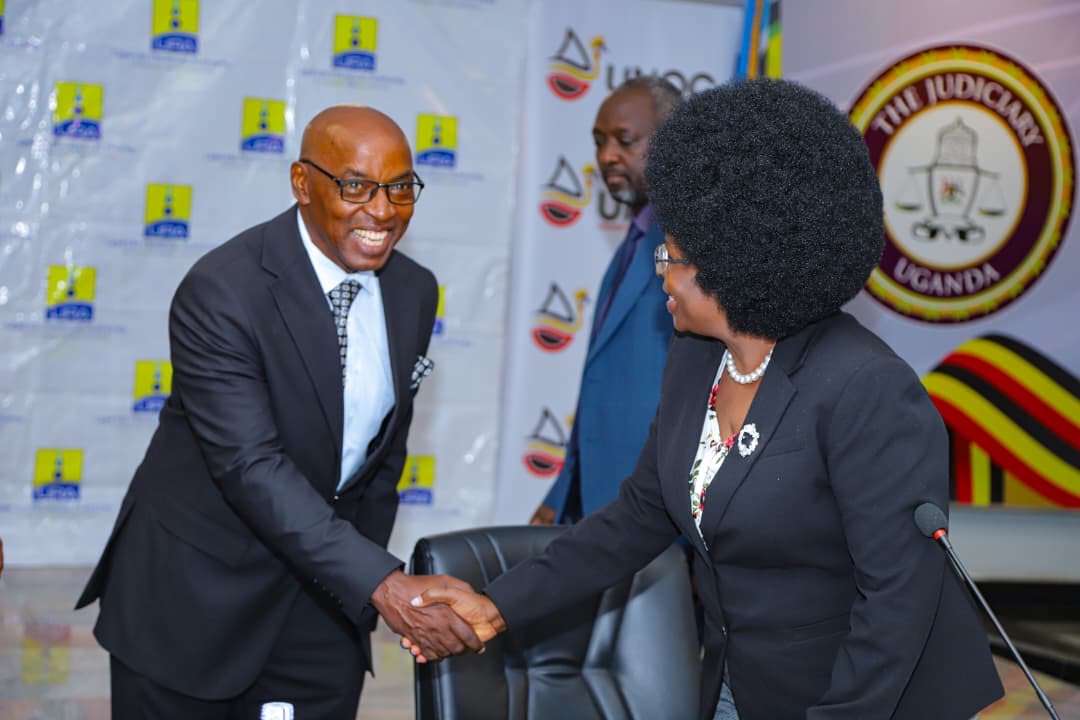
The Judicial Training Institute (JTI), in partnership with the Uganda Revenue Authority (URA), Uganda National Oil Company (UNOC), and the Petroleum Authority of Uganda (PAU), has launched a five-day capacity-building programme aimed at strengthening judicial understanding of Uganda’s oil and gas sector.
The programme started today with a pre-departure training session at the Supreme Court Conference Hall in Kampala, bringing together Justices of the Supreme Court and Court of Appeal, the Principal Judge, High Court Judges, judicial officers from lower courts, senior Judiciary officials, and key stakeholders in the petroleum industry.
Participants also include representatives from URA, PAU, UNOC, the Ministry of Energy and Mineral Development (MEMD), Bank of Uganda (BoU), and members of the media.
The training is designed to equip judicial officers with legal, regulatory, and economic knowledge needed to effectively handle disputes arising from Uganda’s growing oil and gas sector ahead of a four-day field study tour.
The programme will officially be opened by Chief Justice Dr. Flavian Zeija, while Bank of Uganda Governor Dr. Michael Atingi-Ego will deliver the keynote address. Other officials attending include Energy and Mineral Development Minister Dr. Monica Musenero Masanza, URA Commissioner General John Musinguzi Rujoki, and PAU Board member Innocent Kihika.
The opening session is chaired by Deputy Chief Justice Justice Moses Kazibwe Kawumi, while afternoon technical sessions will be led by Principal Judge Lady Justice Jane Frances Abodo.
The first day features presentations on Uganda’s oil and gas sector, national content enforcement, labour rights, taxation, petroleum revenue management, investment, financial governance, environmental issues, land disputes, wildlife, and economic development.
UNOC Chief Legal Officer Peter Muliisa will provide an overview of the petroleum sector and objectives of the field study, while PAU Director of Legal and Corporate Affairs Ali Ssekatawa will discuss employment disputes and national content requirements in the petroleum industry.
A high-level panel discussion will explore taxation and revenue management in the oil sector, with contributions from officials from the Ministry of Finance, URA, and Bank of Uganda.
The training will conclude with a four-day field study tour, during which judicial officers will visit key petroleum facilities, including the Uganda Petroleum Institute Kigumba (UPIK), Kingfisher Development Area, East African Crude Oil Pipeline (EACOP) Pump Station One, and other strategic infrastructure projects.
The Judiciary said the programme will enhance its capacity to adjudicate complex commercial, environmental, labour, and investment disputes linked to Uganda’s petroleum industry.