Long Walks to Class: New infrastructure brings hope to remote school in Kabale
While Universal Primary Education (UPE) has significantly expanded access to schooling across Uganda, challenges remain in hard-to-reach areas where physical access and infrastructure gaps continue to limit meaningful learning outcomes.
In the rolling hills of Kabale District, the school day begins long before sunrise for many children. Some walk for up to two hours across steep terrain to reach class, arriving tired, and in some cases, discouraged from attending altogether.
For years, this daily struggle has affected attendance, particularly among boys who often opt out of school to pursue small income-generating activities instead.
While Universal Primary Education (UPE) has significantly expanded access to schooling across Uganda, challenges remain in hard-to-reach areas where physical access and infrastructure gaps continue to limit meaningful learning outcomes.
One such school is Bwera Primary School, located in the remote Bwera Village in Kahama Sub-county, Ndorwa West Constituency. For decades, the school has grappled with limited infrastructure and near-total inaccessibility, with no proper road network connecting it to surrounding communities.
The logistical challenges have been so severe that some contractors previously declined to undertake construction work at the site due to high transportation costs and difficult terrain.
However, a major transformation is now underway.
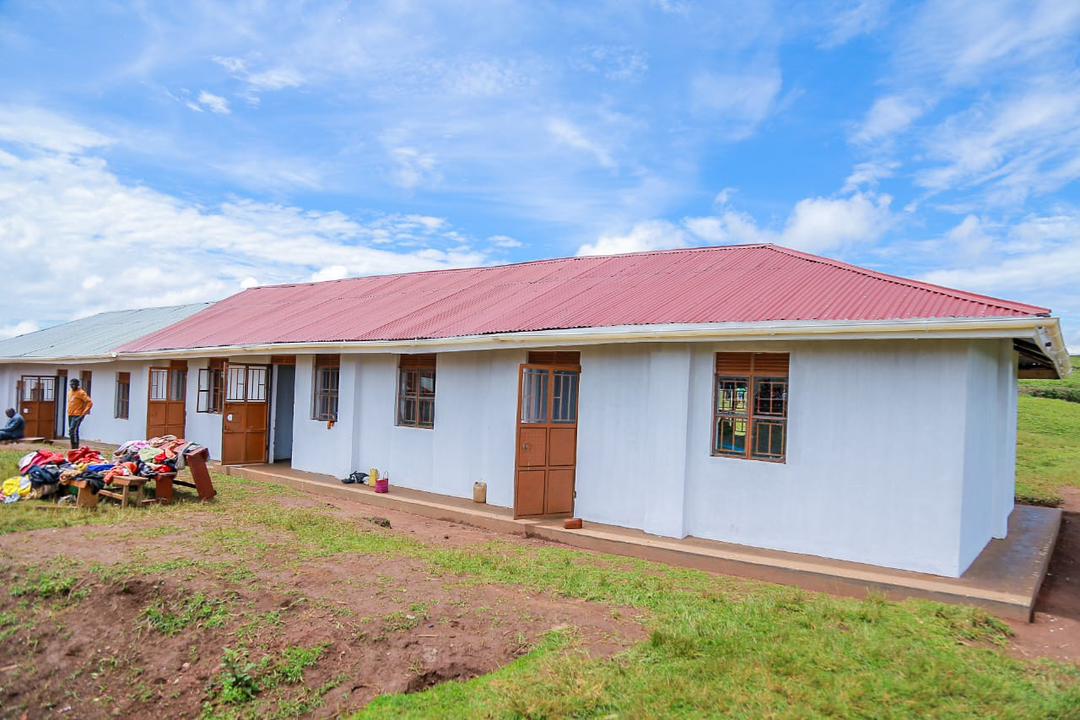
On April 1, 2026, newly refurbished facilities were officially handed over at the school—marking a significant milestone in improving the learning environment.
The project was implemented through a partnership between the Mastercard Scholars Foundation, Makerere University, and dfcu Bank. It delivered a renovated four-classroom block, new desks, improved sanitation facilities, and a water harvesting system.
The upgraded facilities now serve more than 270 pupils, offering a safer and more conducive space for learning. Early signs of impact are already emerging, with teachers reporting improved attendance and better classroom conditions.
Speaking at the handover, Helena Mayanja, Head of Corporate Affairs and Sustainability at dfcu Bank, underscored the importance of addressing physical barriers to education.
“The journey to the school itself reflects the realities these children face every day. Improving infrastructure in such communities is essential to ensuring that access to education translates into real learning outcomes,” she said.
Kabale District Education Officer, Tumwijukye Moses Bwengye, welcomed the development and praised the partners for overcoming longstanding logistical challenges.
He noted that previous attempts to upgrade the school had stalled due to inaccessibility, with contractors unable to reach the site. He emphasized that such partnerships are critical in unlocking development in underserved communities.
The initiative included a UGX 20 million contribution from dfcu Bank, highlighting the growing role of public-private partnerships in extending quality education to marginalized areas.
As the new facilities take root, there is renewed optimism that improved infrastructure will not only boost attendance but also enhance the overall learning experience for children who have long faced the burden of distance and isolation.