
Musasizi sets ambitious agenda at ministry of finance: here are his five key targets
The minister pledged to enforce strict budget discipline across government institutions while championing procurement reforms aimed at improving efficiency and reducing waste.
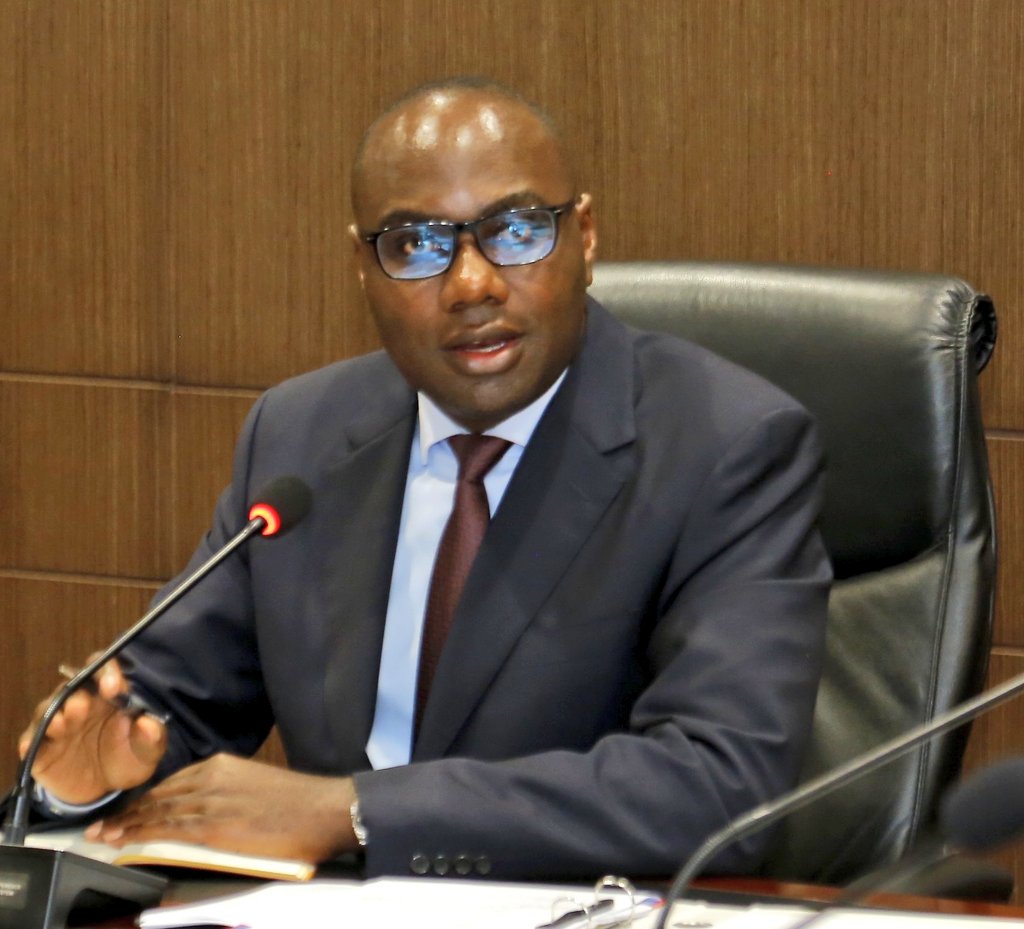
Finance Minister Henry Musasizi has laid out an ambitious roadmap for his tenure at the Ministry of Finance, Planning and Economic Development, pledging to accelerate Uganda’s journey from steady growth to what he described as an “exponential economic take-off.”
Speaking during his maiden top management meeting with senior ministry officials, Musasizi outlined five strategic pillars that will guide his leadership as he seeks to steer the country toward achieving its long-term economic transformation goals.
The minister said the Ministry must move beyond routine administration and focus on delivering measurable outcomes that improve livelihoods, expand economic opportunities and strengthen Uganda’s fiscal position.
Pursuing a $500 Billion Economy
At the heart of Musasizi’s vision is the government’s ambitious target of growing Uganda into a US$500 billion economy.
“We shall relentlessly execute the tenfold growth strategy to turn Uganda into a 500 billion-dollar economy,” Musasizi told the ministry’s top management team.
The target aligns with the government’s broader economic transformation agenda, which seeks to leverage agro-industrialization, tourism, mineral development, science, technology and innovation to accelerate growth and create jobs.
Economists say achieving such a milestone will require sustained high growth rates, increased productivity, greater industrialization and expanded participation of Ugandans in the formal economy.
Results-Oriented Public Spending
Musasizi also signaled a shift in the Ministry’s operating culture, emphasizing accountability and value for money in public expenditure.
“We shall shift the Ministry culture from spending money to enforcing results,” he said.
The minister pledged to enforce strict budget discipline across government institutions while championing procurement reforms aimed at improving efficiency and reducing waste.
He further announced plans for rigorous value-for-money audits on public projects to ensure taxpayers receive tangible benefits from government investments.
The move is expected to strengthen public financial management and improve confidence among development partners, investors and citizens.
Driving Domestic Revenue Growth
Another key priority for Musasizi is boosting domestic revenue mobilization to reduce reliance on external financing.
He said the government will aggressively implement the Second Domestic Revenue Mobilization Strategy with the aim of increasing Uganda’s revenue-to-GDP ratio to at least 20 percent.
“We shall push our revenue-to-GDP ratio to at least 20 percent, cutting external dependency,” he said.
Uganda’s revenue mobilization efforts have become increasingly important as the country seeks to finance major infrastructure projects, social services and economic development programs without accumulating unsustainable debt.
Analysts note that stronger domestic revenue collection would provide government with greater fiscal space while enhancing economic resilience.
Supporting Wealth Creation
Musasizi reaffirmed the government’s commitment to President Yoweri Museveni’s wealth creation agenda, particularly the commercialization of smallholder agriculture.
He said the Ministry would prioritize financing and monitoring programs aimed at helping millions of Ugandans transition from subsistence activities into the money economy.
“The Ministry will prioritize funding and tracking the commercialization of smallholders to ensure every Ugandan enters the money economy,” he said.
The strategy is expected to focus on increasing household incomes through commercial agriculture, improved market access, value addition and enterprise development.
Government considers the integration of more Ugandans into productive economic activities as a critical step toward achieving inclusive growth and poverty reduction.
Preparing for the Oil Era
With Uganda edging closer to commercial oil production, Musasizi stressed the importance of prudent management of future petroleum revenues.
He pledged to establish strong institutional safeguards to ensure oil resources contribute to sustainable development rather than creating economic distortions.
“We shall manage our impending oil revenues with bulletproof institutional guardrails,” the minister said.
According to Musasizi, oil revenues will primarily be invested in strategic infrastructure projects that can stimulate long-term economic growth and competitiveness.
He emphasized that Uganda’s objective is to become an oil-producing nation without becoming dependent on oil revenues.
“The goal is for Uganda to become an oil producer but never an oil-dependent economy,” he said.
Setting the Tone for a New Era
Musasizi’s address offers the clearest indication yet of the priorities that will define his tenure at the Finance Ministry.
The emphasis on fiscal discipline, revenue mobilization, wealth creation, economic transformation and prudent oil governance reflects government’s broader strategy of achieving middle-income and eventually upper-middle-income status.
For ministry officials and stakeholders, the message was clear: the focus is shifting from managing budgets to delivering outcomes that can transform Uganda’s economy and improve the lives of its citizens.
As Uganda navigates a critical period marked by preparations for oil production, rapid population growth and rising development aspirations, Musasizi’s agenda sets a demanding but potentially transformative course for the country’s economic future.