Russia partnership could boost Uganda’s mineral processing capacity
Uganda seeks to strengthen local engineering, mineral processing and industrial innovation through proposed skills development programmes with Russia.
By George Niyonzima
Uganda is exploring a scientific and technological partnership with Russia aimed at building local capacity to process minerals into finished products, improve engineering productivity and develop home-grown solutions for key industrial sectors.
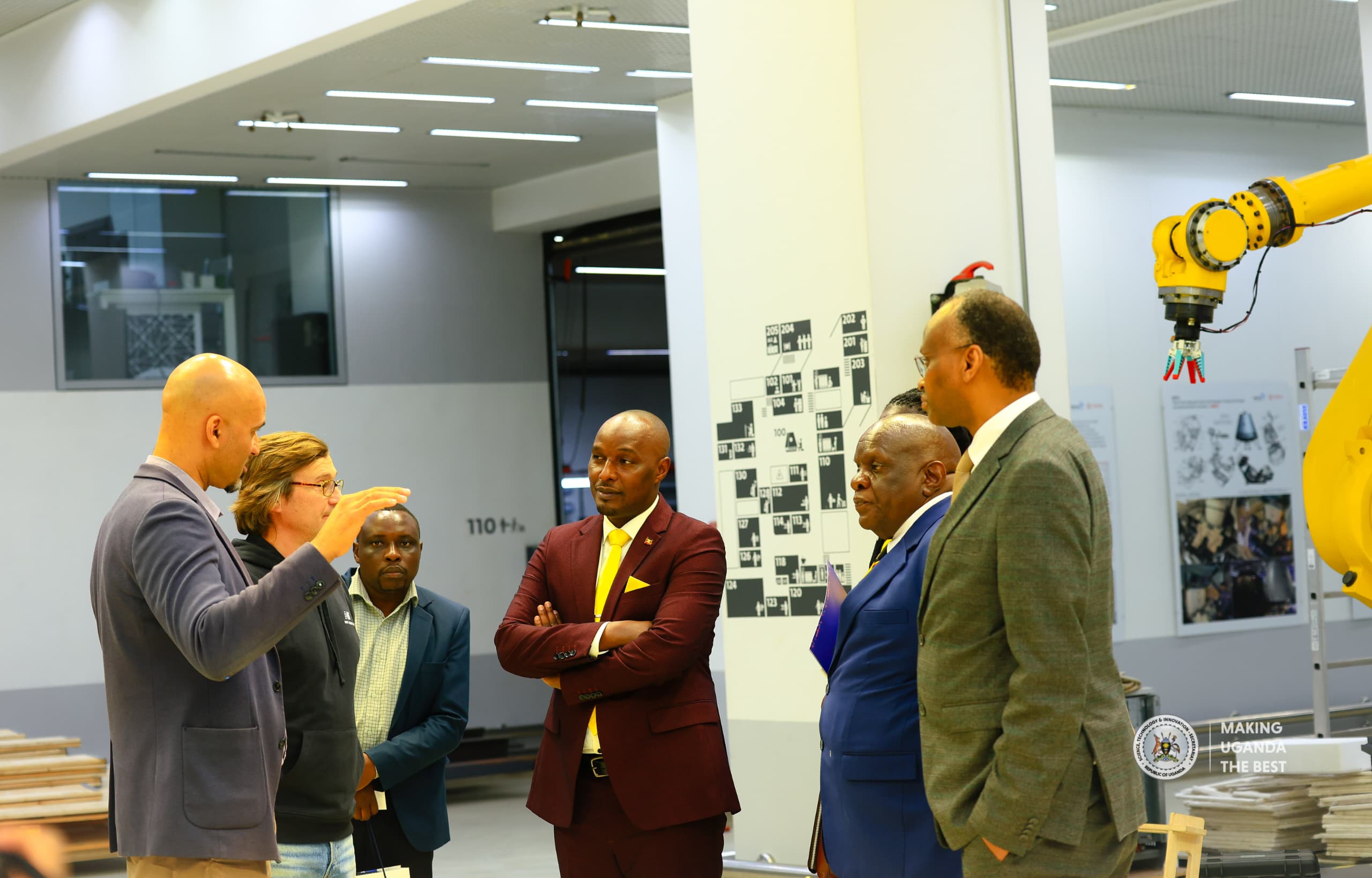
The proposed cooperation follows a visit by the Minister for Science, Technology, Innovation and Outer Space, Eng. Jonard Asiimwe Akiiki, to Russia’s National University of Science and Technology in Moscow, where discussions focused on equipping Ugandan scientists, engineers and innovators with practical skills to support industrial development.
A key outcome of the visit is a proposed project to upskill Ugandan innovators in transforming the country’s mineral resources into finished products, potentially strengthening domestic value addition and reducing reliance on exporting unprocessed raw materials.
The partnership is also expected to explore opportunities in infrastructure development, aerospace, mobility, energy and industrial processing.
During the visit, Akiiki met Konstantin Mogilevsky, Russia’s Deputy Minister of Science and Higher Education, to discuss strengthening scientific and technological cooperation between the two countries.
The discussions centred on developing the capacity of Ugandan scientists and innovators to translate their knowledge and the country’s available natural resources into practical technologies and commercially useful products.
“We want to identify talented young Africans, train them in Russia and equip them with the skills to return home and develop their motherland,” Mogilevsky said.
The proposed training programmes would target young Ugandans, with the aim of equipping them with specialised technical knowledge that can be applied to local industrial and technological challenges.
Mineral value addition in focus
The proposed initiative comes as Uganda seeks to expand its industrial base by increasing the value derived from its mineral resources.
Processing minerals locally into finished or semi-finished products can create opportunities for manufacturing, employment, technology transfer and the development of supporting industries.
However, achieving this requires more than access to raw materials. It also depends on specialised engineering skills, modern processing equipment, research and development, reliable energy supplies and investment in industrial infrastructure.
The proposed collaboration with Russia could help address some of these capacity gaps by exposing Ugandan innovators to specialised training and facilities for developing and testing new technologies.
For Uganda, the economic benefits will depend on how effectively the acquired knowledge is translated into commercially viable enterprises, industrial applications and locally manufactured products.
Building local innovation capacity
Beyond mineral processing, the discussions covered possible cooperation in infrastructure, aerospace, mobility and energy, sectors that require advanced technical expertise and sustained investment in research and innovation.
The partnership seeks to strengthen the ability of Ugandan scientists and engineers to develop solutions suited to the country’s needs rather than relying exclusively on imported technologies.
Joint training programmes and access to specialised scientific facilities could provide opportunities for knowledge transfer, particularly for young innovators seeking to apply science and engineering to production challenges.
Such programmes would also need to be linked to Uganda’s universities, research institutions, industrial firms and innovation centres to ensure that training produces measurable economic outcomes.
From discussions to implementation
While the visit has opened discussions on potential areas of cooperation, details regarding the project’s financing, implementation timeline, number of beneficiaries and institutional arrangements have not been provided.
The eventual impact will depend on whether the two countries formalise the proposed partnership, establish clear implementation mechanisms and provide sustained support for innovators after their training.
Uganda will also need to ensure that technology transfer is accompanied by opportunities for local enterprises to access financing, equipment, markets and technical support.
If implemented effectively, the proposed cooperation could contribute to the country’s efforts to strengthen domestic industrial capacity, improve mineral value addition and turn scientific knowledge into productive economic activity.