UBOS, audit committee tighten accountability and internal controls
The Committee commended the Centre for its contribution to improving access to and dissemination of official statistics, as well as promoting their use in response to stakeholders' data needs.
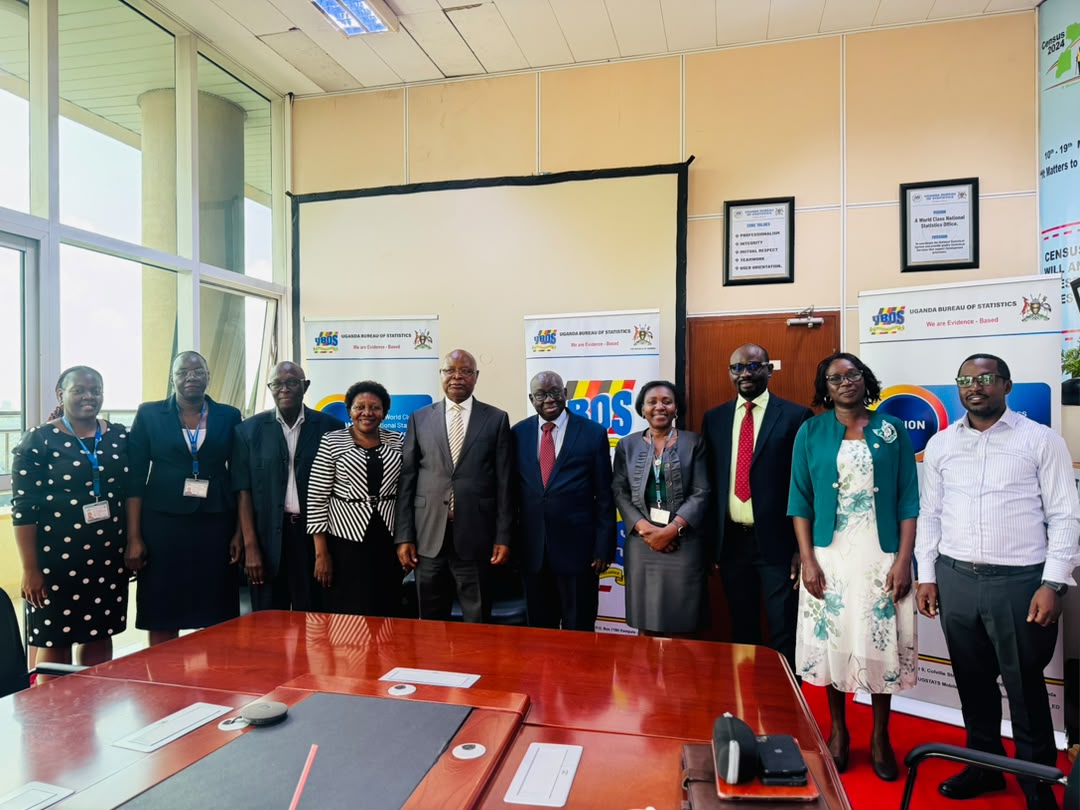
The Uganda Bureau of Statistics (UBOS) is strengthening its internal accountability, governance and audit systems following an engagement with the Accountability Sector Audit Committee (ASAC) aimed at improving oversight and implementation of audit recommendations.
The engagement, held on August 11, 2026, brought together ASAC members and UBOS Management to review the Bureau’s internal control environment, governance systems and compliance with audit and financial management requirements.
The meeting was chaired by UBOS Executive Director Dr. Chris N. Mukiza, while the ASAC delegation was led by its Chairperson, Justice Emeritus Ralph W. Ochan.
The discussions focused on the implementation of audit recommendations, statutory instruments governing the establishment and operations of UBOS and its committees, staff welfare, the effectiveness of the Internal Audit Directorate and areas where the Ministry of Finance, Planning and Economic Development (MoFPED) could provide further support to the Bureau.
Focus on audit recommendations
ASAC commended UBOS for the quality of its audit reports and stressed the importance of submitting them on time to enable effective oversight and follow-up.
The Committee and UBOS Management also examined challenges that could affect the timely submission of quarterly audit reports.
Following the discussions, both sides agreed on measures to address identified gaps and improve compliance with reporting timelines.
They also agreed to prioritise critical audit recommendations for short-term implementation while maintaining closer collaboration between UBOS and the Accountability Sector.
The measures are expected to strengthen institutional accountability and ensure that identified weaknesses in systems and processes are addressed promptly.
Internal audit gets management backing
Dr. Mukiza highlighted the role of the Internal Audit Directorate in strengthening UBOS’s internal control environment and ensuring that institutional systems operate effectively and efficiently.
He said the Directorate is adequately resourced and facilitated with the necessary tools, including audit management software, to execute its mandate.
Dr. Mukiza reaffirmed the commitment of UBOS Management and the Board to continue supporting the Directorate by strengthening internal audit systems, mechanisms and staff capacity.
The engagement underscores the growing importance of internal controls and institutional governance in ensuring that public institutions operate efficiently and remain accountable in the management of public resources.
ASAC’s oversight role
ASAC operates under MoFPED and provides independent oversight of governance, risk management and internal control systems within public sector institutions.
The Committee also monitors compliance with financial management regulations and follows up on the implementation of audit recommendations.
For UBOS, effective implementation of audit recommendations is particularly important given the Bureau’s role as Uganda’s official statistics agency and its responsibility for providing data used in public planning, policy formulation and resource allocation.
National Statistical Resource Centre tour
Following the engagement, the ASAC delegation toured the National Statistical Resource Centre, where members were briefed on its role in facilitating access to statistical information and promoting the utilisation of official statistics.
The Committee commended the Centre for its contribution to improving access to and dissemination of official statistics, as well as promoting their use in response to stakeholders’ data needs.
The engagement and subsequent tour highlight the connection between strong institutional governance and the effective delivery of Uganda’s statistical mandate, as UBOS seeks to strengthen accountability systems while improving access to reliable official data.