
UNATU justifies strike as teachers commence nationwide industrial action over unfair’ salary disparities, unfulfilled government pledges
Uganda National Teachers’ Union (UNATU) last week announced that its members will embark on a nationwide industrial action starting September 15, 2025, coinciding with the official opening of the third school term.
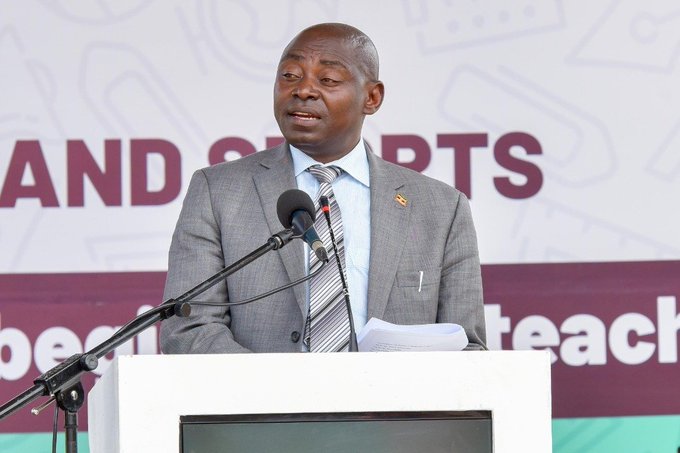
The Uganda National Teachers Union (UNATU) has firmly articulated the reasons behind its ongoing nationwide industrial action, with General Secretary Filbert Baguma emphasizing long-standing grievances over salary disparities and unfulfilled government promises.
Uganda National Teachers’ Union (UNATU) last week announced that its members will embark on a nationwide industrial action starting September 15, 2025, coinciding with the official opening of the third school term.
Speaking in an interview with NBS Television Monday morning, Baguma underscored that the strike is a culmination of years of patient waiting and a plea for equitable treatment for all educators.
“First of all, all terms are equally important because if you don’t start the first term or second term, you don’t come for exams in the third term,” Baguma stated when asked why they targeted the last term of the academic year.
Baguma refuted any suggestions that the timing of the strike, during the third term, was arbitrary or less impactful. “And two, the issue we are talking about is not an issue of today. If you recall, in 2022, it was on 4th July when we were in Corona [COVID-19 pandemic period], and the President told us, ‘you wait, be patient, we are going to handle it.’ Three years down the road, there is no communication to that effect.”
Baguma stressed that the public should not view the strike as a sudden third-term disruption, but rather as a direct consequence of three years of teachers patiently awaiting the government to honor its commitments.
The core of UNATU’s grievances centers on the significant salary disparities created by a selective enhancement policy. Baguma highlighted stark differences:
Secondary School Teachers: A science teacher received a 300% increment, bringing their salary to UGX 4 million (before taxes), while their arts counterpart remained at UGX 1 million.
Diploma Holders: A diploma holder teaching science currently earns UGX 2.2 million, compared to their arts counterpart’s UGX 600,000.
Primary School Teachers: These educators earn a meager UGX 490,000 before taxes, which reduces to approximately UGX 400,000 after deductions. Baguma starkly contrasted this, saying, “Now, in the current situation, 400,000 is breakfast for some of these government officials.”
He passionately argued for parity: “Therefore, government needs to be considerate to look at the plight of the teachers, because all teachers matter and they go to the same shop, same markets, they live in the same environment and work in the same environment.”
Baguma also pointed out the ripple effect of these disparities on leadership roles within schools, fostering a sense of inequity and undermining unity. “Even the headteachers, a headteacher of science earns 6.5 million, and the counterpart remained at 2.2 million before taxes. The deputy [headteacher, science] 4.5 million, and the counterpart [arts] at 1.6 million. That is very unfair.”
He explained that this deep-seated unfairness necessitates collective action. “Even when one group [science teachers] decides to remain in the class, they will not do much. And therefore the best way is please, can we have the teachers treated fairly and equitably so that they concentrate on their work and leave this business of discussing who gets what or who is getting better, and who is working as a pauper. We need the teachers to be treated fairly and that is all. Because a teacher is a teacher and all teachers matter.”
Acknowledging the impact on students, Baguma reiterated that teachers’ conditions directly affect learners’ conditions. “Obviously, teachers’ conditions are learners’ conditions. And therefore if a teacher is not in the [classroom], the most affected is the innocent learner. And that’s why government should come in very quickly to address this, so that the teachers can go and do their work.”
UNATU’s immediate demand to the government is clear: “We have communicated to government and majorly what we need first is salary enhancement. The others, we shall sit on the table and discuss them. But most important now is salary enhancement for all the categories of teachers – primary, secondary, and other tertiary institutions – whose salary was not enhanced in 2022.”