USEA, Rotary launch national initiative for community resource centres
The gathering brought together leaders from the private sector, diplomatic missions, development partners, Rotary leadership, and civil society organisations to mobilise partnerships for sustainable, community-driven development.
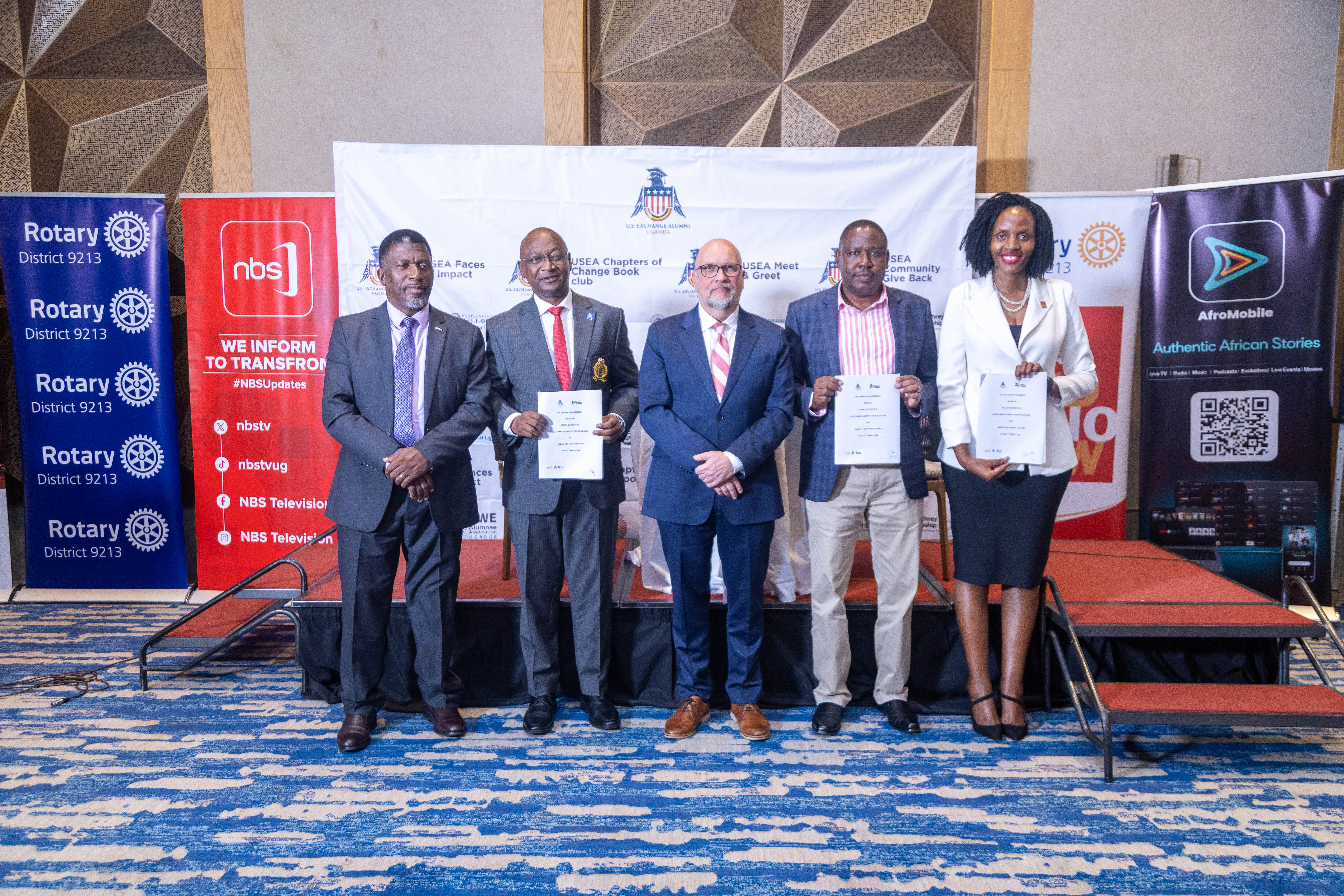
The U.S. Exchange Alumni Uganda (USEA) and Rotary District 9213 have unveiled an ambitious national initiative to establish Community Resource Centres across Uganda’s five regions—Central, Eastern, Northern, Western, and West Nile—aimed at expanding access to knowledge, skills training, and innovation.
The initiative was officially introduced during a Partnership Breakfast held at the Four Points by Sheraton Kampala in Kampala. The gathering brought together leaders from the private sector, diplomatic missions, development partners, Rotary leadership, and civil society organisations to mobilise partnerships for sustainable, community-driven development.
Investing in Human Capital
The proposed resource centres are designed to strengthen human capital development, particularly among young people, by providing platforms for research, digital learning, and innovation.
Ronald Nsubuga Balimwezo welcomed the initiative, emphasising the importance of expanding educational infrastructure to support youth development.
“Human capital development through resource centres is a good idea. We need resource centres for research, skills training, and innovation. Education is the greatest asset to a child,” he said.
Bridging Knowledge Gaps in the Digital Era
Leaders involved in the initiative highlighted that while information has increasingly moved online, physical learning spaces remain essential for many communities across Uganda.
- Kitakule noted that resource centres can play a critical role in helping young people access educational and career opportunities.
“In the past, I spent a lot of time at the U.S. resource centre to get information about study opportunities abroad. Today, things are online, but we still need centres that provide resources both digitally and physically. Let us do this to help the next generation,” he said.
He added that the collaboration between Rotary and USEA reflects a broader commitment to partnership-driven development.
“This year, at Rotary, we are uniting for good. We are demonstrating this today by convening together to establish resource centres modelled after U.S. resource centres,” Kitakule said.
Addressing Gaps in Community Learning Infrastructure
USEA leaders say the project responds directly to gaps in access to public learning facilities across Uganda.
Owomugisha Blessing Immaculate explained that limited access to libraries and training facilities has created barriers for many communities seeking educational and employment opportunities.
“Public libraries are limited in Uganda. We identified a need in different regions of our communities. It is a challenge of education, employment, and youth development. This is a gap we want to close with the establishment of USEA community library and resource centres across Uganda,” she said.
Partnerships for Modern Development Challenges
Representatives from the U.S. Embassy in Kampala also welcomed the initiative, highlighting the importance of collaboration in addressing today’s complex development challenges.
Mikael Cleverley said partnerships that combine innovation, technology, and community leadership are essential for effective development.
“This USEA project is great because of the collaborative effort around it. In the modern age we face complex challenges, and we must rely on partnerships, new ways of innovating, and technology to do old things better and more effectively. Gatherings like this remind us that we can achieve much more together than alone,” he said.
Multi-Purpose Centres for Community Transformation
Each USEA Community Resource Centre will function as a hub for holistic community development, offering a wide range of services including digital literacy and ICT skills training, entrepreneurship and vocational skills development, education and literacy support programmes, youth mentorship and leadership training, sports and recreation activities, and basic community health services through village clinics.
By integrating education, health, and economic empowerment programmes, the centres are expected to strengthen local capacity while encouraging community engagement.
Reaching One Million Ugandans Annually
Organisers say the establishment of five fully operational centres across Uganda’s regions could directly impact more than one million vulnerable Ugandans each year, particularly youth, women, and community leaders.
The initiative aligns closely with Rotary’s core areas of focus, including economic empowerment, disease prevention, education, and community development.
For USEA and its partners, the project represents a long-term investment in Uganda’s human capital—transforming community spaces into engines of learning, innovation, and opportunity.