27% of Ugandans poor as new UBOS report exposes deep regional inequalities
The findings highlight a persistent urban-rural divide, with 31.5% of rural populations experiencing multidimensional poverty compared to 27.0% in urban areas, a gap that reflects unequal access to services and opportunities.
A new national poverty assessment has revealed that more than a quarter of Ugandans are trapped in overlapping forms of deprivation, underscoring the limits of income-based measures and sharpening the focus on inequality across regions and households.
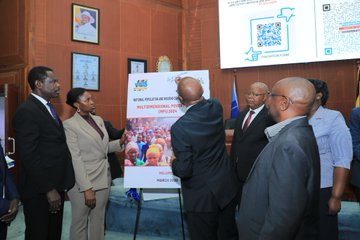
The Uganda Bureau of Statistics (UBOS) on Thursday unveiled the Multidimensional Poverty Index (MPI) Census Monograph 2024 – Volume 5 at Statistics House in Kampala, offering one of the most comprehensive snapshots yet of how poverty is experienced across the country.
Presented by Stephen Baryahirwa, Head of Social Surveys and Censuses, and Elemiah Muhondogwa, Statistician for Labour Statistics, the findings show that 27% of Ugandans are multidimensionally poor, facing simultaneous deprivations in education, health, living standards, and access to basic services.
A National Average That Masks Deep Divides
Uganda’s MPI stands at 27%, but beneath this national average lie stark regional disparities that continue to define the country’s development challenge.
The Karamoja sub-region remains the most deprived, with an MPI of 56%, more than double the national figure. It is followed by West Nile at 39.0% and Sebei at 33.5%.
At the district level, Kaabong District records the highest deprivation at 63%, reinforcing Karamoja’s position as the epicentre of multidimensional poverty.
In contrast, Kampala has the lowest MPI at 0.088, with only 8.8% of its population classified as multidimensionally poor.
The findings highlight a persistent urban-rural divide, with 31.5% of rural populations experiencing multidimensional poverty compared to 27.0% in urban areas, a gap that reflects unequal access to services and opportunities.
Gender, Age and Household Dynamics
Beyond geography, the MPI reveals how poverty is shaped by household characteristics.
Female-headed households are disproportionately affected, registering higher levels of multidimensional poverty compared to male-headed households, an indication of structural inequalities that continue to limit women’s economic and social opportunities.
Age also plays a critical role. Child-headed households face the highest deprivation levels at 36%, significantly higher than households headed by adults aged 20 to 50 years. The data points to the vulnerability of households lacking stable adult support systems.
“Poverty Is More Than Money”
Speaking at the release, UBOS Executive Director Chris Mukiza challenged conventional definitions of poverty.
“Poverty is not only monetary; it is also about losing a child to unclean water, lacking representation, and lacking access to basic freedoms,” he said, urging policymakers to rethink how deprivation is understood and addressed.
Mukiza noted that the MPI monograph is derived from the 2024 National Population and Housing Census and forms part of a broader series of thematic reports aimed at deepening understanding of Uganda’s socio-economic landscape.
He emphasized that the findings provide critical indicators for tracking progress under Sustainable Development Goal 1, which calls for ending poverty in all its forms.
Data as a Strategic National Asset
Representing the UBOS Board Chair, Irene Birungi Mugisha described reliable data as a cornerstone of national development.
“Quality statistics are not just a technical requirement, they are a strategic national asset that enables informed decision-making,” she said, noting that Uganda’s development frameworks, from the Poverty Eradication Action Plan of the 1990s to the current National Development Plans, have increasingly relied on data-driven insights.
The MPI, she added, provides a timely tool for evaluating the effectiveness of government interventions such as the Parish Development Model, NAADS, and Operation Wealth Creation.
A Tool for Targeted Action
Development partners welcomed the report as a critical instrument for more precise policy design.
Thangavel Palanivel, Chief Strategy and Policy Unit and Senior Economic Advisor at United Nations Development Programme (UNDP), said the MPI goes beyond measurement to act as a driver of human development.
“It helps identify who is being left behind, where, and in what ways—guiding more equitable and responsive interventions,” he noted.
Similarly, John Ilukol of the World Bank highlighted the index’s value in programme targeting and evaluation, describing it as a “critical resource” for understanding poverty patterns.
Policy, Politics and Persistent Gaps
Lawmakers also weighed in, pointing to the enduring nature of regional poverty disparities.
Geoffrey Ekanya, MP for Tororo North County, noted that sub-regions such as Karamoja, Bukedi, and West Nile have consistently ranked among the poorest, stressing the importance of statistics in guiding budgeting and legislative priorities.
Meanwhile, Faith Nakut highlighted the severity of deprivation in Karamoja, particularly in Napak District, where a majority of residents face multidimensional poverty.
Despite significant government investment in poverty reduction programmes, she said, outcomes remain limited—pointing to the need for more targeted and effective interventions.
From Data to Delivery
Minister of State for Planning Amos Lugoloobi underscored a critical gap: not data availability, but data utilisation.
While UBOS continues to generate extensive statistics, he noted, the real challenge lies in ensuring that policymakers, institutions, and stakeholders actively use this data to inform decisions.
He reaffirmed government’s commitment to infrastructure development, including roads, electricity, rail, and industrial parks, as a pathway to job creation and inclusive growth, while calling for collective action across sectors.
The Road Ahead
As Uganda pursues its ambition of becoming a modern, inclusive economy, the MPI findings offer both a warning and an opportunity.
They reveal that poverty is not just about low incomes, but about layered disadvantages that limit people’s choices, resilience, and dignity.
For policymakers, the message is clear: tackling poverty requires more than economic growth. It demands targeted, data-driven interventions that address the multiple dimensions of deprivation, especially in regions and communities that have long been left behind.
If effectively utilised, the MPI could mark a turning point, shifting Uganda’s anti-poverty strategy from broad-based approaches to precision policy that reaches those who need it most.