Budget Framework Paper, now approved by Parliament, signals tighter spending, stronger revenue drive
The framework, debated extensively by legislators, outlines how government plans to navigate a shrinking resource envelope while sustaining growth and laying the groundwork for what it calls tenfold economic expansion.

As Parliament approved Uganda’s National Budget Framework Paper (NBFP) for FY 2026/27 on Thursday evening, the government set out an ambitious economic narrative: one of tighter spending, deeper reforms, and a long-term push to expand the economy to USD 500 billion by 2040.
The framework, debated extensively by legislators, outlines how the government plans to navigate a shrinking resource envelope while sustaining growth and laying the groundwork for what it calls tenfold economic expansion.
Growth Ambitions amid Fiscal Tightening
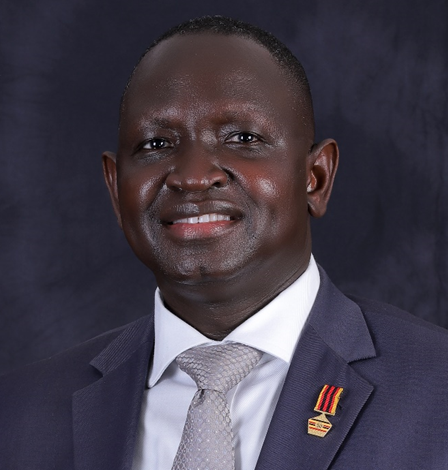
Presenting the government’s position, the Minister of State for Finance (General Duties), Henry Musasizi, said Uganda’s economy is projected to grow between 6.5 and 7 percent in FY 2026/27, building on recent recovery momentum. The medium-term strategy, he noted, focuses on scaling up production, exports, and value addition to unlock faster and more inclusive growth.
Yet the optimism comes against a backdrop of fiscal restraint. The preliminary resource envelope for FY 2026/27 is projected at Shs 69.399 trillion, down from Shs 72.376 trillion in the current financial year. This tightening reflects the government’s deliberate effort to rein in borrowing, stabilise public finances, and improve Uganda’s sovereign credit profile.
Betting on ATMS and Enablers
At the core of the framework is a renewed emphasis on ATMS sectors (Agro-industrialisation, Tourism development, Mineral development (including oil and gas), and Science, technology, and innovation) supported by key enablers such as infrastructure, energy, transport, and human capital development.
For the business community, this signals where public investment and policy attention will be concentrated over the next five years. The government is also doubling down on export-led growth, with plans to strengthen standards certification through the Uganda Bureau of Standards (UNBS) to improve competitiveness in regional and international markets.
Revenue First, Borrowing Second
A notable feature of the framework is its strong tilt toward domestic revenue mobilisation. Domestic revenues are projected to rise to Shs 40.090 trillion in FY 2026/27, up from Shs 36.806 trillion in FY 2025/26. This reflects continued tax administration reforms and efforts to widen the tax base rather than increase tax rates.
At the same time, domestic borrowing is expected to decline sharply to Shs 8.952 trillion, from Shs 11.381 trillion in the current year. External budget financing is also projected to fall dramatically, from Shs 2.084 trillion to Shs 330.97 billion, underscoring the government’s intent to reduce reliance on costly financing.
For businesses, this could ease pressure on domestic interest rates and private sector credit, a long-standing concern for investors and manufacturers.
Plugging Leaks, Rebuilding Confidence
Beyond the headline numbers, the framework places heavy emphasis on public financial management reforms. Government has pledged to clamp down on what it terms “budget games” that fuel corruption, close leakages in routine expenditures such as transfers to schools and health centres, and strengthen internal controls and audit functions.
The plan also prioritises clearing domestic arrears, which have strained private sector cash flows for years. Government says a strategy is already in place to eliminate the current stock of arrears over three financial years starting FY 2025/26, a move welcomed by contractors and suppliers who rely on timely government payments.
Financing Development Differently
While external project financing is projected to reduce to Shs 10.018 trillion from Shs 11.327 trillion, Government says it will prioritise concessional loans for social sectors and explore innovative financing for infrastructure projects with high economic returns.
This approach reflects a shift toward more selective borrowing, focusing on projects that directly support growth, productivity and export competitiveness, while re-prioritising spending within the existing fiscal framework to improve value for money.
The Road to 2040
As Uganda eyes its long-term target of a USD 500 billion economy, the FY 2026/27 Budget Framework Paper marks a balancing act between ambition and restraint. For investors, the signals are clear: tighter fiscal discipline, stronger revenue effort, and renewed focus on productive sectors.
Whether these plans translate into sustained growth will depend on execution—particularly the ability to curb corruption, absorb project funds efficiently, and deliver reforms that lower the cost of doing business. For now, the framework sets the tone for a leaner but more growth-focused phase of Uganda’s economic journey.