Museveni – Ruto multi-billion rail project to unlock trade across East and Central Africa
The project was jointly launched by Yoweri Kaguta Museveni and William Ruto after the Ugandan leader arrived at Kisumu International Airport for the high-level ceremony.
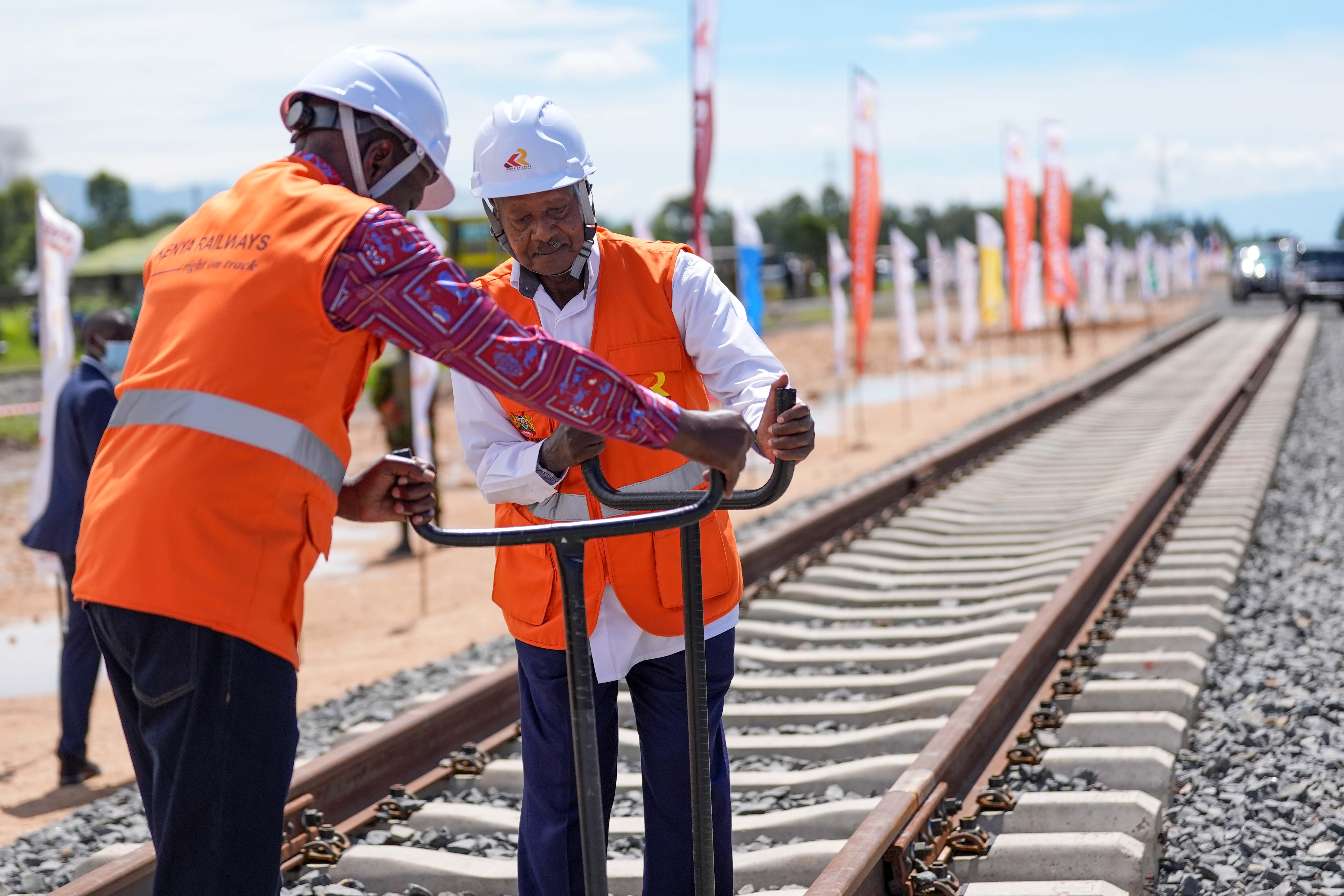
Regional trade and logistics are set for a major boost following the launch of the Kisumu–Malaba Standard Gauge Railway (SGR) Extension (Phase II), a multi-billion-dollar infrastructure project expected to reshape transport efficiency across East Africa.
The project was jointly launched by Yoweri Kaguta Museveni and William Ruto after the Ugandan leader arrived at Kisumu International Airport for the high-level ceremony.
The two leaders held bilateral talks focusing on trade, infrastructure development, and regional integration before symbolically marking the start of construction works. The railway extension forms part of a broader regional network linking Mombasa to inland markets across East and Central Africa.
Driving Down the Cost of Trade
President Museveni framed the SGR extension as a strategic intervention to address inefficiencies in Uganda’s transport system, where heavy cargo, passengers, and petroleum products largely depend on road transport.
“The railway is part of the rationalisation of our transport system… which is currently wasteful,” he noted, adding that Uganda plans to shift heavy cargo to rail, petroleum products to pipelines and water transport, and reserve roads for passengers and light goods.
This rebalancing, he explained, will significantly reduce logistics costs—one of the biggest constraints to business competitiveness in the region.
Museveni further warned that high transport costs, alongside expensive electricity and financing, continue to undermine Africa’s ability to compete globally. “If Africa does not address these cost pushers, we shall be outpriced,” he said.
Unlocking Regional Markets
President Ruto described the SGR extension as a game-changer for regional commerce, noting that it will enhance connectivity between Kenya’s hinterland and neighbouring countries including Uganda, Rwanda, Burundi, South Sudan, and the Democratic Republic of Congo.
He revealed that cargo volumes through the Port of Mombasa reached 7.37 million tonnes in the first half of 2025, with nearly 70 percent destined for Uganda, highlighting the strategic importance of the Northern Corridor.
Currently, cargo takes up to 80 hours to move from Mombasa to Malaba and over 100 hours to Kampala, delays that significantly increase the cost of doing business.
“A slow transport corridor inevitably loses business and weakens our competitiveness as a nation,” Ruto said.
Strategic Gains for Business and Industry
The Kisumu–Malaba SGR extension is expected to cut transit times, lower freight costs, and improve reliability in the movement of goods. This is likely to benefit key sectors such as agriculture, manufacturing, and fisheries, particularly around the Lake Victoria basin.
The corridor will also strengthen Uganda’s access to the Port of Mombasa, its primary gateway for international trade, while opening up new opportunities for cross-border commerce in the Great Lakes region.
Beyond logistics, the project is seen as a cornerstone for deeper regional integration under the East African Community framework, aligning infrastructure development with trade expansion and industrial growth.
Strengthening Regional Cooperation
President Ruto commended Museveni’s long-standing commitment to regional integration, while both leaders expressed optimism that the project will accelerate economic cooperation between the two countries.
The launch was attended by senior officials from both governments, including Rebecca Alitwala Kadaga and Katumba Wamala.
As construction begins, the SGR extension is poised to become a critical backbone for East Africa’s trade ecosystem—linking production zones to markets more efficiently and positioning the region for greater competitiveness in the global economy.