Museveni, World Bank discuss financing and strategic support for Uganda’s SGR and agricultural industrialization
During the meeting, President Museveni emphasized the strategic importance of the SGR, noting that the railway would significantly reduce transport costs, enhance regional connectivity, and facilitate industrial growth.
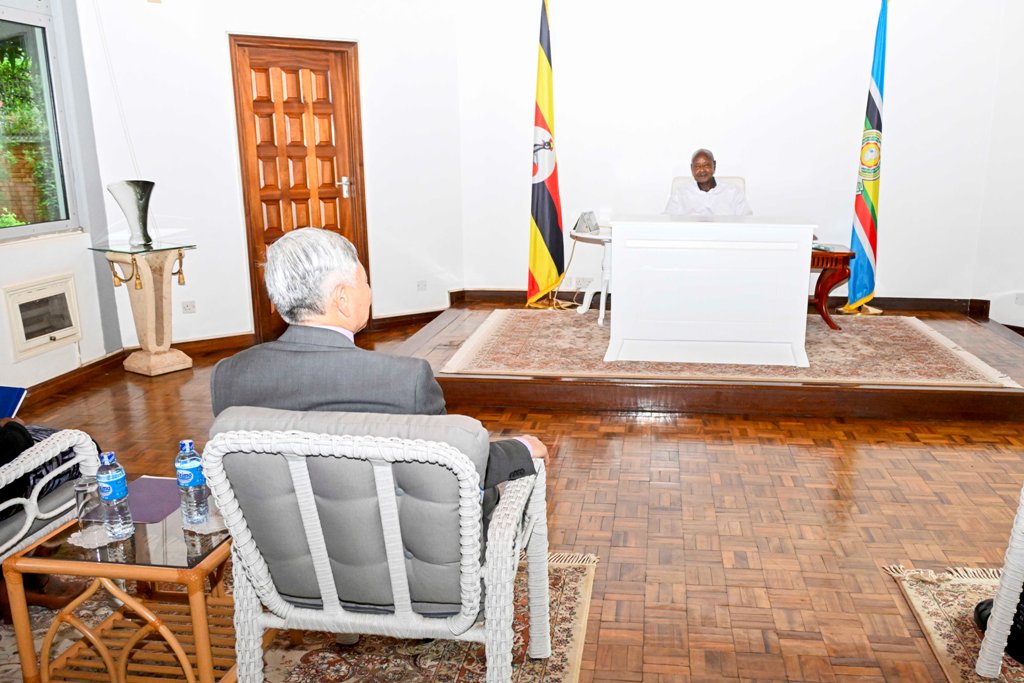
President Yoweri Museveni has welcomed renewed financial and technical support from the World Bank for Uganda’s development ambitions, particularly the Standard Gauge Railway (SGR) project and agricultural industrialization.
The discussions took place on Monday at State Lodge, Nakasero, where President Museveni met a high-level World Bank delegation led by Qimiao Fan, Division Director for Kenya, Rwanda, Somalia, and Uganda. He was accompanied by Francisca Ayodeji Akala, World Bank Country Manager for Uganda, and Tonderai Fadzai Mukonoweshuro, Senior Operations Officer based in Zimbabwe.
During the meeting, President Museveni emphasized the strategic importance of the SGR, noting that the railway would significantly reduce transport costs, enhance regional connectivity, and facilitate industrial growth.
“These are the funds I want. I want funds for capacity building and to give the basics for production at lower costs,” he said. He clarified that the SGR is intended primarily for heavy cargo, while pipelines will handle petroleum products and water transport will complement the railway for cargo movement, leaving roads for passengers and light cargo.
The President also stressed the need for affordable electricity, access to low-cost financing, and efficient transport systems as pillars for sustainable economic growth. He highlighted the role of value addition in agriculture, lamenting that university curricula have traditionally focused on raw material production rather than agro-processing.
“I’m also happy with the proposal to support agricultural industrialisation and agro-processing,” President Museveni noted. “The system here even in university was to train people, even those doing Bachelor of Science in Agriculture, and their job was to produce the raw materials but no value addition was taught.”
On his part, Qimiao Fan commended Uganda for maintaining economic stability and pledged robust support from the World Bank for strategic projects like the SGR.
“I’m happy to say that I have the documents, and the World Bank seriously pledges to support you financially,” Qimiao said, adding that investments in energy, transport, and agribusiness remain key drivers of sustainable development. He emphasized that the Bank will also provide training and technical support to enhance value addition and skills in the agricultural sector.
The meeting was attended by senior government officials, including Matia Kasaija, Minister of Finance, Planning and Economic Development; Kiryowa Kiwanuka, Attorney General; Ramathan Ggoobi, Permanent Secretary at the Ministry of Finance; and Maris Wanyera, Acting Director of Debt and Cash Policy.
Uganda’s engagement with the World Bank reflects the government’s strategy of leveraging international partnerships to fund infrastructure and industrial projects while promoting inclusive economic development. Analysts note that the SGR and enhanced agro-processing could open new avenues for regional trade, reduce the cost of doing business, and create thousands of jobs across the country.