Bank of Uganda rallies Masindi leaders on financial inclusion, low inflation and access to credit
The Deputy Governor emphasised that economic transformation is a shared responsibility, calling on political, religious and community leaders to work with financial institutions to improve awareness and uptake of financial services.
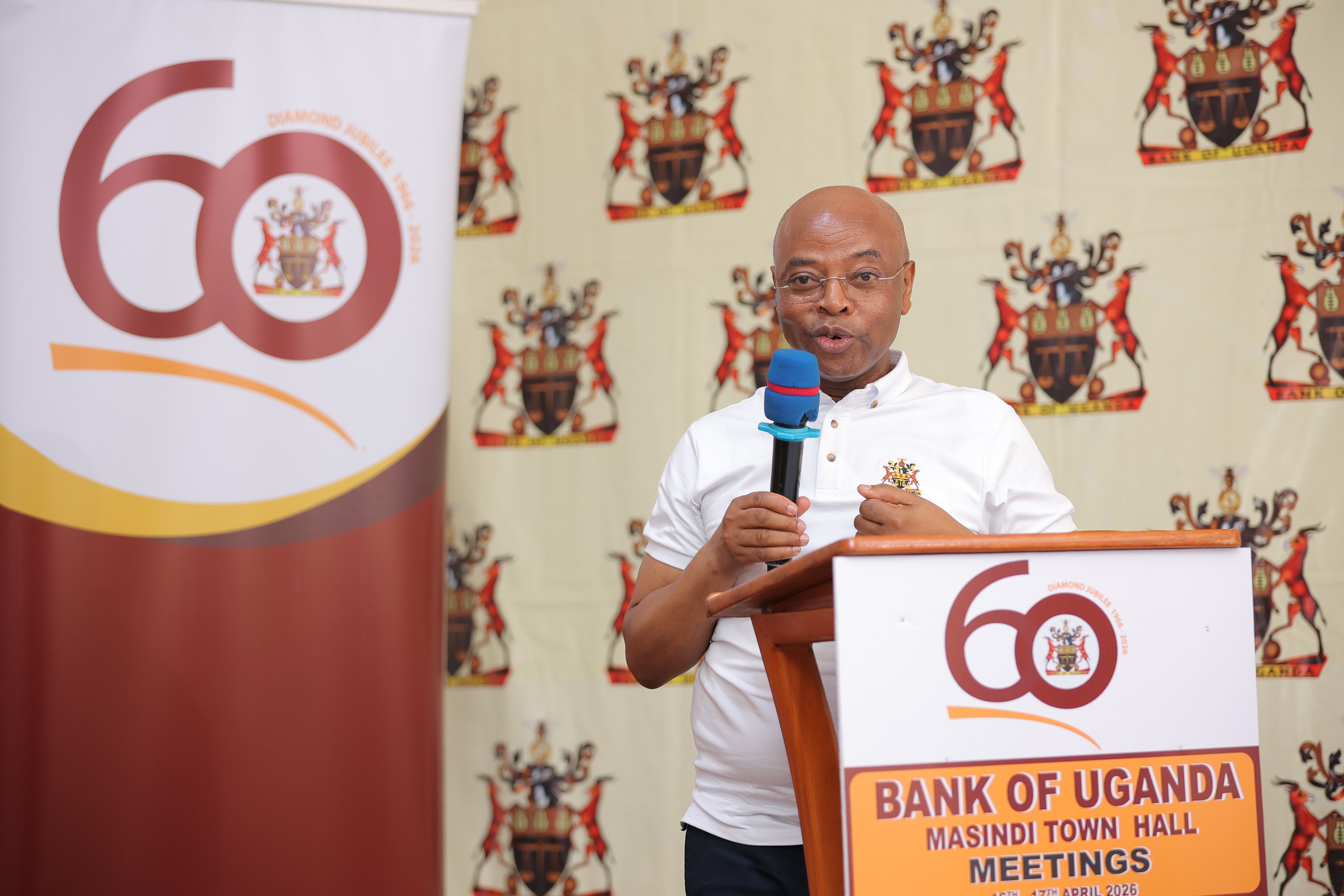
The Deputy Governor of the Bank of Uganda has urged local leaders in Masindi District to take a more active role in promoting financial inclusion, access to affordable credit and responsible use of financial services as key drivers of economic transformation.
Speaking during a town hall meeting with district leaders, the central bank official said Uganda’s economic policies are designed to directly improve livelihoods, stressing that the Bank’s work must be understood and felt at the grassroots level.
Inflation stable, shilling strengthening
The Deputy Governor told leaders that Uganda’s macroeconomic environment remains stable, with inflation kept low and predictable—an outcome critical for households and businesses.
“Low and stable inflation ensures that the money people earn today retains its value tomorrow,” the official said, noting that price stability supports household budgeting, business planning and investment decisions.
The Uganda shilling has also shown resilience, appreciating against the US dollar over the past year, helping to ease the cost of imports such as fuel, medicine and machinery.
Financial sector safe, deposits protected
Addressing concerns about the safety of financial institutions, the central bank reassured the public that deposits in licensed banks are secure and protected under the Deposit Protection Fund.
The Deputy Governor emphasised the Bank’s supervisory role over commercial banks, microfinance institutions and other financial service providers, urging the public to report unresolved complaints directly to the regulator.
Leaders were also warned against the growing threat of mobile money fraud, with the central bank advising Ugandans never to share their PINs and to only transact with authorised agents.
Push for financial inclusion and savings
The Bank highlighted ongoing efforts to expand financial access, including digital platforms that allow individuals to save and invest small amounts of money.
Officials said financial inclusion is essential for economic transformation, noting that farmers, traders and small businesses must be integrated into the formal financial system to unlock growth.
The number of licensed payment service providers has significantly increased in recent years, reflecting rapid expansion in Uganda’s financial infrastructure.
Credit facilities underutilised
The Deputy Governor expressed concern over the low uptake of key government-supported credit programmes, particularly in regions like Masindi.
The Agricultural Credit Facility (ACF), which offers loans at capped interest rates, has disbursed over Shs1.2 trillion nationwide to support farmers and agro-processors. However, uptake at district level remains uneven.
Similarly, the Small Business Fund, aimed at supporting enterprises such as shops, schools and hospitality businesses, has seen limited participation in some districts.
Leaders were tasked with mobilising communities to take advantage of these financing opportunities, especially among women and youth who remain underrepresented among beneficiaries.
Environment and sustainability highlighted
The central bank also raised concerns about environmental degradation, warning that climate change, deforestation and unsustainable farming practices pose risks to long-term economic growth.
Financial institutions have been encouraged to support green financing initiatives, including investments in sustainable agriculture, renewable energy and climate-resilient infrastructure.
Call for collective action
The Deputy Governor emphasised that economic transformation is a shared responsibility, calling on political, religious and community leaders to work with financial institutions to improve awareness and uptake of financial services.
The town hall meeting forms part of the Bank of Uganda’s nationwide outreach programme aimed at demystifying monetary policy and bringing financial education closer to communities.
Officials said such engagements will continue across the country as the central bank seeks to bridge the gap between policy formulation and real-life economic experiences of Ugandans.