
How public procurement could shape Uganda’s future and create a USD 500 billion economy
At the PPDA Public Procurement Cadre Forum 2026, Uganda's top economic policymakers delivered a blunt verdict: the country's development ambitions will rise or fall on the quality of how it buys.
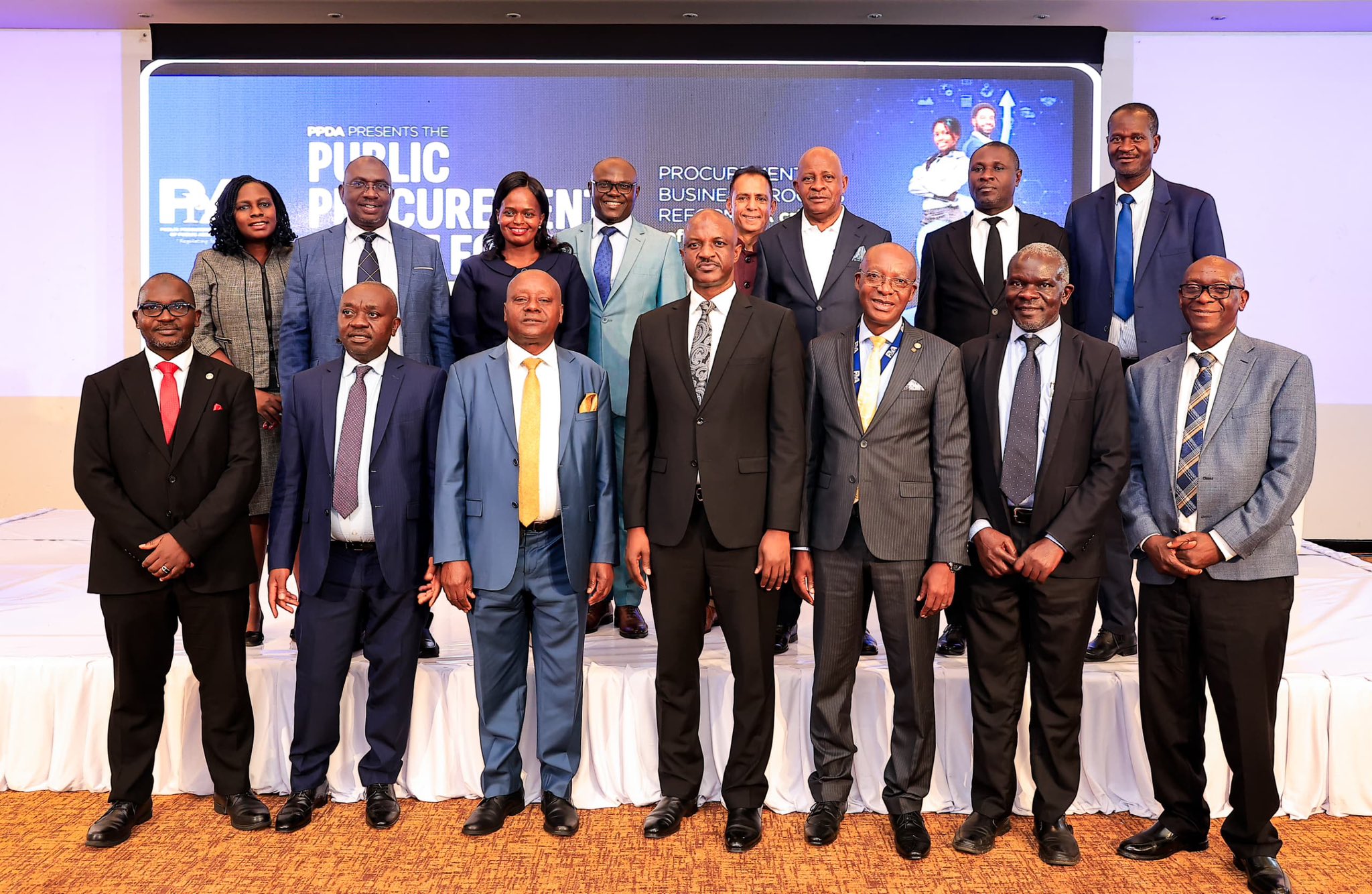
Uganda’s ambition to build a USD 500 billion economy by 2040, the centrepiece of the National Development Plan IV and the Tenfold Growth Strategy, will be determined not merely by policy design or investment volumes, but by something far more unglamorous – the speed, integrity, and professionalism of its public procurement systems.
That was the central message delivered by Permanent Secretary and Secretary to the Treasury, Dr. Ramathan Ggoobi, as he officially opened the PPDA Public Procurement Cadre Forum 2026 at Speke Resort Munyonyo. His remarks carried the weight of a government that has grown impatient with procurement as a bureaucratic ritual and is demanding it become a strategic instrument of national transformation.
“Public procurement must stop being viewed merely as a compliance process. It must become a strategic tool for delivering faster growth, better services, stronger local industries and value for money for Ugandans.” Dr. Ramathan Ggoobi, PSST, Ministry of Finance.
With 65% of the annual government budget channelled through procurement processes, and the function contributing an estimated 15–20% of GDP, the machinery of public purchasing is not a back-office function, it is, in effect, the transmission belt between government policy and real-world outcomes. Whether a road is finished on schedule, whether a hospital receives its equipment, whether a farmer gets subsidised inputs, all of it flows through procurement.
Yet Uganda’s procurement ecosystem has long been plagued by a catalogue of ailments that Ggoobi did not shy away from naming directly: lengthy timelines, delayed projects, weak contract management, cost overruns, fragmented systems, and endemic corruption risks.
“These delays are costly to government, costly to taxpayers and costly to national development,” he said, framing the dysfunction not as an administrative inconvenience but as a tax on growth.
The government’s response is a multi-pronged reform agenda now being rolled out across Ministries, Departments and Agencies. At its core is the accelerated deployment of e-Government procurement, a digital shift intended to improve transparency, efficiency, accountability and traceability in a system where opacity has historically been a gateway to abuse.
Beyond digitisation, the new reform framework targets reduced procurement lead times, the elimination of unnecessary bureaucracy, the standardisation of processes across government entities, stronger contract management regimes, and an explicit push to promote local content in procurement decisions, a provision that, if effectively implemented, could channel public spending into building domestic industrial capacity rather than importing finished goods and services.
“We need a procurement system that is faster, cleaner, smarter and more professional. A system that delivers projects. A system that inspires public confidence. A system aligned to Uganda’s development agenda.” Dr. Ramathan Ggoobi, PSST.
PPDA Executive Director Canon Benson Turamye struck a similarly urgent note, arguing that effective and efficient procurement is not merely a management challenge but a growth driver in its own right. With procurement accounting for the lion’s share of annual budgetary expenditure, he said the authority’s focus has shifted decisively toward “practical, implementable reforms” that can be felt on the ground rather than celebrated in policy documents.
Turamye highlighted one of the authority’s most tangible recent innovations: a digital Contract Monitoring System that goes beyond internal oversight by empowering citizens and civil society organisations to track government projects in real time.
Since its inception, the platform has processed over 1,296 contract implementation-related cases, a figure that suggests meaningful uptake and points to the civic dimension of procurement accountability that is too often overlooked.
The PPDA chief also outlined a suite of technical standards and mechanisms being embedded into Uganda’s procurement architecture: the adoption of Open Contracting Data Standards, the introduction of infrastructure risk standardisation frameworks, and the deployment of collaborative procurement mechanisms designed to reduce fragmentation, minimise cost variations, and extract greater value from every shilling of public expenditure.
Completing the forum’s senior panel, Uthman Segawa, Director Legal and Board Affairs at PPDA, added a public investment management lens to the proceedings. His message was one of discipline and execution: government projects must be handled in a more organised, practical, and results-oriented manner. Strong procurement systems are not an end in themselves, he argued, but a means of ensuring that public resources reach the people they are intended to serve, on time and at the promised quality.
Taken together, the forum’s proceedings amounted to something of a manifesto moment for Uganda’s procurement reform agenda. The vocabulary has shifted, from compliance to strategy, from process to outcomes, from bureaucracy to delivery. Whether the institutions, incentives and human capital exist to operationalise that shift at the scale the Tenfold Growth Strategy demands remains the defining test ahead.