Africa unites against sickle cell disease as Uganda leads continental response
Hydroxyurea remains one of the most effective medicines in reducing pain crises and complications among sickle cell patients, but access remains limited in many African countries due to high costs.
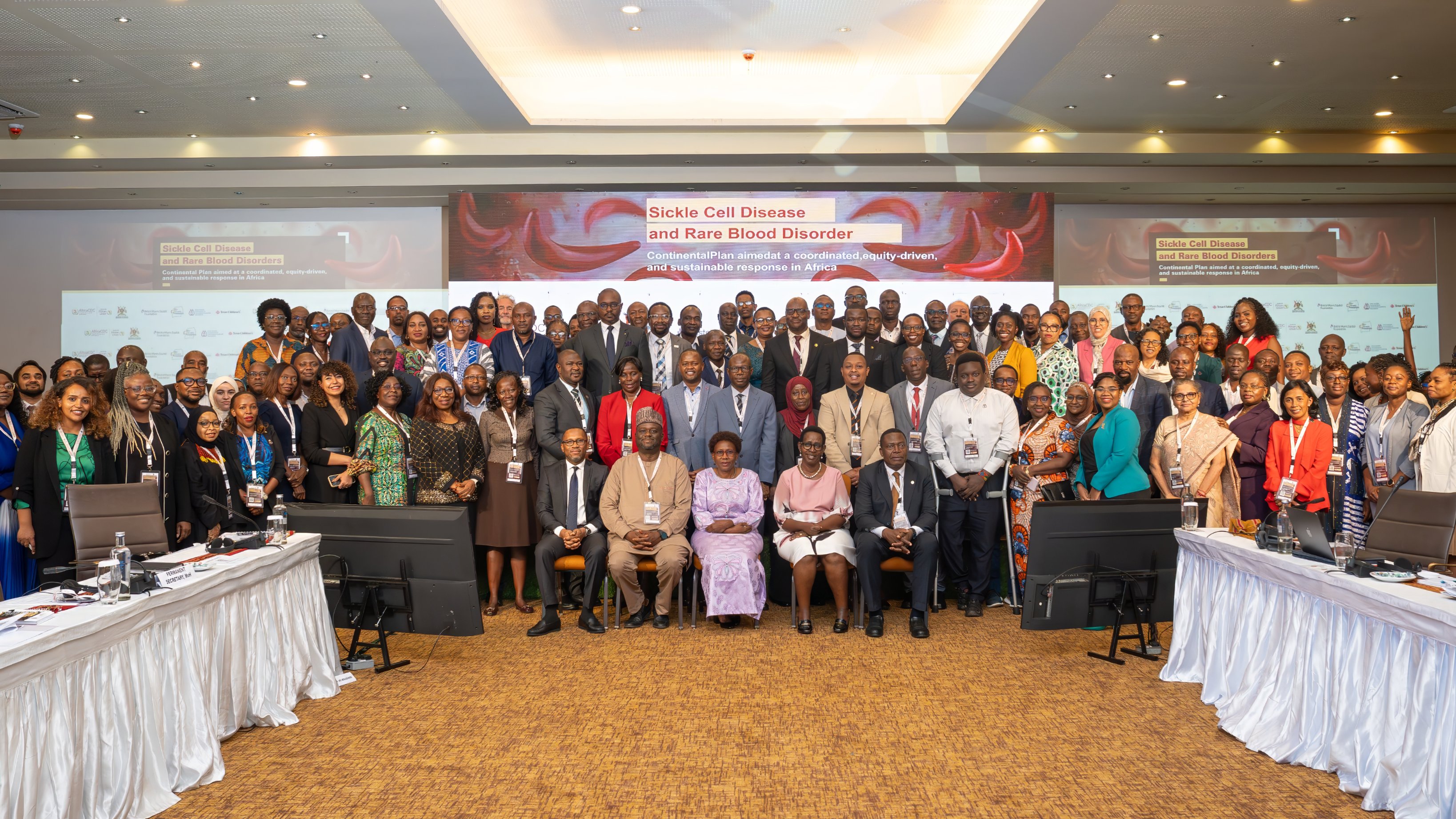
Uganda has positioned itself at the forefront of Africa’s fight against Sickle Cell Disease following the launch and technical validation of the Continental Plan for Sickle Cell Disease and other Rare Blood Disorders aimed at strengthening prevention, screening, treatment, and long-term care across the continent.
The landmark workshop, hosted in Kampala, brought together health experts, policymakers, and partners from across Africa to develop a coordinated response to one of the continent’s most persistent but underfunded public health challenges.
Officiating at the event, Jane Ruth Aceng described the continental plan as a major step toward building a unified African response against sickle cell disease and rare blood disorders.
“This Continental Plan developed with support from Africa CDC is a commitment to a unified response to Sickle Cell Disease,” Aceng said.
She revealed that Uganda has intensified efforts to combat the disease by rolling out nationwide newborn screening programmes aimed at ensuring early detection and treatment. Uganda has also launched locally manufactured test kits that are highly sensitive in detecting sickle cell disease among newborn babies.
The Minister said Uganda’s interventions are already transforming lives through the Strengthening Care Access and Linkage for Sickle Cell Disease (SCALE) programme implemented in partnership with Texas Children’s Global HOPE.
Under the programme, Uganda has integrated sickle cell services into primary healthcare systems while training specialist nurses and paediatric haematologists to improve patient care.
“Today, over 2,000 patients across Uganda and the East African region have accessed hydroxyurea through collaborative clinical partnerships,” Aceng noted, adding that Uganda is exploring prospects of manufacturing hydroxyurea locally to improve affordability and accessibility.
Hydroxyurea remains one of the most effective medicines in reducing pain crises and complications among sickle cell patients, but access remains limited in many African countries due to high costs.
Speaking at the workshop, Dr. Diana Atwine urged African governments to prioritise sickle cell disease by allocating sufficient resources toward screening, treatment, and access to medicines.
“Many families are suffering silently, with limited commitment from governments in developing strong national strategies and allocating budgets for screening, treatment, and medicines, which remain very expensive for ordinary families,” Dr Atwine said.
She warned that sickle cell disease and other rare blood disorders are increasingly becoming major public health concerns that deserve the same level of attention given to other high-burden diseases.
The Director General Health Services, Prof. Olaro Charles, said the continental plan would help bridge gaps in healthcare systems from the continental level down to communities.
“This plan is built on data and is intended to save lives,” Prof. Olaro said.
He revealed that Uganda’s national sickle cell trait prevalence currently stands at 13 percent, with approximately 20,000 babies born annually with sickle cell disease.
According to Prof. Olaro, Uganda’s progress in screening, specialised care, and policy implementation is now serving as an important benchmark for Africa’s wider response to the disease.
He called upon African governments and stakeholders to ensure sustainability in sickle cell programming by integrating services into national health insurance schemes and broader healthcare systems.
Meanwhile, Dr. Mohammed AbdulAziz from Africa CDC challenged African member states and development partners to strengthen political commitment toward fighting sickle cell disease.
He emphasised the need for improved access to essential medicines and healthcare services, workforce development, stronger country ownership, and better coordination among partners.
Health experts attending the workshop said early diagnosis, comprehensive treatment, community awareness, and stronger health systems remain key to reducing deaths and improving the quality of life for people living with sickle cell disease across Africa.
The continental plan is expected to guide African countries in harmonising policies, mobilising resources, and strengthening healthcare systems to address sickle cell disease and other rare blood disorders in a more coordinated and sustainable manner.