Political Satire – Uganda Cabinet Reactions: The Cheetahs, The Kobs and The Monkeys
Uganda’s Cabinet Sparks Cheers, Memes and Side-Eyes
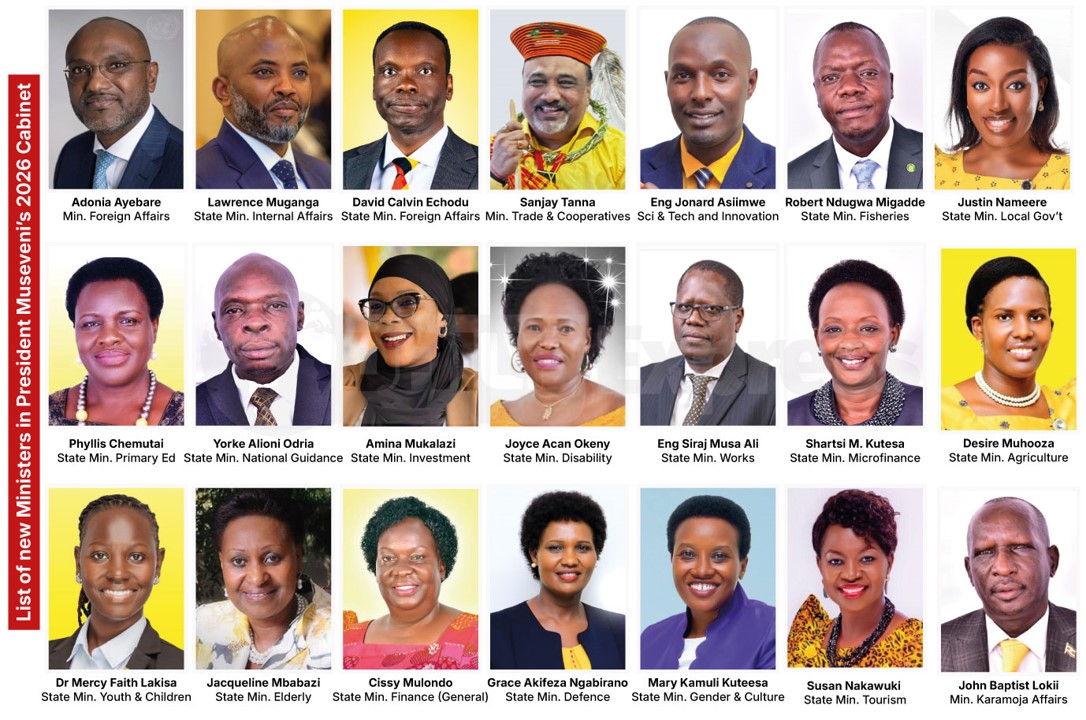
Uganda has unveiled a new cabinet, and judging by the national reaction, the country is unsure whether it has witnessed a political revolution, a wildlife documentary, or a family meeting where uncles finally agreed to let younger cousins sit closer to the food as they mentor them.
President Museveni’s “Kisanja No Sleep” cabinet has delivered exactly what Ugandans love most: skeptics, confusion, memes, political conspiracy theories, and enough WhatsApp analysis to qualify as a parallel intelligence service.
At the center of the excitement is the carefully staged entrance of younger faces into cabinet – a move clearly designed to communicate energy, succession planning and generational inclusion without frightening the old guard currently holding the keys to the kingdom.
And suddenly, Uganda’s cabinet now resembles a safari ecosystem.
The cheetahs have entered. Figures like Jonard Asiimwe, Adonia Ayebare, Yorke Alioni Odria, Mary Kamuli, Simon Mulongo, Lillian Aber, Lawrence Muganga, Mercy Faith Lakisa and Justine Nameere, Lydia Wanyoto who symbolize the faster, media-savvy, presentation-ready generation. They are articulate, fearless, understand social media optics, know how to trend positively for at least six hours, and can probably survive both a cabinet retreat and a TED Talk.
To many young Ugandans, these appointments finally look like a breathe of fresh air – new blood being positioned for grooming, being tested for their potential or even being rewarded.
But then there are the Kobs – the veterans.
The political elders whose survival instincts deserve military medals of their own. Men and women who have survived coups, recessions, donor pressure, opposition waves, Twitter storms, and at least seven generations of political analysts declaring them “finished.” Like it or not, these leaders are known for their resilience, alertness and their sacrifice for their country.
People like Edward Katumba Wamala, Kahinda Otafiire, Chris Baryomunsi, Jacqueline Mbabazi, Lt. Gen. Henry Tumukunde, Jim Muhwezi, Justine Kasule Lumumba, Rebecca Kadaga, Dr. Chrispus Kiyonga continue to embody the philosophy that experience not speed, remains the most valuable currency in Museveni’s government. These are the leaders who do not panic during scandals because they have personally outlived entire scandals.
And then, somewhere in the middle of this political jungle, are the monkeys – agile survivors constantly swinging between influence, relevance and reinvention. Which brings us to people like: Persis Namuganza, Norbert Mao, Peter Ogwang, Balaam Barugahara, Judith Nabakooba, Kiryowa Kiwanuka, Haruna Kyeyune Kasolo, David Bahati others attempting complicated political comebacks despite public skepticism.
Ugandans online immediately began asking: “Are these appointments about competence, loyalty, tribal balancing, future succession or simply rewarding who clapped hardest during campaigns?” The answer, naturally, is probably a mix of all.
But the real drama online centered around the exits. The departure of Moses Ali felt less like a cabinet reshuffle and more like discovering Lake Victoria had relocated. One X user wrote: “Moses Ali leaving cabinet is like removing the clock tower from Kampala.” Another posted: “I thought Moses Ali came with independence.”
And perhaps the most savage comment: “Even ChatGPT thought Moses Ali was permanent infrastructure.”
Meanwhile, the dropping of Hamson Obua triggered mixed reactions from the ruling party online defenders who had grown accustomed to seeing him aggressively defending government positions on television and social media.
Then came the exits of former military heavyweights Jeje Odongo and David Muhoozi. And that is when Uganda’s online conspiracy department officially clocked in for overtime. Social media users immediately connected their exits to the highly publicized political ecosystem surrounding Muhoozi Kainerugaba and his famous birthday run. One popular X comment joked: “So if you missed the run, they made you run out of cabinet?”
Another wrote: “Kisanja No Sleep” started with those who slept on the birthday invitation.”
Some political commentators were vocal, questioning whether the reshuffle reflected deeper internal power alignments rather than simple administrative changes while another framed the reshuffle as “new branding on an old engine.”
These mixed sentiments perhaps capture the national mood better than any newspaper editorial because despite the youthful faces, many Ugandans remain skeptical about whether the newcomers possess real authority or are simply decorative modern packaging around an unchanged power structure.
Still, despite the satire, the memes and the animal analogies, one truth stands out. Ugandans are watching this cabinet very critically. The public no longer measures success by appointments alone. Citizens want functional and durable roads that do not dissolve during the rains, electricity that behaves less emotionally, well equipped and facilitated schools, jobs that do not require recommendation from “someone powerful” and hospitals with medicine.
The memes may be funny but beneath them sits a serious national exhaustion, expectations and hope for a better and brighter, corrupt free Uganda that serves and works all Ugandans.